
Brass Bound Rosewood Malabar Box - Early 19th Century
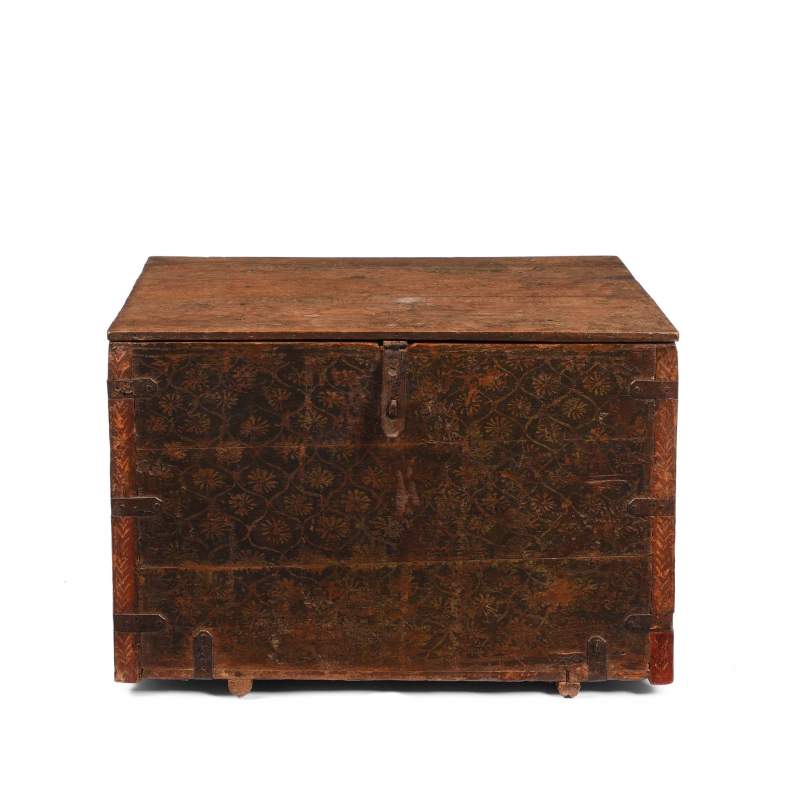
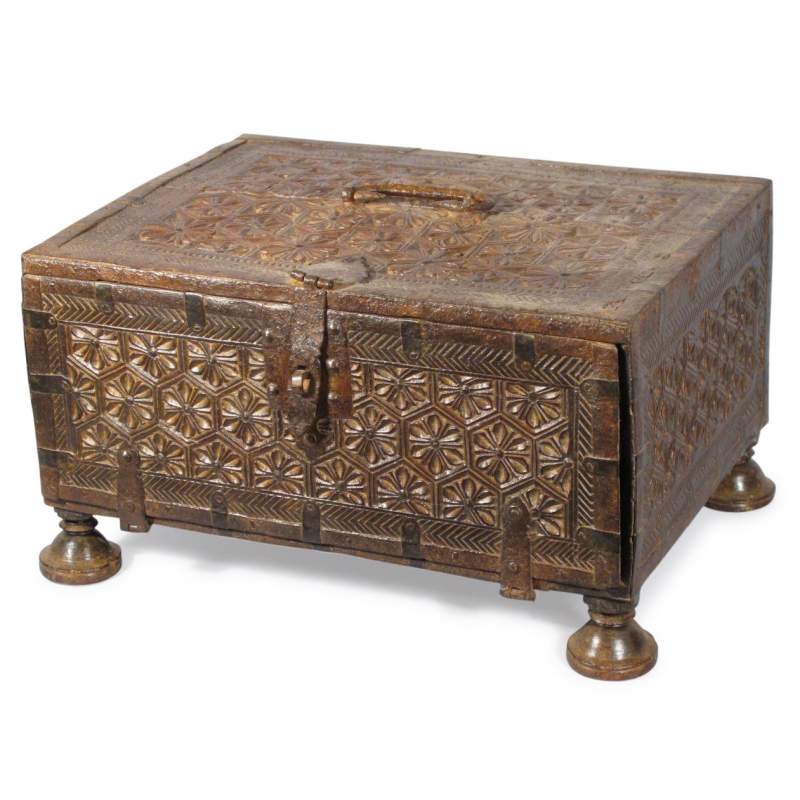
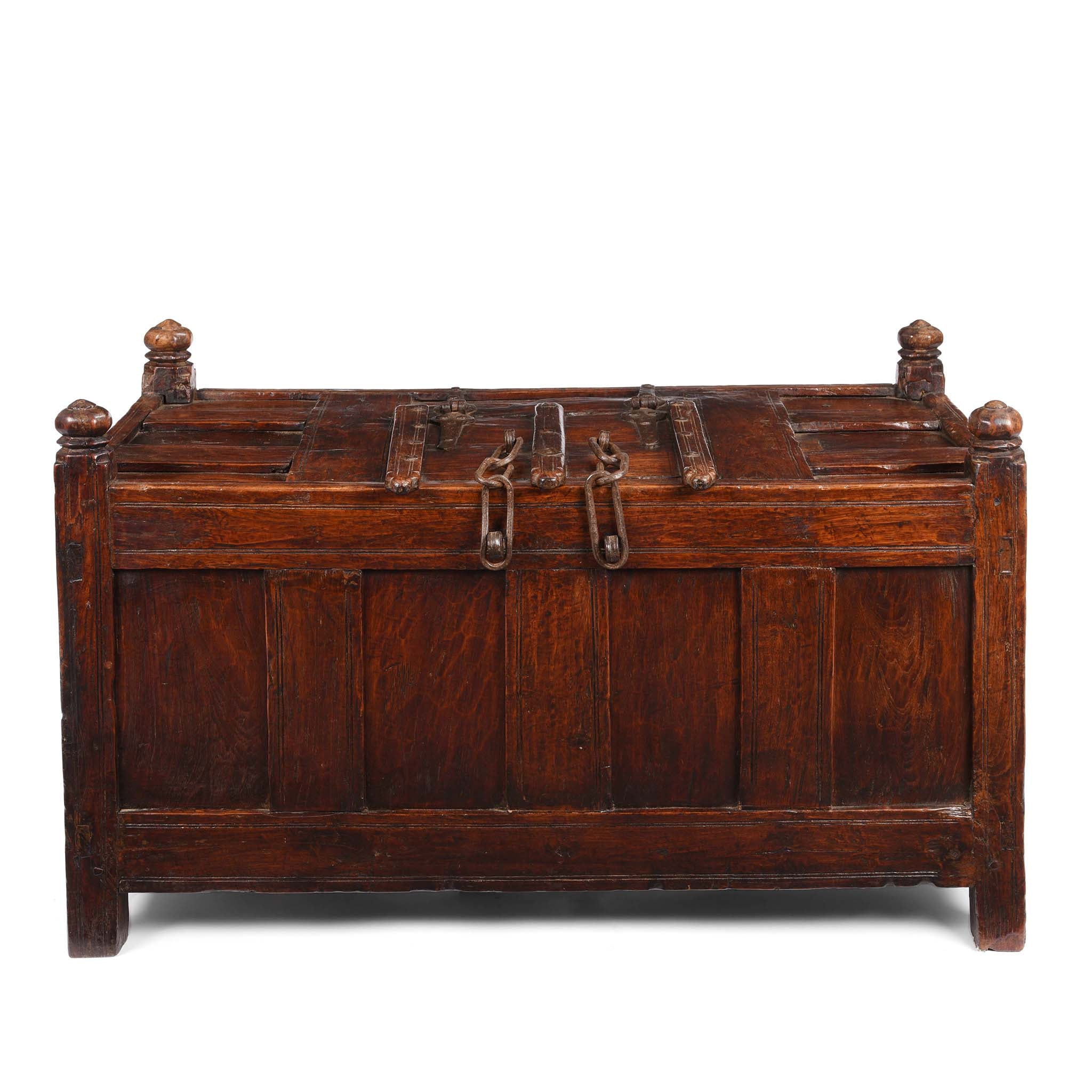
This finely made brass bound Malabar strongbox originates from Kutch, India, and dates to the early 19th century. This style is known as a Malabar cash box. Produced within a long tradition of Gujarati merchant craftsmanship, the box reflects a sophisticated decorative vocabulary combining indigenous Indian ornamentation with forms that appealed to both local elite and traders travelling on the Asian trade routes during the late 18th and early 19th centuries. These boxes would have been used by merchants & captains of ships of the dhow trade.
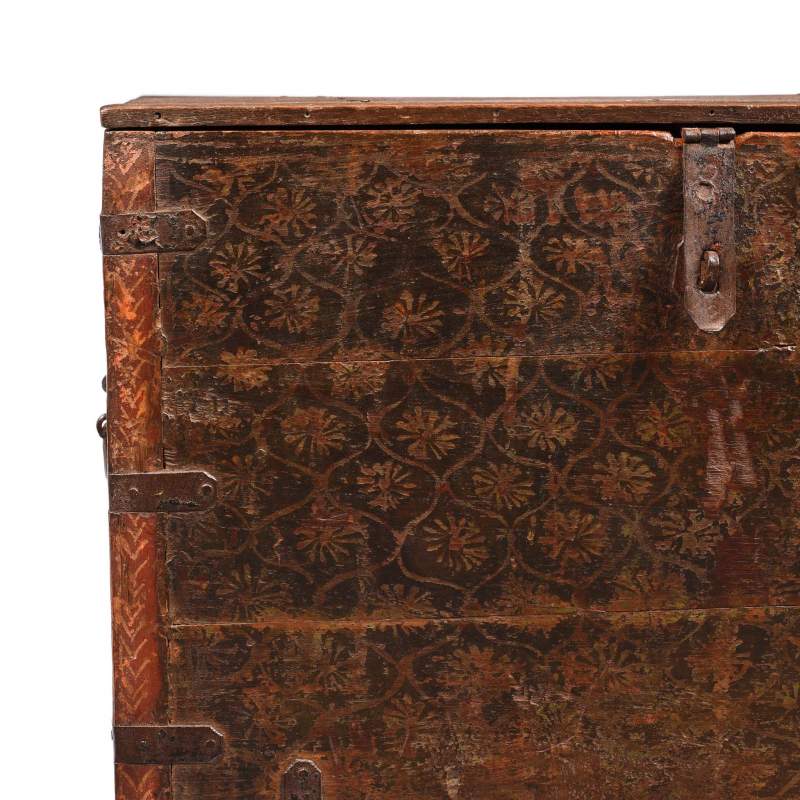
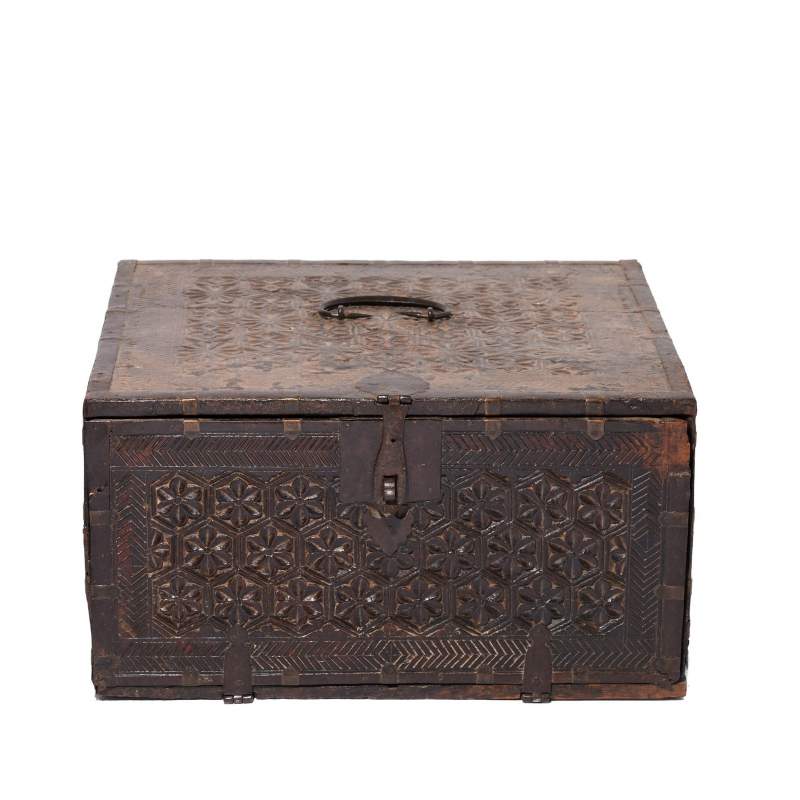
The richly toned rosewood body is extensively embellished with engraved and pierced brass inlay, including elongated drop-shaped bhoti (boṭhī) motifs, delicate foliate bands, and small star-shaped inlays across the front and lid. Substantial brass corner mounts and edge bindings enhance the visual impact while reinforcing the structure, underscoring its original function as a secure table box or strongbox. The front retains its original twin pin-lock fittings (key no longer present), framed by an oval brass escutcheon.
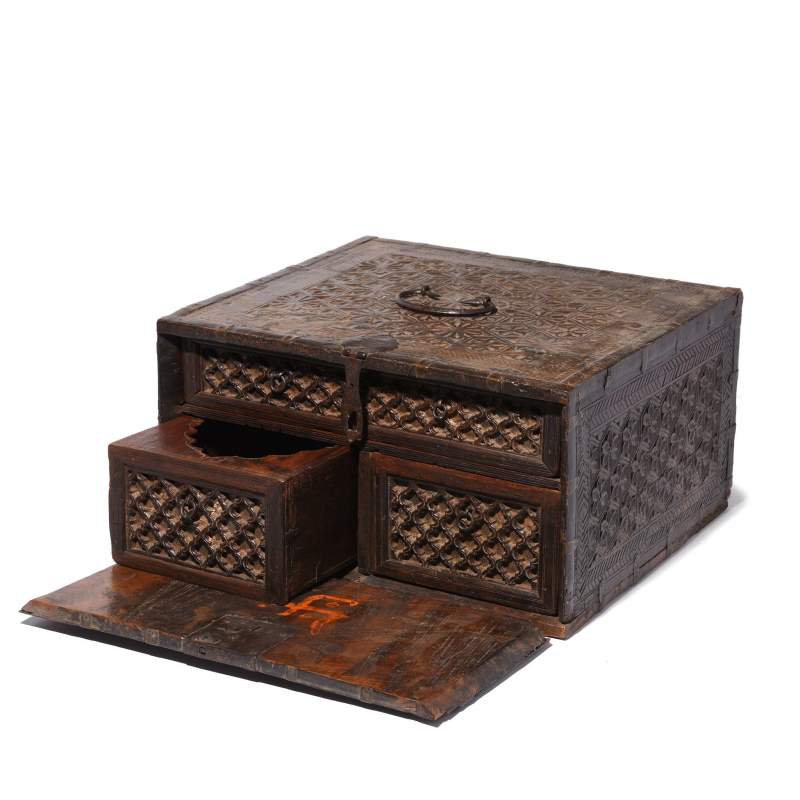
The hinged lid opens to reveal a thoughtfully arranged interior with side compartments flanking a deep central well, suitable for the storage of valuables, documents, or personal effects. Matching brass strap hinges continue the decorative language inside. The overall construction is robust, with surface wear and patination consistent with age and careful use.
- Origin: Kutch, Gujarat, India
- Date: Early 19th century
- Materials: Rosewood, pierced brass
- Features: Engraved brass inlay, bhoti-shaped motifs, star inlay, brass corner mounts, twin pin locks (no key), compartmented interior
- Condition: Good antique condition with age-related wear and patina
- Dimensions: W52 × D27 × H19 cm
References:
For a near identical example see The Arab Chest by Sheila Unwin. Page 103. Note she has incorrectly attributed this to 'of Malabar origin' - these boxes actually originate from Kutch in Gujarat, North India.
More Images


Brass Bound Rosewood Malabar Box - Early 19th Century
This finely made brass bound Malabar strongbox originates from Kutch, India, and dates to the early 19th century. This style is known as a Malabar cash box. Produced within a long tradition of Gujarati merchant craftsmanship, the box reflects a sophisticated decorative vocabulary combining indigenous Indian ornamentation with forms that appealed to both local elite and traders travelling on the Asian trade routes during the late 18th and early 19th centuries. These boxes would have been used by merchants & captains of ships of the dhow trade.
The richly toned rosewood body is extensively embellished with engraved and pierced brass inlay, including elongated drop-shaped bhoti (boṭhī) motifs, delicate foliate bands, and small star-shaped inlays across the front and lid. Substantial brass corner mounts and edge bindings enhance the visual impact while reinforcing the structure, underscoring its original function as a secure table box or strongbox. The front retains its original twin pin-lock fittings (key no longer present), framed by an oval brass escutcheon.
The hinged lid opens to reveal a thoughtfully arranged interior with side compartments flanking a deep central well, suitable for the storage of valuables, documents, or personal effects. Matching brass strap hinges continue the decorative language inside. The overall construction is robust, with surface wear and patination consistent with age and careful use.
- Origin: Kutch, Gujarat, India
- Date: Early 19th century
- Materials: Rosewood, pierced brass
- Features: Engraved brass inlay, bhoti-shaped motifs, star inlay, brass corner mounts, twin pin locks (no key), compartmented interior
- Condition: Good antique condition with age-related wear and patina
- Dimensions: W52 × D27 × H19 cm
References:
For a near identical example see The Arab Chest by Sheila Unwin. Page 103. Note she has incorrectly attributed this to 'of Malabar origin' - these boxes actually originate from Kutch in Gujarat, North India.
Product Information
Product Information
Shipping & Returns
Shipping & Returns
Description
This finely made brass bound Malabar strongbox originates from Kutch, India, and dates to the early 19th century. This style is known as a Malabar cash box. Produced within a long tradition of Gujarati merchant craftsmanship, the box reflects a sophisticated decorative vocabulary combining indigenous Indian ornamentation with forms that appealed to both local elite and traders travelling on the Asian trade routes during the late 18th and early 19th centuries. These boxes would have been used by merchants & captains of ships of the dhow trade.
The richly toned rosewood body is extensively embellished with engraved and pierced brass inlay, including elongated drop-shaped bhoti (boṭhī) motifs, delicate foliate bands, and small star-shaped inlays across the front and lid. Substantial brass corner mounts and edge bindings enhance the visual impact while reinforcing the structure, underscoring its original function as a secure table box or strongbox. The front retains its original twin pin-lock fittings (key no longer present), framed by an oval brass escutcheon.
The hinged lid opens to reveal a thoughtfully arranged interior with side compartments flanking a deep central well, suitable for the storage of valuables, documents, or personal effects. Matching brass strap hinges continue the decorative language inside. The overall construction is robust, with surface wear and patination consistent with age and careful use.
- Origin: Kutch, Gujarat, India
- Date: Early 19th century
- Materials: Rosewood, pierced brass
- Features: Engraved brass inlay, bhoti-shaped motifs, star inlay, brass corner mounts, twin pin locks (no key), compartmented interior
- Condition: Good antique condition with age-related wear and patina
- Dimensions: W52 × D27 × H19 cm
References:
For a near identical example see The Arab Chest by Sheila Unwin. Page 103. Note she has incorrectly attributed this to 'of Malabar origin' - these boxes actually originate from Kutch in Gujarat, North India.