Bambara Ci Wara Antelope Headdress - Early 20thC
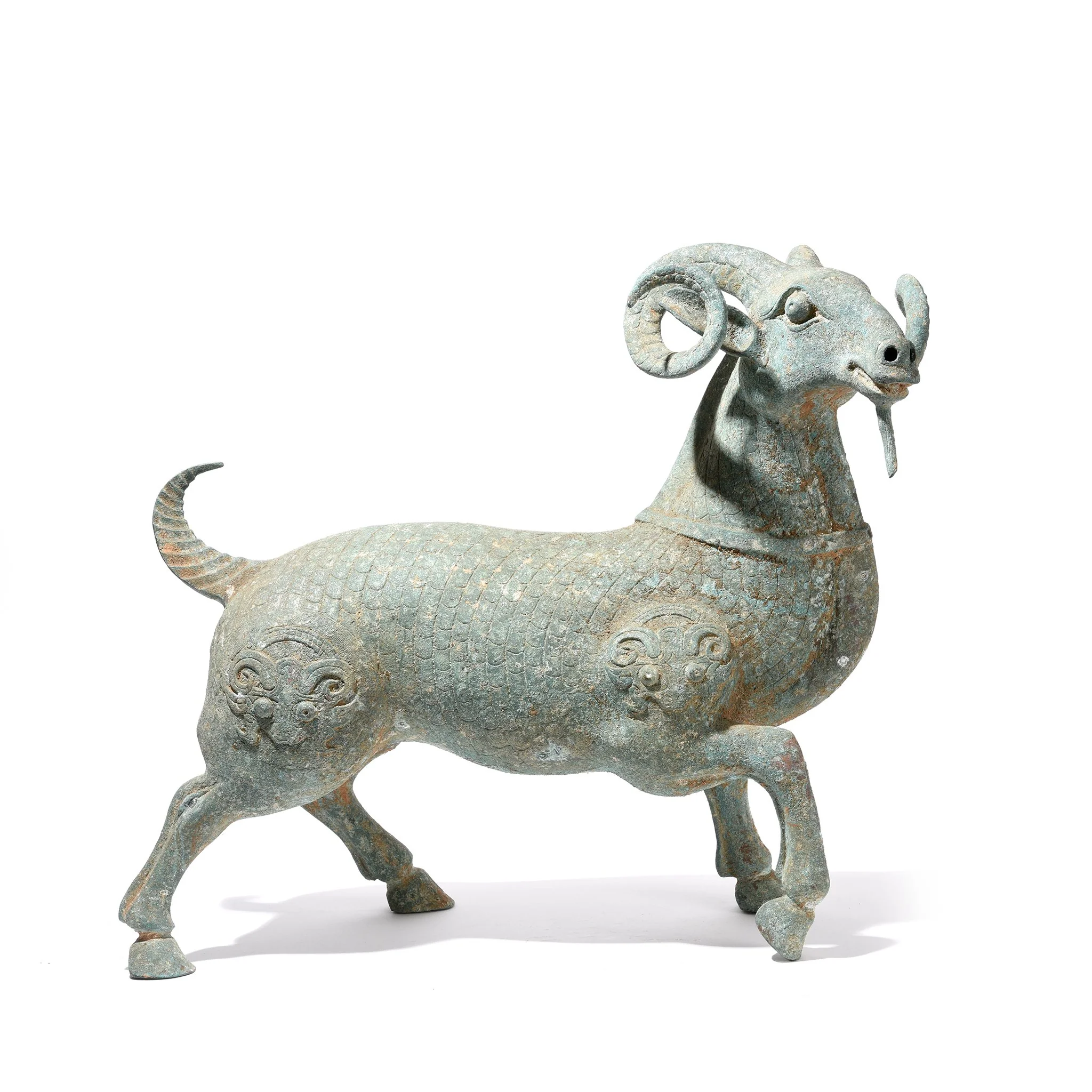
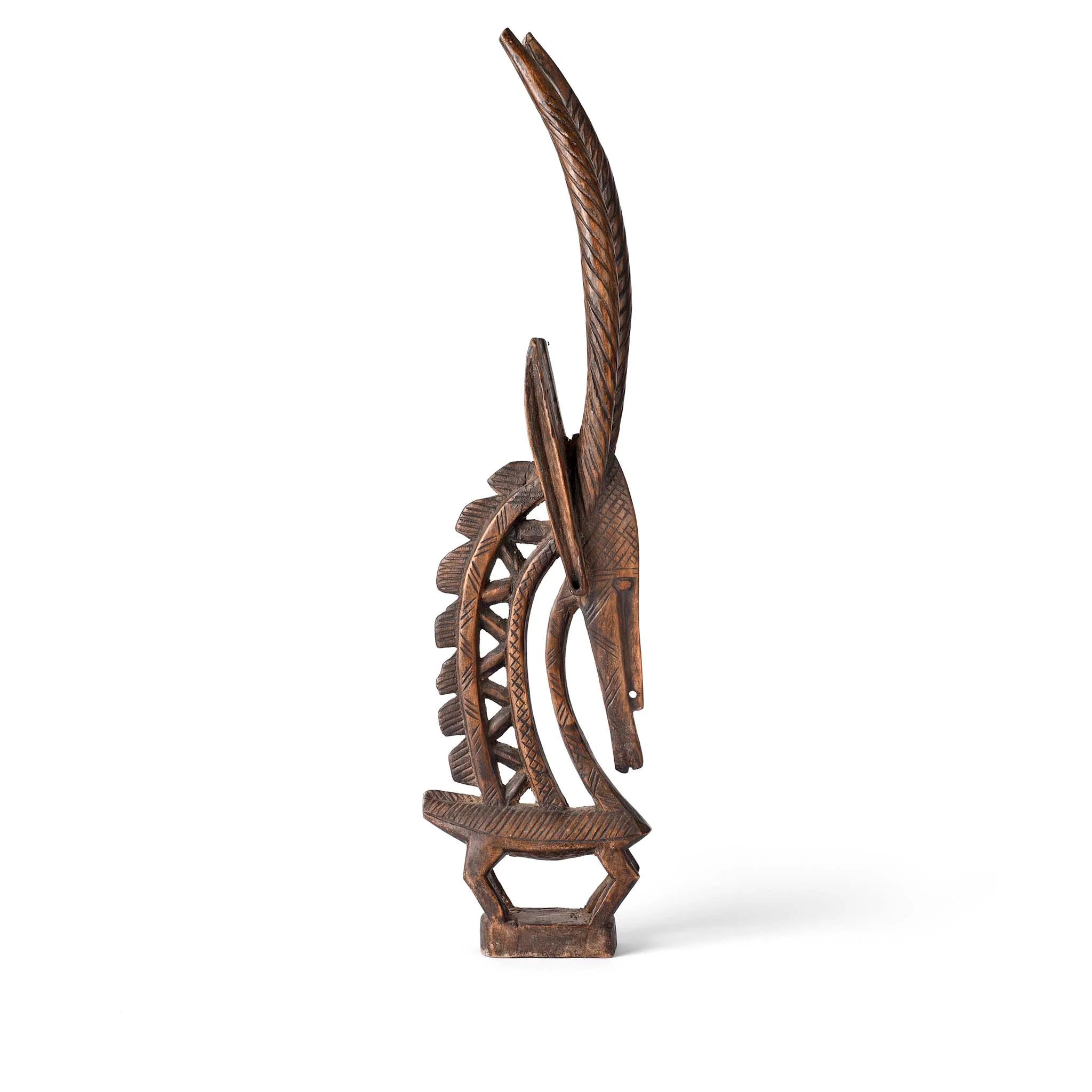
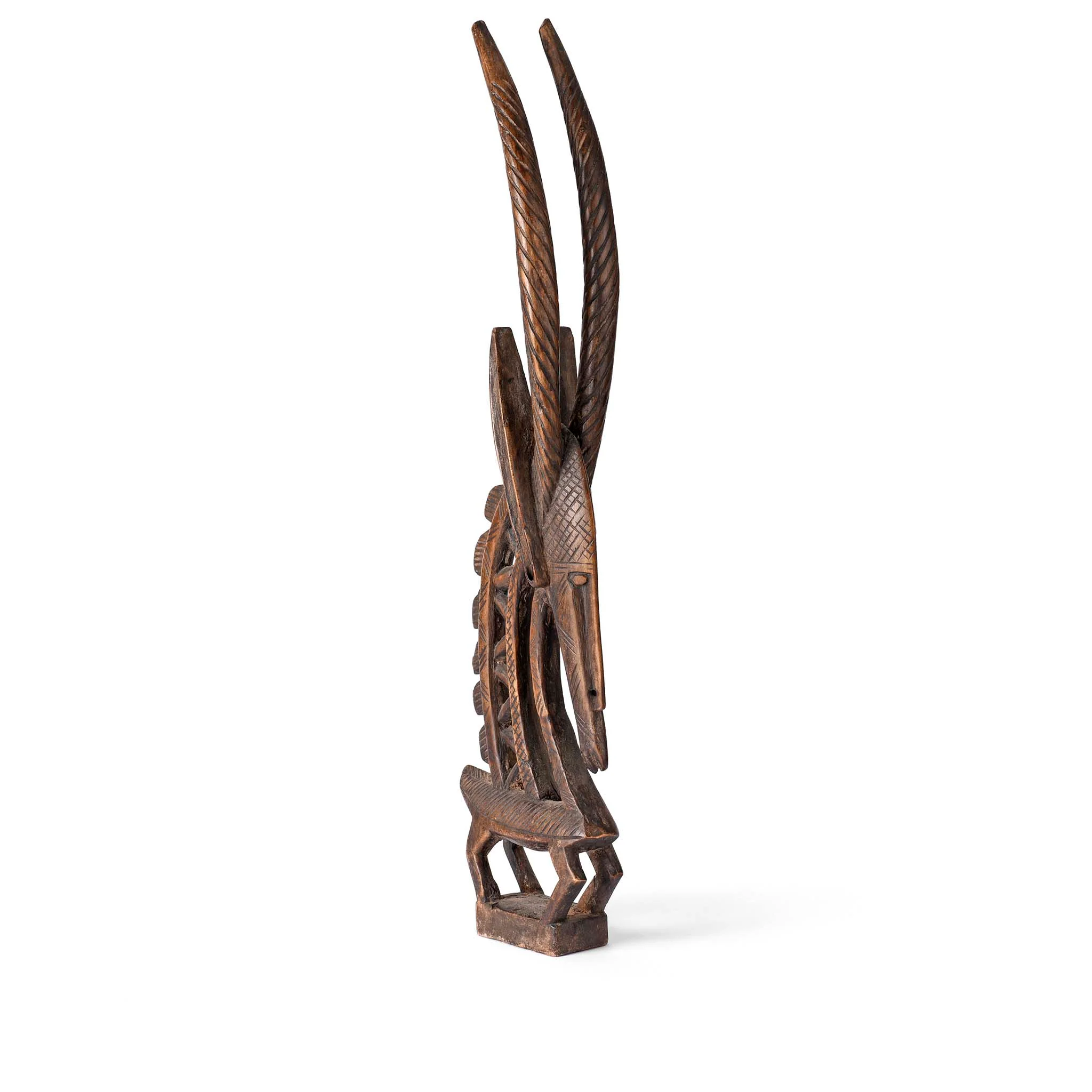
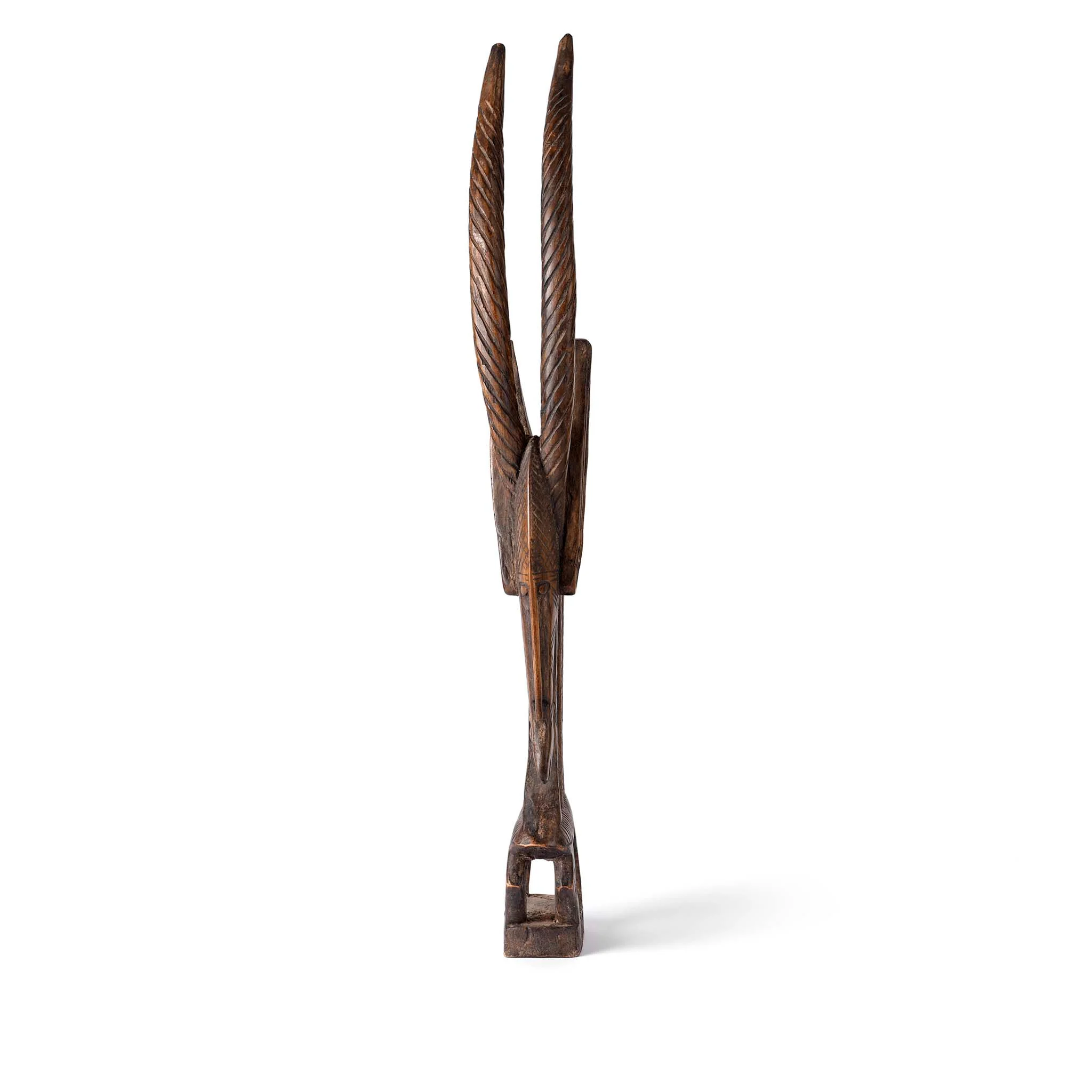
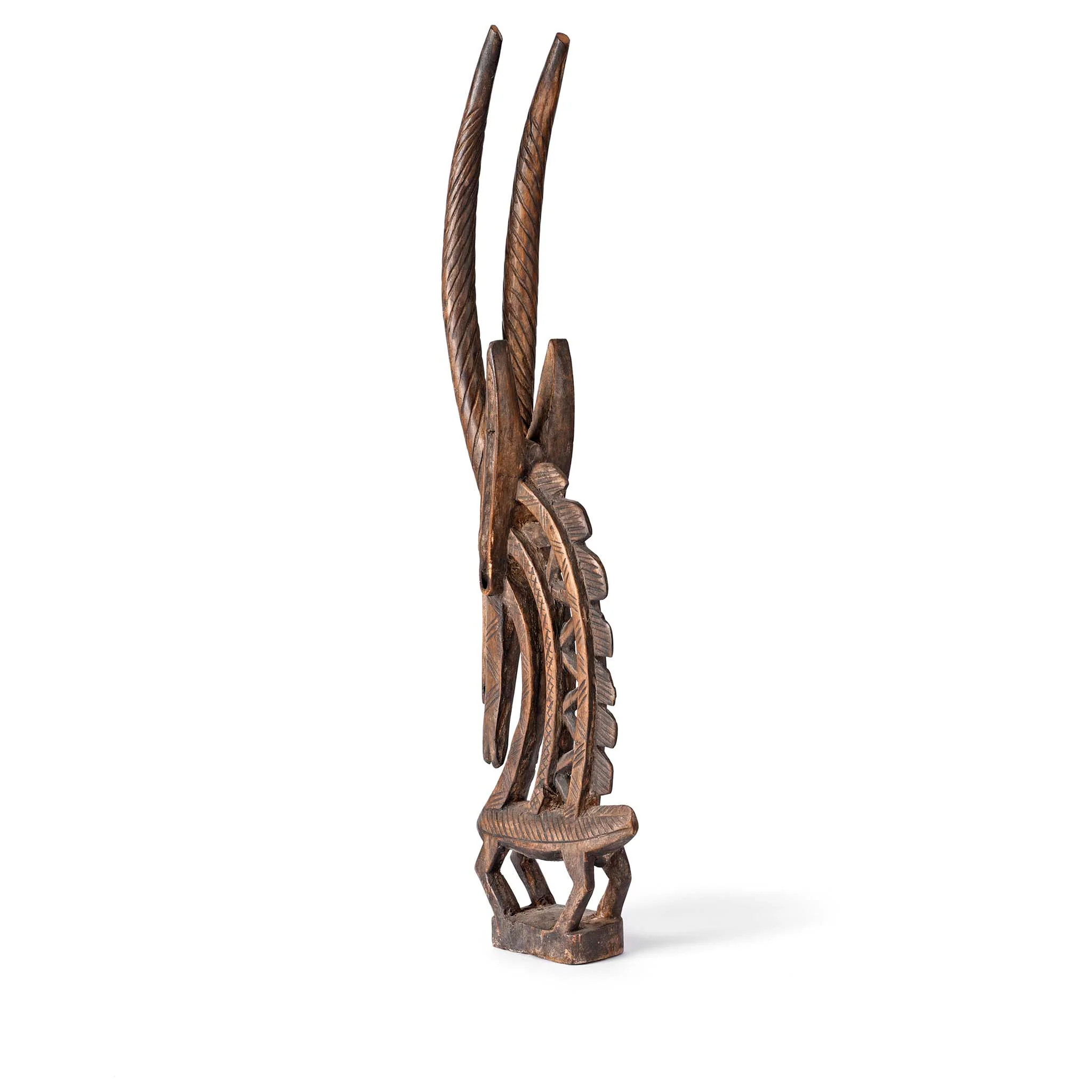
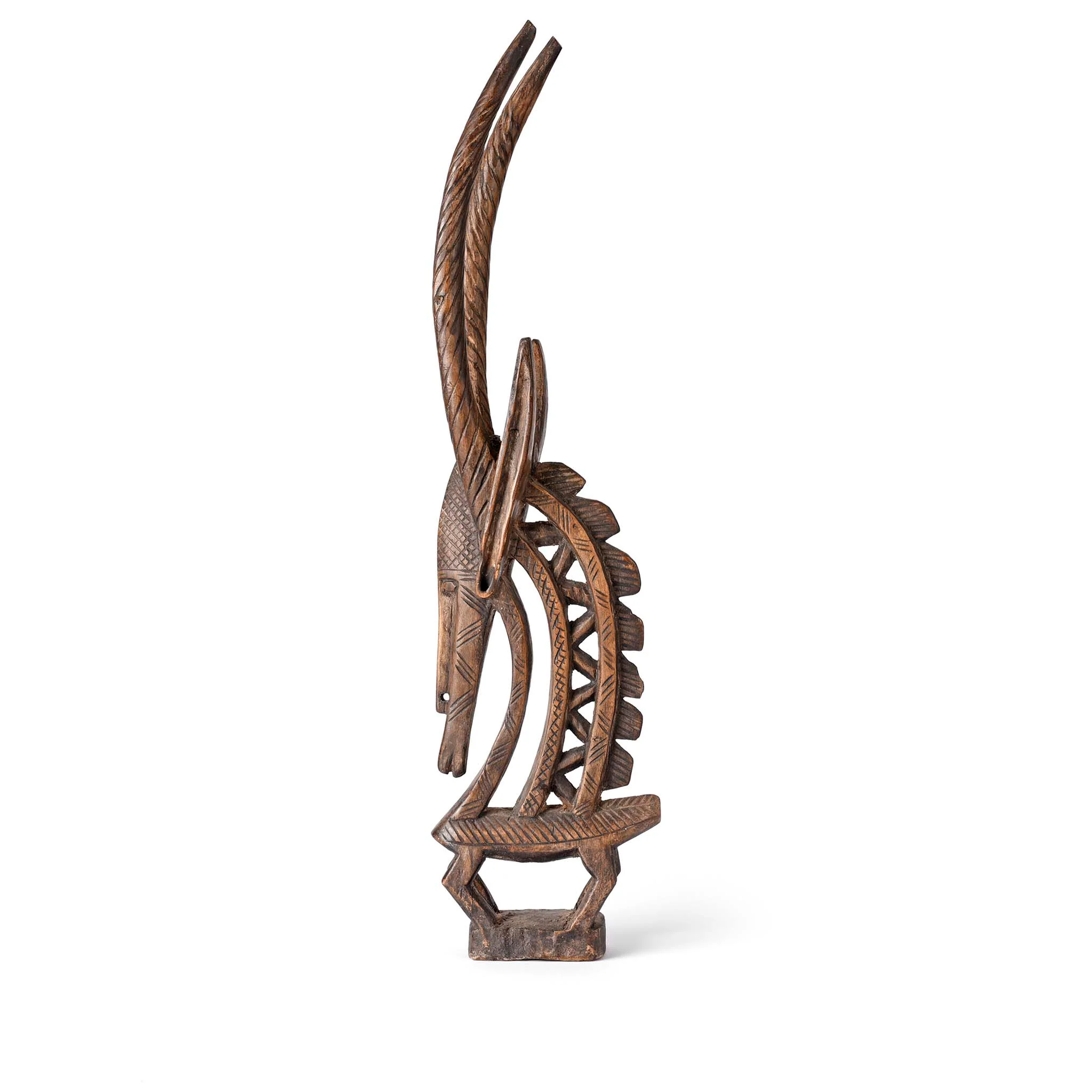
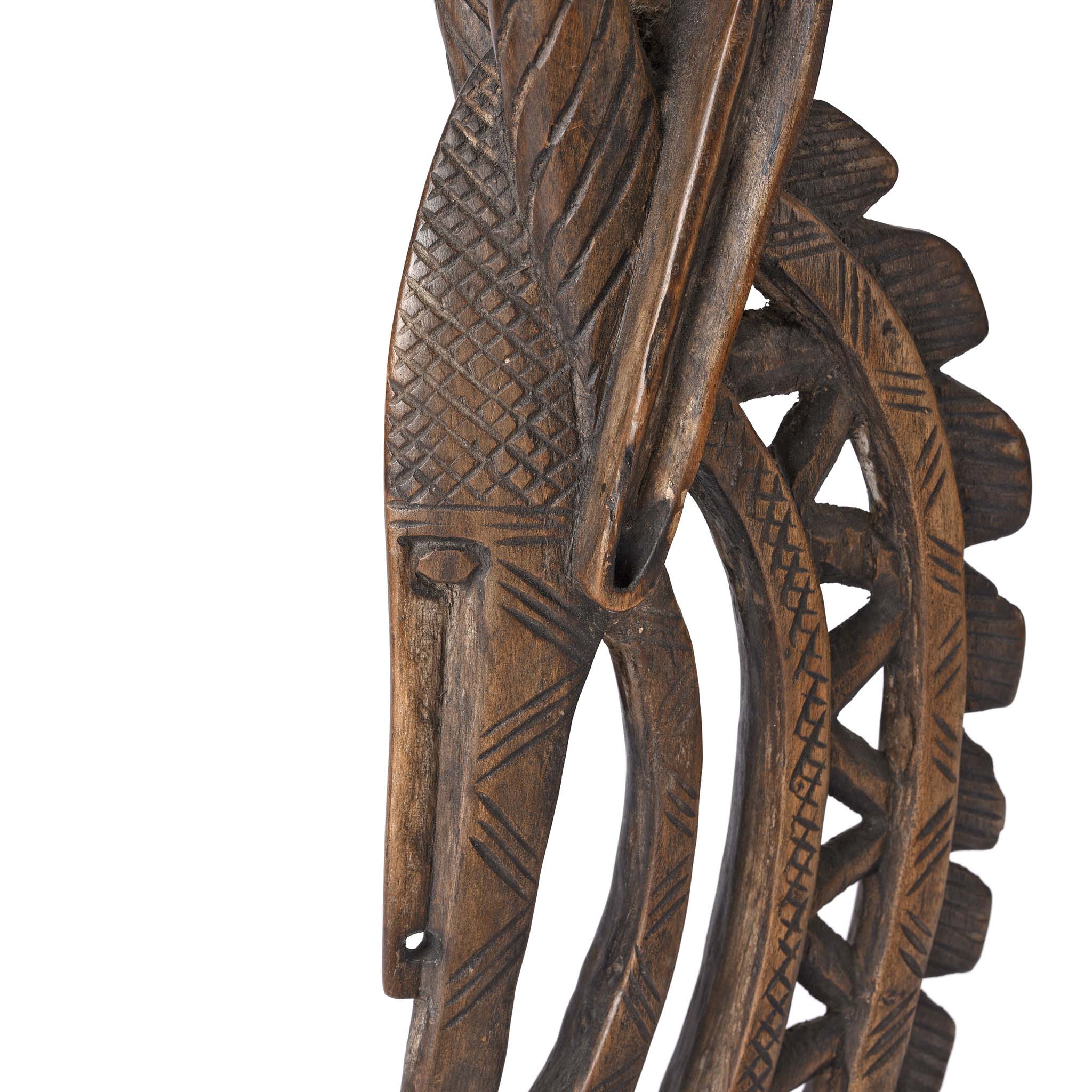
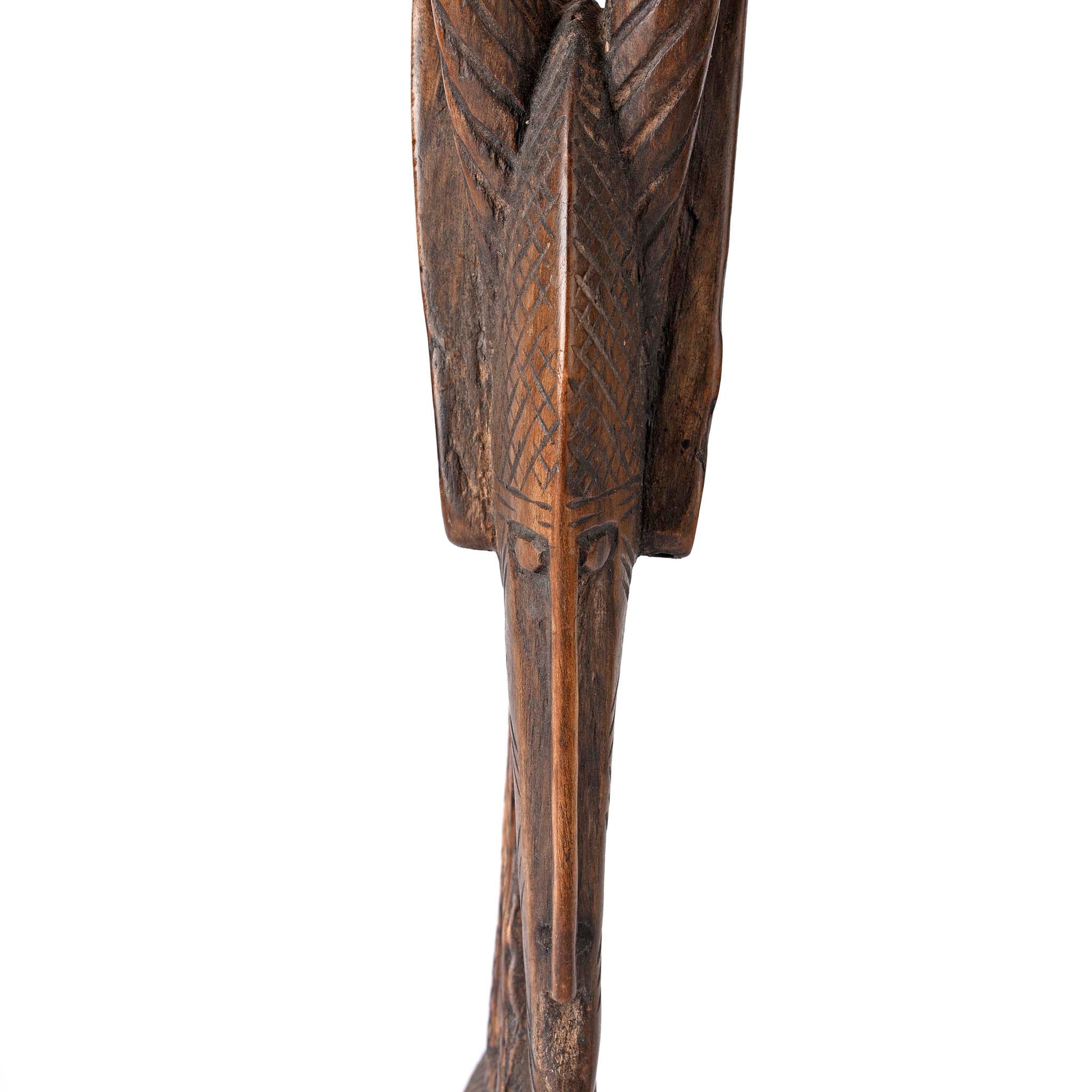
This beautifully carved headdress represents the Ci Wara, the male antelope mythical being of the Bambara (or Bamana) people of Mali. Ci Wara was half-mortal and half animal and it is the belief that it was Ci Wara who first taught humans to cultivate and farm the lands around them. As humanity became more wasteful, legend has it that Ci Wara buried himself in earth. In memory of him, Bambara carve these headdresses which are power objects called boli for Ci Wara to reside within. These headdresses were used in dancing ceremonies by the Bambara people to celebrate the efforts of their farmers. The headdress is strapped under the chin and dancers lean over and touch the horns to the ground to pass the spirit of Ci Wara into the soil to induce a rich harvest. Performances feature a pair of headdresses, male and female and each headdress demonstrates a beautiful juxtaposition balancing positive and negative space.
The Bambara are a tribe that belongs to the Mandé ethnic group and can be found in much of west Africa. They are famed for their masks and headdresses which often incorporate animals.
From Africa
16 x 7 x 60 cms (wxdxh)
UK Delivery Charge - except Highlands & Islands £15
More delivery options available at checkout
Original: $1,076.21
-65%$1,076.21
$376.67More Images
Bambara Ci Wara Antelope Headdress - Early 20thC
This beautifully carved headdress represents the Ci Wara, the male antelope mythical being of the Bambara (or Bamana) people of Mali. Ci Wara was half-mortal and half animal and it is the belief that it was Ci Wara who first taught humans to cultivate and farm the lands around them. As humanity became more wasteful, legend has it that Ci Wara buried himself in earth. In memory of him, Bambara carve these headdresses which are power objects called boli for Ci Wara to reside within. These headdresses were used in dancing ceremonies by the Bambara people to celebrate the efforts of their farmers. The headdress is strapped under the chin and dancers lean over and touch the horns to the ground to pass the spirit of Ci Wara into the soil to induce a rich harvest. Performances feature a pair of headdresses, male and female and each headdress demonstrates a beautiful juxtaposition balancing positive and negative space.
The Bambara are a tribe that belongs to the Mandé ethnic group and can be found in much of west Africa. They are famed for their masks and headdresses which often incorporate animals.
From Africa
16 x 7 x 60 cms (wxdxh)
UK Delivery Charge - except Highlands & Islands £15
More delivery options available at checkout
Product Information
Product Information
Shipping & Returns
Shipping & Returns
Description
This beautifully carved headdress represents the Ci Wara, the male antelope mythical being of the Bambara (or Bamana) people of Mali. Ci Wara was half-mortal and half animal and it is the belief that it was Ci Wara who first taught humans to cultivate and farm the lands around them. As humanity became more wasteful, legend has it that Ci Wara buried himself in earth. In memory of him, Bambara carve these headdresses which are power objects called boli for Ci Wara to reside within. These headdresses were used in dancing ceremonies by the Bambara people to celebrate the efforts of their farmers. The headdress is strapped under the chin and dancers lean over and touch the horns to the ground to pass the spirit of Ci Wara into the soil to induce a rich harvest. Performances feature a pair of headdresses, male and female and each headdress demonstrates a beautiful juxtaposition balancing positive and negative space.
The Bambara are a tribe that belongs to the Mandé ethnic group and can be found in much of west Africa. They are famed for their masks and headdresses which often incorporate animals.
From Africa
16 x 7 x 60 cms (wxdxh)
UK Delivery Charge - except Highlands & Islands £15
More delivery options available at checkout