Tibetan Leather Saddle Box - 17th Century
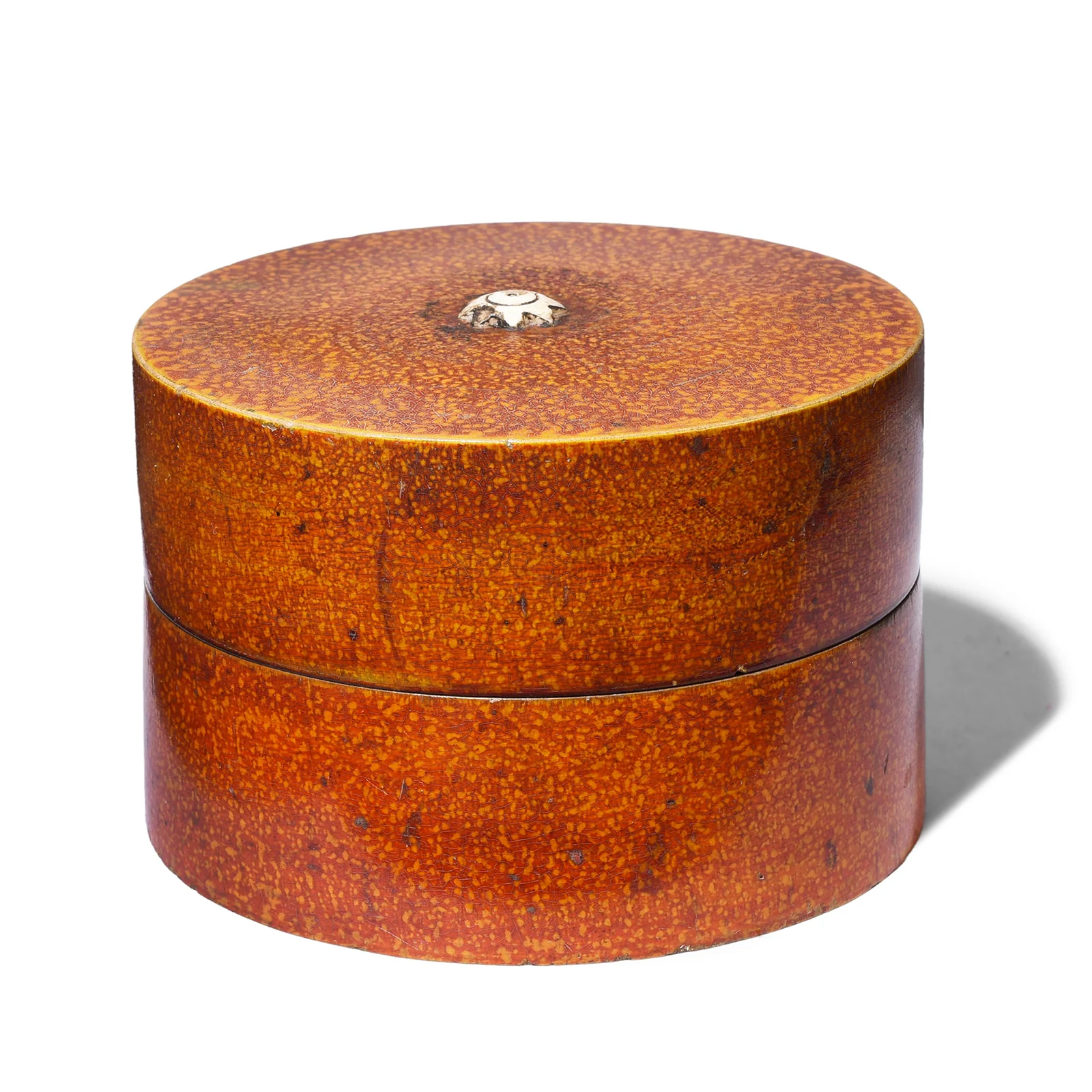
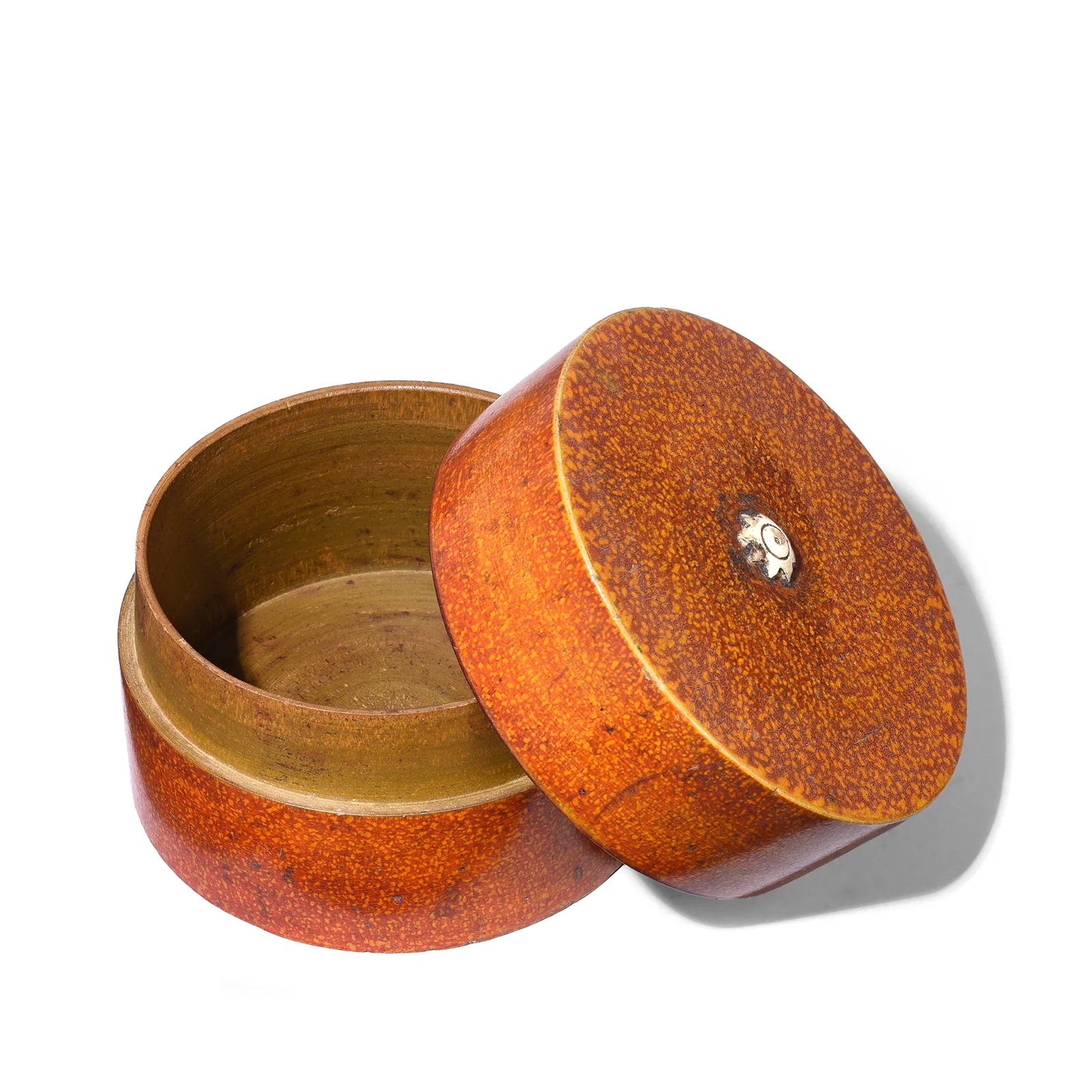
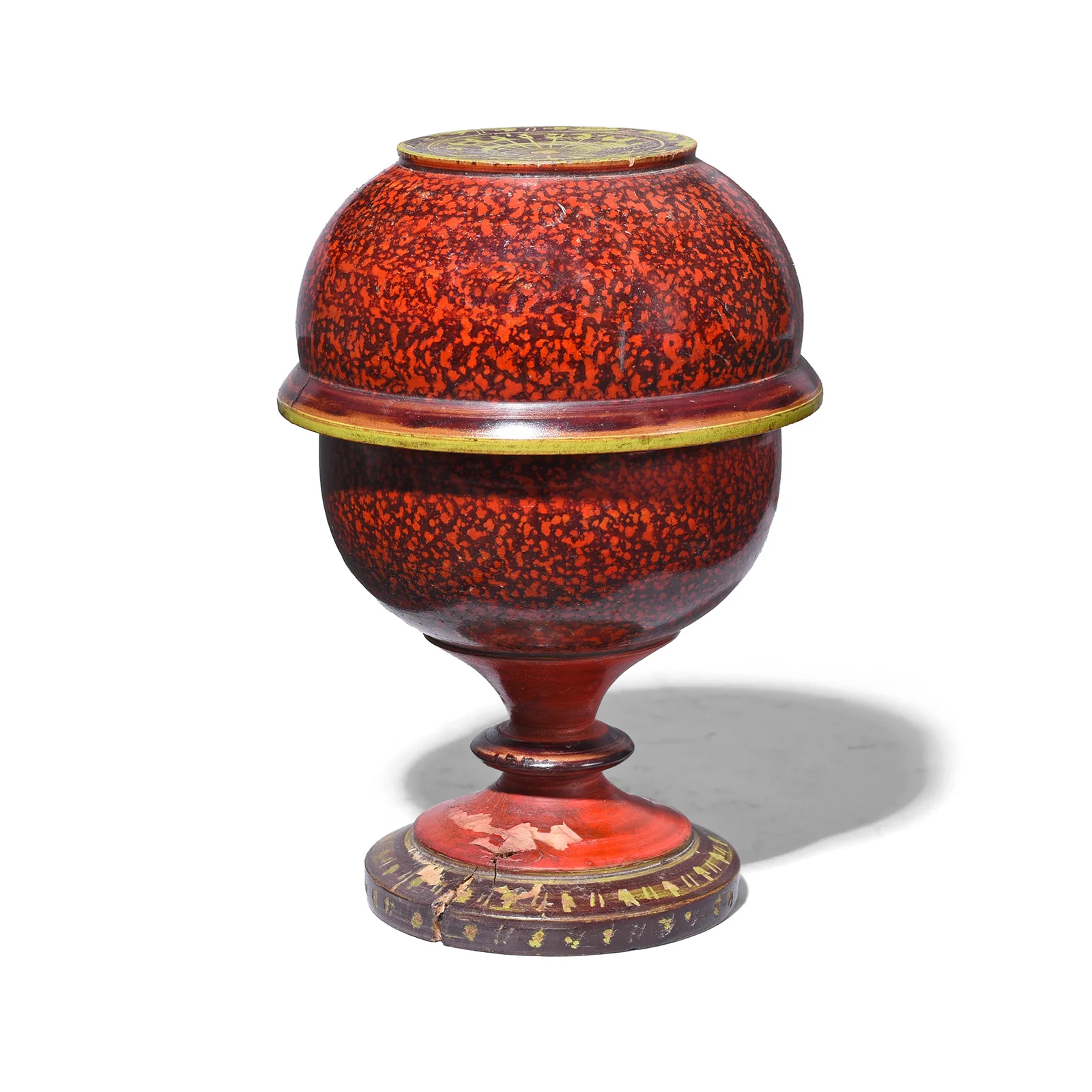
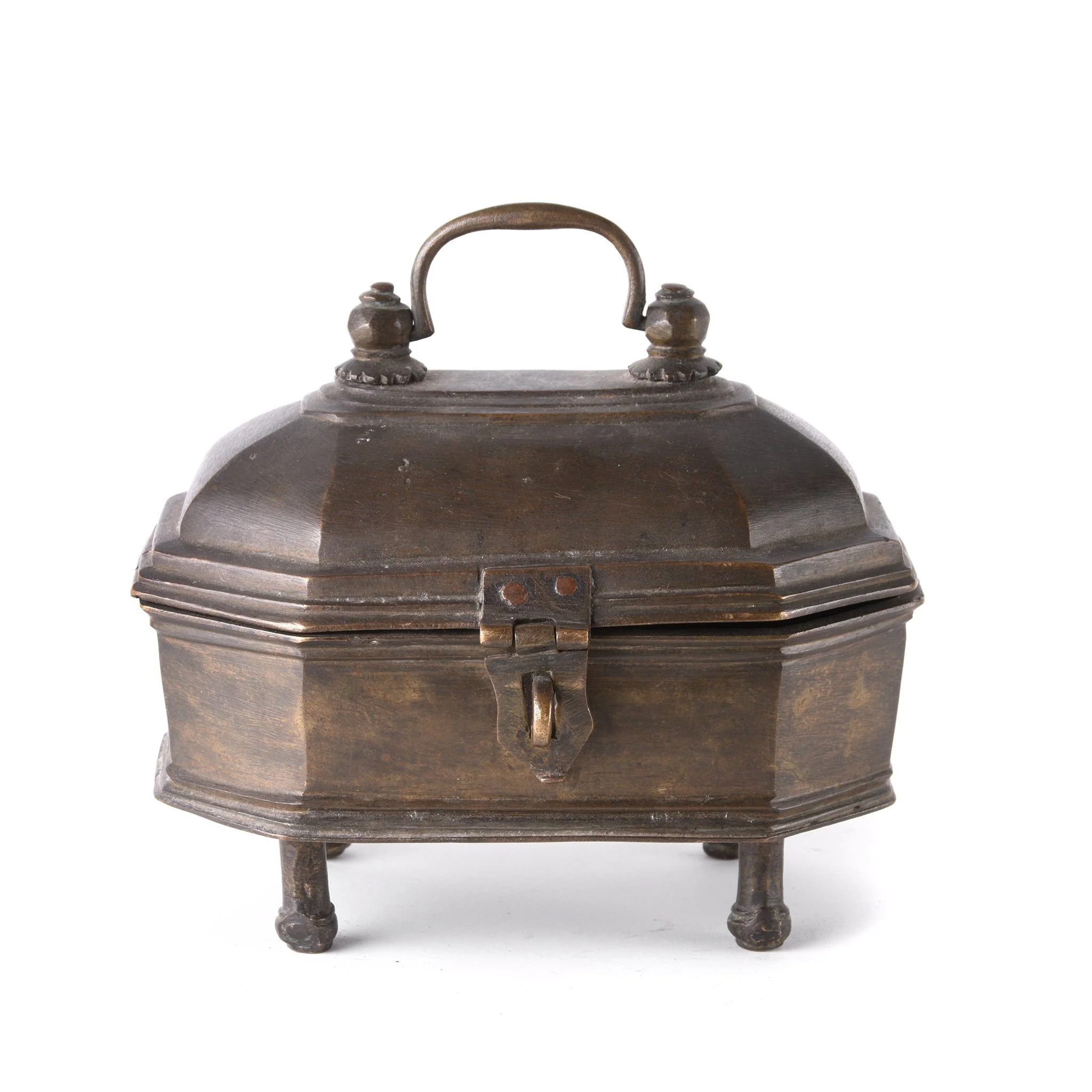
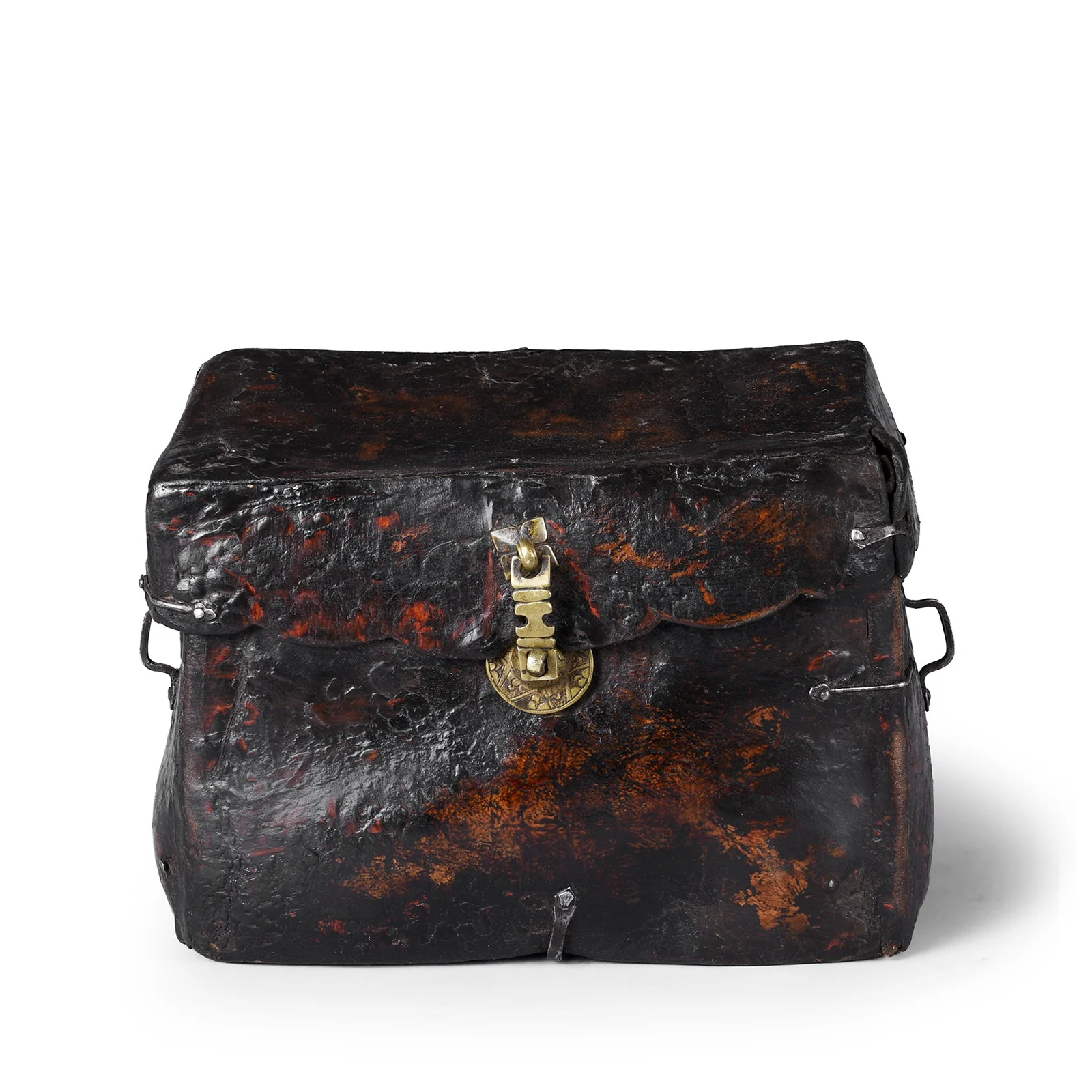
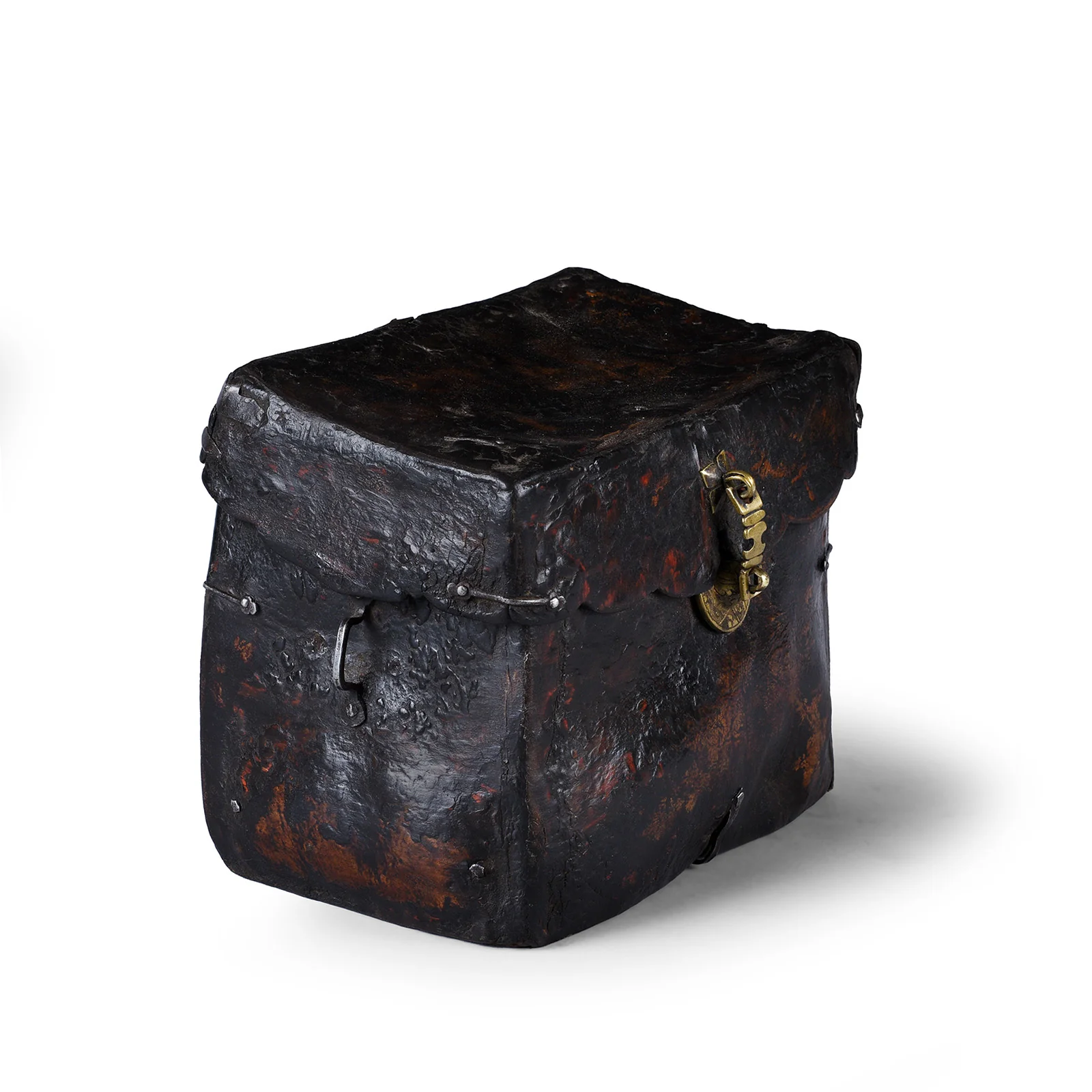
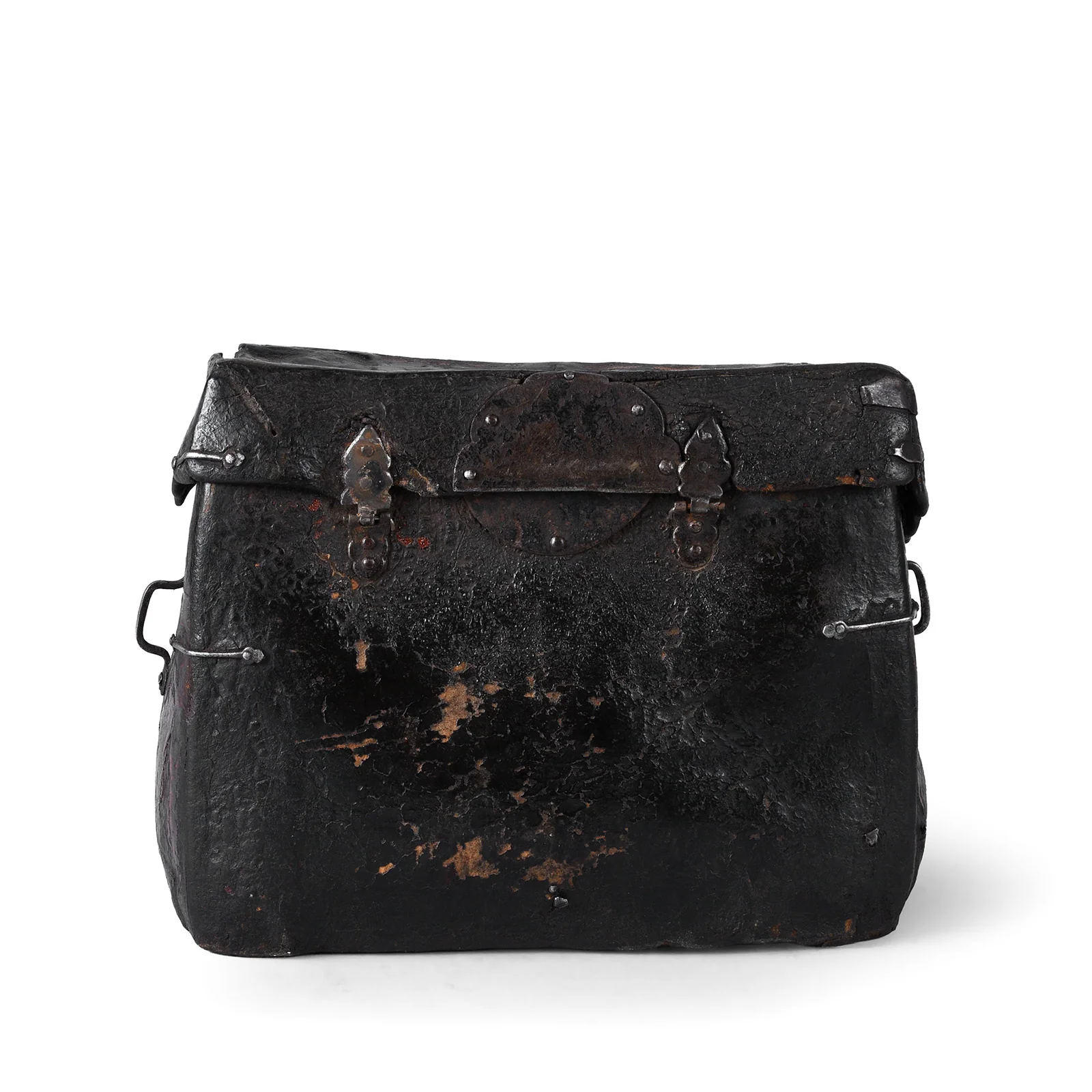
This finely patinated Tibetan saddle box is crafted from thick yak hide, hand-shaped into a compact container originally used during travel across the plateau. Made without an internal wooden frame, the heavy hide was moulded and hardened to create a resilient form suited to the needs of nomadic life. Its surface displays deep, mottled tones of red and dark brown that speak to centuries of handling and exposure.
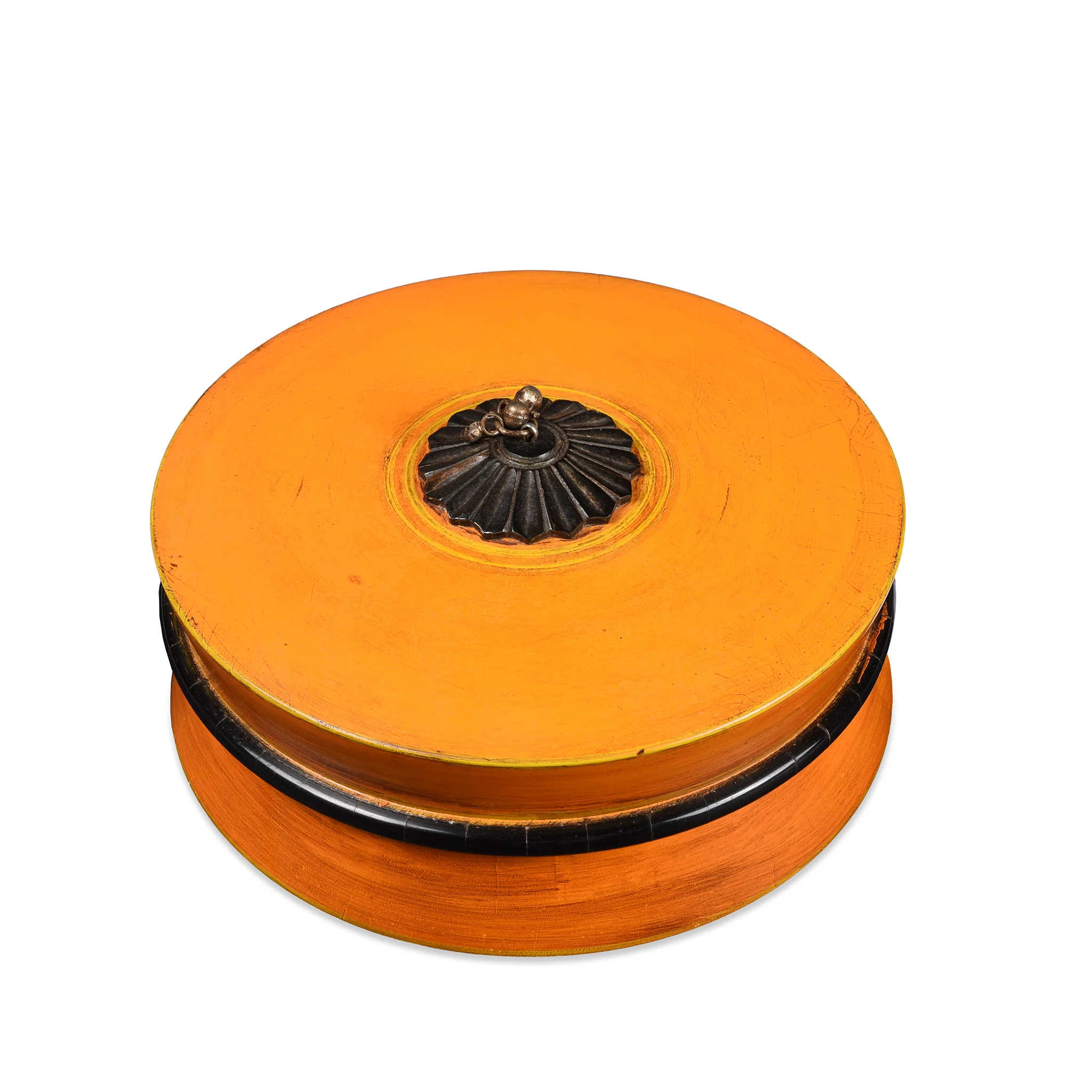
The scalloped lid edge, original brass script-form clasp and iron side loops reflect traditional Tibetan leatherworking practices. The unlined interior, stitched seams and textured patina underline its early construction, while its portable size points to its use as a personal travelling box carried on horseback.
- Origin: Tibet
- Date: 17th century
- Material: Heavy yak hide with brass clasp and iron fittings
- Construction: Hand-formed leather body with no internal wooden structure
- Condition: Deep patination, surface wear and historic repairs consistent with age
- Use: A travelling box traditionally attached to a saddle for carrying valuables
An evocative and very early example of Tibetan yak-hide leatherwork.
References:
- Buckley, Chris. Tibetan Furniture. Bangkok: Orchid Press, 2005, fig. 140.
- Kamansky, David - Wooden Wonders: Tibetan Furniture in Secular & Religious Life . Berkeley: Dharma Publishing, 2002, fig. 75.
Original: $862.59
-65%$862.59
$301.91More Images

Tibetan Leather Saddle Box - 17th Century
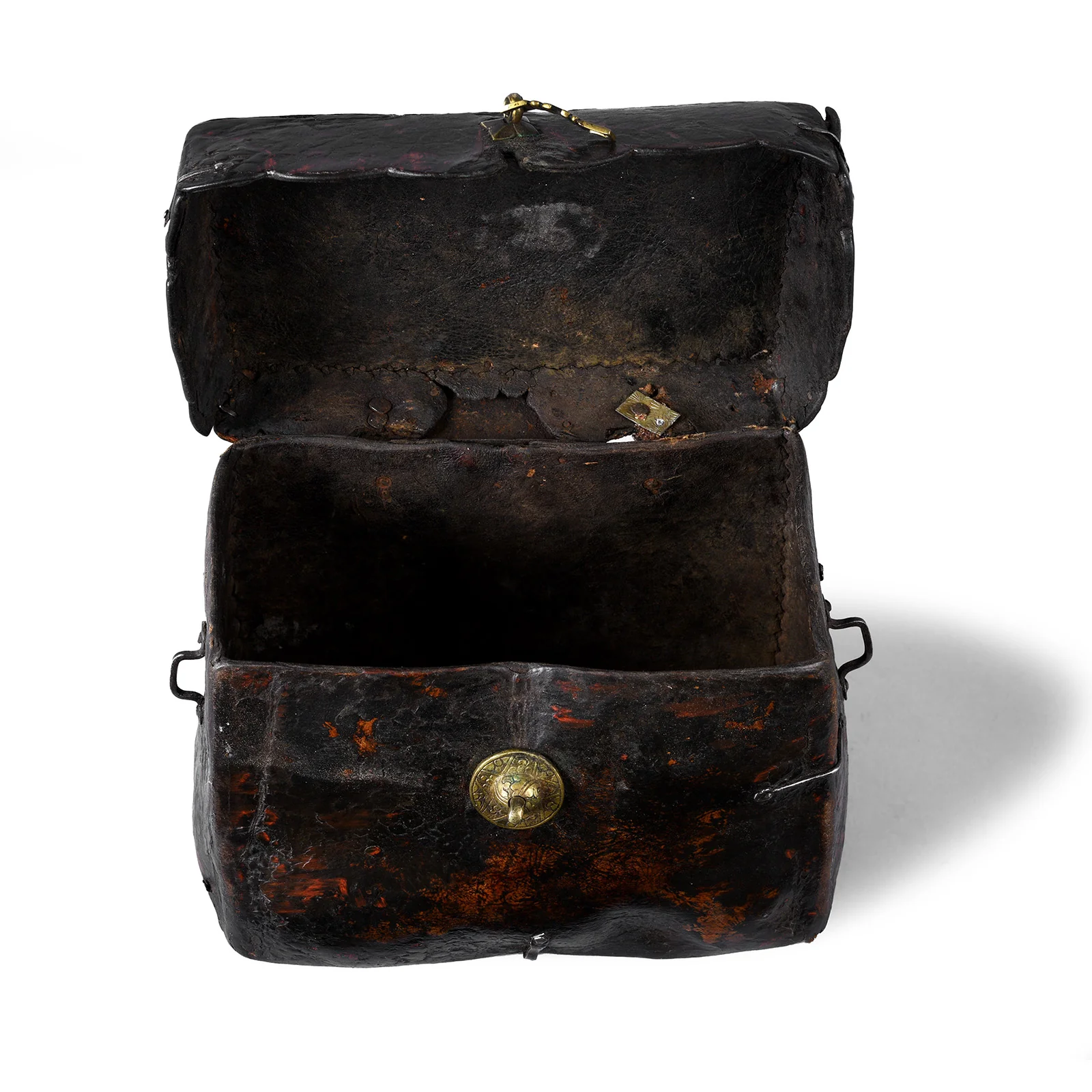
This finely patinated Tibetan saddle box is crafted from thick yak hide, hand-shaped into a compact container originally used during travel across the plateau. Made without an internal wooden frame, the heavy hide was moulded and hardened to create a resilient form suited to the needs of nomadic life. Its surface displays deep, mottled tones of red and dark brown that speak to centuries of handling and exposure.
The scalloped lid edge, original brass script-form clasp and iron side loops reflect traditional Tibetan leatherworking practices. The unlined interior, stitched seams and textured patina underline its early construction, while its portable size points to its use as a personal travelling box carried on horseback.
- Origin: Tibet
- Date: 17th century
- Material: Heavy yak hide with brass clasp and iron fittings
- Construction: Hand-formed leather body with no internal wooden structure
- Condition: Deep patination, surface wear and historic repairs consistent with age
- Use: A travelling box traditionally attached to a saddle for carrying valuables
An evocative and very early example of Tibetan yak-hide leatherwork.
References:
- Buckley, Chris. Tibetan Furniture. Bangkok: Orchid Press, 2005, fig. 140.
- Kamansky, David - Wooden Wonders: Tibetan Furniture in Secular & Religious Life . Berkeley: Dharma Publishing, 2002, fig. 75.
Product Information
Product Information
Shipping & Returns
Shipping & Returns
Description
This finely patinated Tibetan saddle box is crafted from thick yak hide, hand-shaped into a compact container originally used during travel across the plateau. Made without an internal wooden frame, the heavy hide was moulded and hardened to create a resilient form suited to the needs of nomadic life. Its surface displays deep, mottled tones of red and dark brown that speak to centuries of handling and exposure.
The scalloped lid edge, original brass script-form clasp and iron side loops reflect traditional Tibetan leatherworking practices. The unlined interior, stitched seams and textured patina underline its early construction, while its portable size points to its use as a personal travelling box carried on horseback.
- Origin: Tibet
- Date: 17th century
- Material: Heavy yak hide with brass clasp and iron fittings
- Construction: Hand-formed leather body with no internal wooden structure
- Condition: Deep patination, surface wear and historic repairs consistent with age
- Use: A travelling box traditionally attached to a saddle for carrying valuables
An evocative and very early example of Tibetan yak-hide leatherwork.
References:
- Buckley, Chris. Tibetan Furniture. Bangkok: Orchid Press, 2005, fig. 140.
- Kamansky, David - Wooden Wonders: Tibetan Furniture in Secular & Religious Life . Berkeley: Dharma Publishing, 2002, fig. 75.