Japanese Painting of a Egret by Akaishi Mitebokashi - Circa 1900
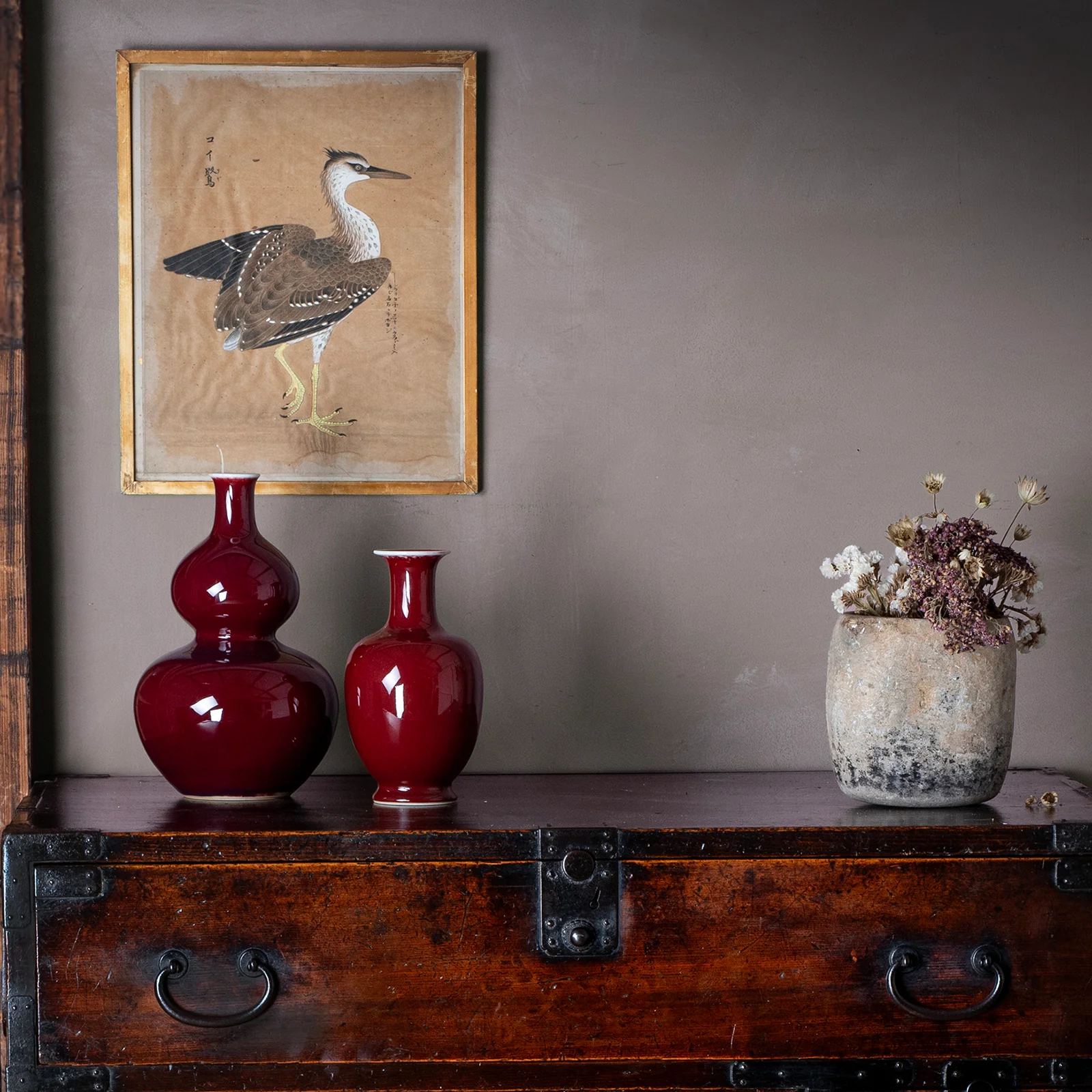
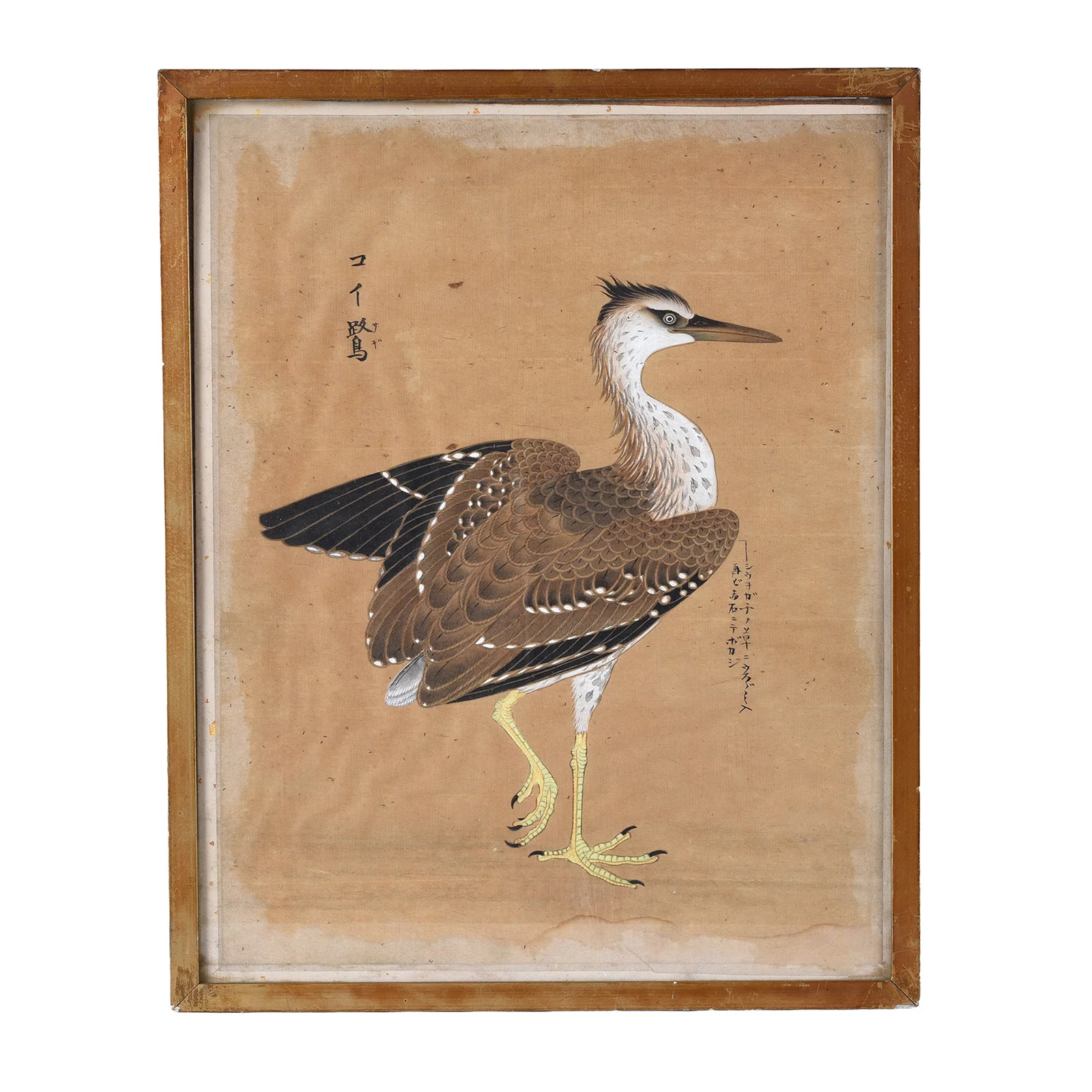
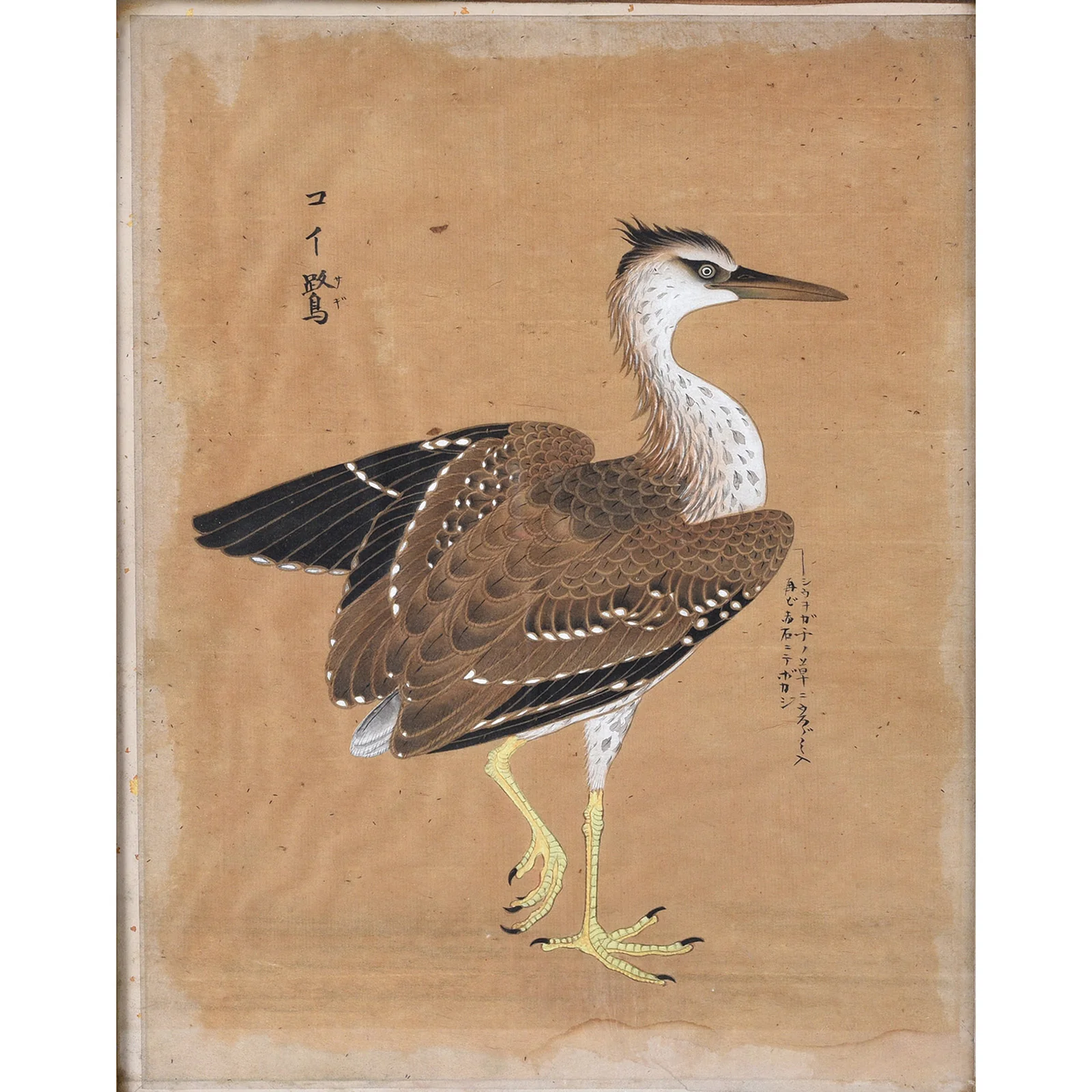
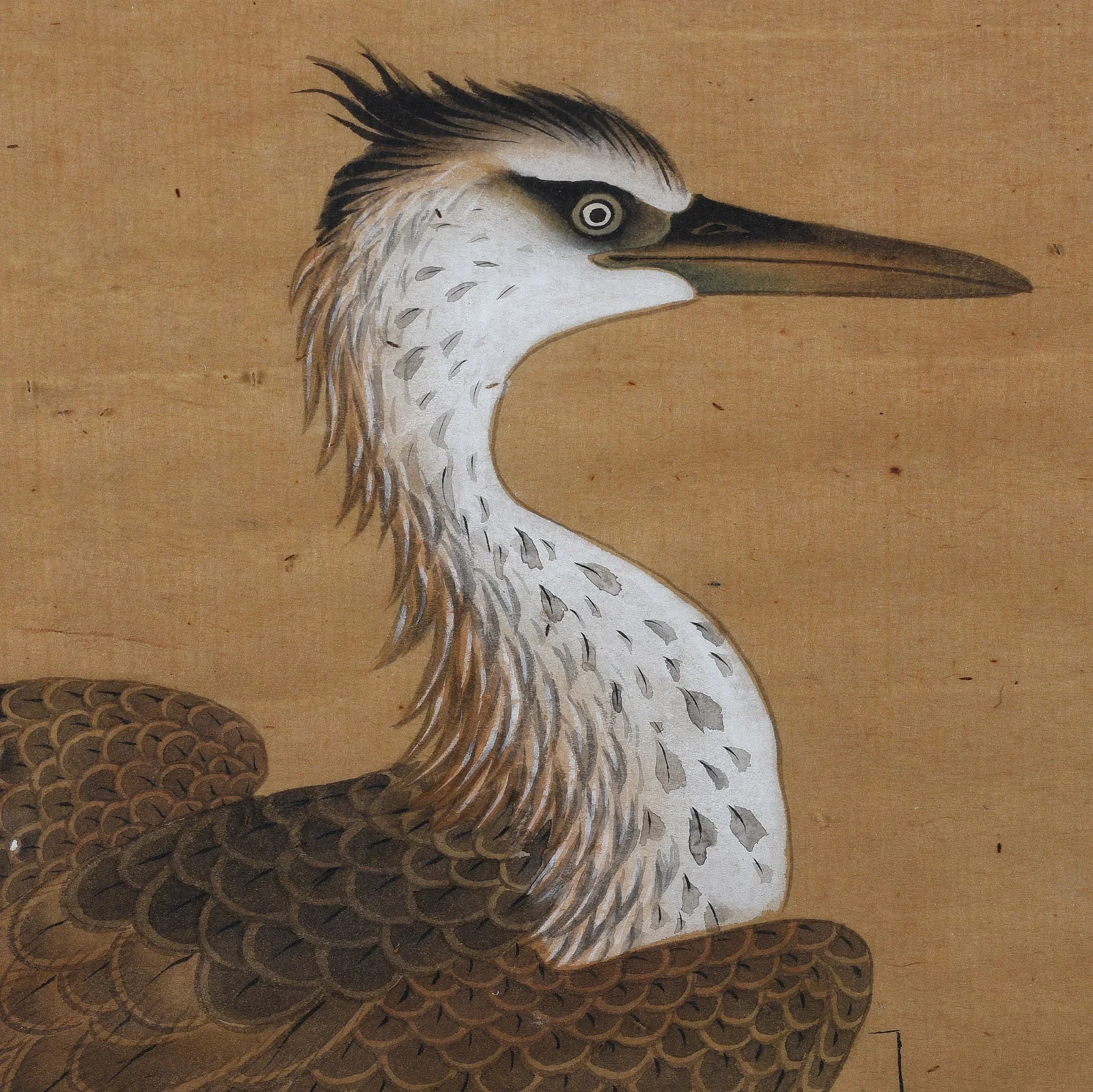
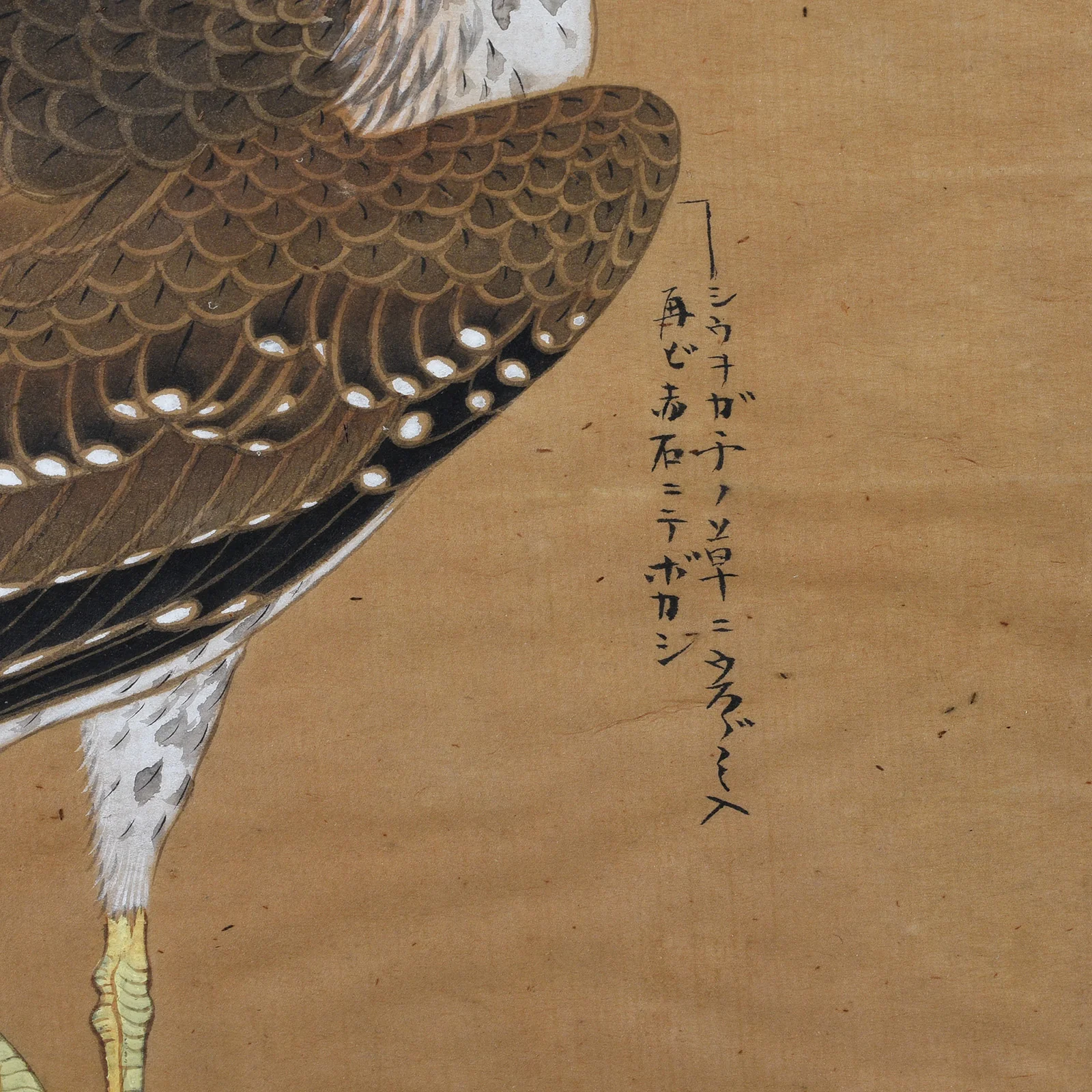
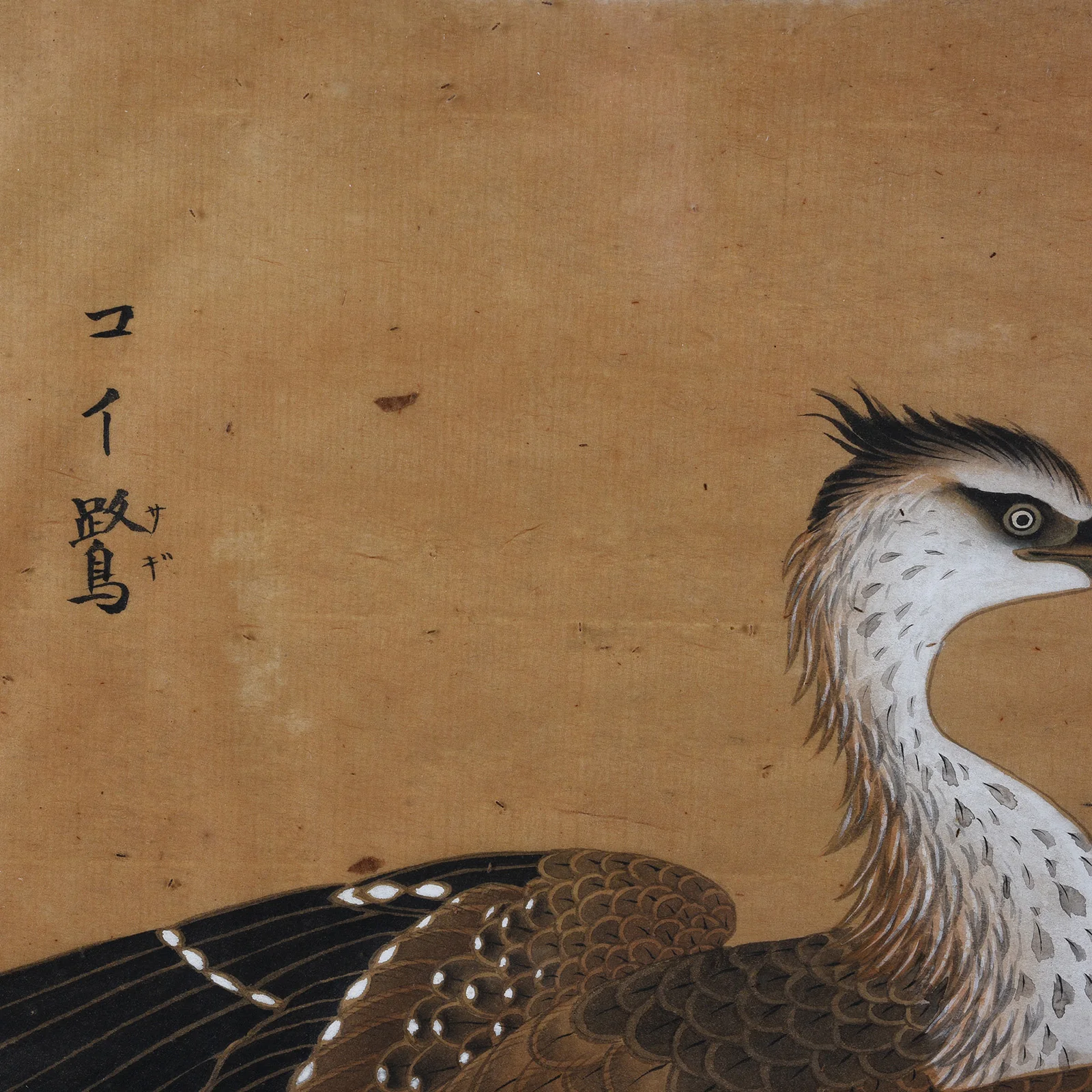
This elegant Japanese watercolour depicts a standing egret rendered with the refined naturalism characteristic of late Meiji–era painting. Attributed to Akaishi Mitebokashi, the work captures the bird in a poised, alert stance, its delicately layered feathers painted with remarkable precision and tonal variation. The artist’s fine brushwork emphasises the egret’s striking plumage, from the speckled chest to the soft gradation of the wing feathers, while the bright yellow legs and sharp beak add contrast against the warm, aged paper ground.
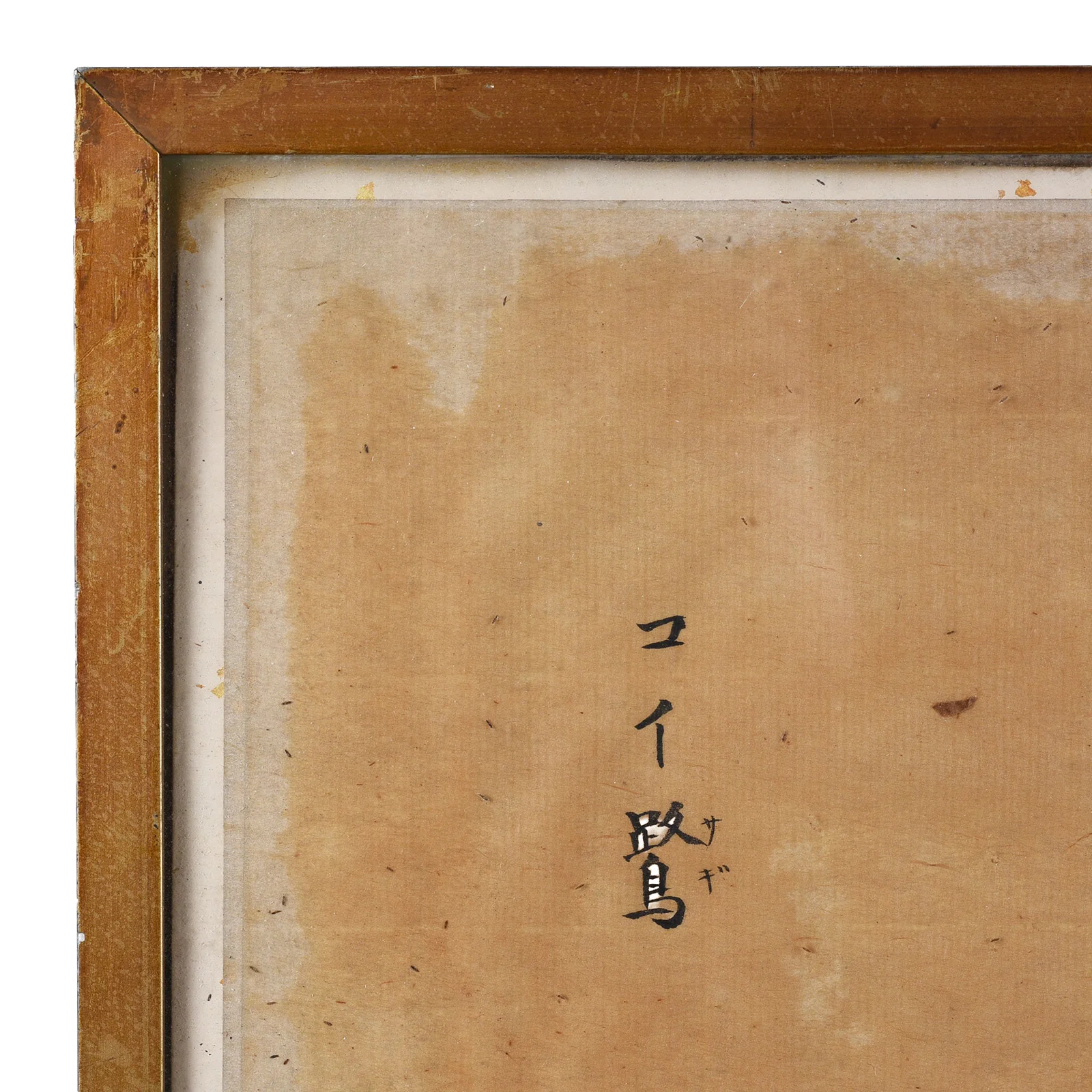
Inscriptional details appear alongside the bird, typical of natural history studies of the period, which sought to balance aesthetic grace with observational accuracy. The painting is presented in its original wooden frame, which retains a soft patina consistent with its age. This is a serene and beautifully detailed work, ideal for collectors of Japanese art or lovers of ornithological studies.
- Origin: Japan
- Artist: Akaishi Mitebokashi
- Date: Circa 1900
- Materials: Ink and watercolour on paper; original wooden frame
- Features: Finely painted egret; detailed feather work; inscriptional notes; warm aged paper
- Condition: Age-related toning, light marks, and wear to frame consistent with age
- Dimensions: W32 x D1 x H39.5 cm
- Dimensions Unframed: W28 x H36.5 cm
Original: $918.02
-65%$918.02
$321.31More Images
Japanese Painting of a Egret by Akaishi Mitebokashi - Circa 1900
This elegant Japanese watercolour depicts a standing egret rendered with the refined naturalism characteristic of late Meiji–era painting. Attributed to Akaishi Mitebokashi, the work captures the bird in a poised, alert stance, its delicately layered feathers painted with remarkable precision and tonal variation. The artist’s fine brushwork emphasises the egret’s striking plumage, from the speckled chest to the soft gradation of the wing feathers, while the bright yellow legs and sharp beak add contrast against the warm, aged paper ground.
Inscriptional details appear alongside the bird, typical of natural history studies of the period, which sought to balance aesthetic grace with observational accuracy. The painting is presented in its original wooden frame, which retains a soft patina consistent with its age. This is a serene and beautifully detailed work, ideal for collectors of Japanese art or lovers of ornithological studies.
- Origin: Japan
- Artist: Akaishi Mitebokashi
- Date: Circa 1900
- Materials: Ink and watercolour on paper; original wooden frame
- Features: Finely painted egret; detailed feather work; inscriptional notes; warm aged paper
- Condition: Age-related toning, light marks, and wear to frame consistent with age
- Dimensions: W32 x D1 x H39.5 cm
- Dimensions Unframed: W28 x H36.5 cm
Product Information
Product Information
Shipping & Returns
Shipping & Returns
Description
This elegant Japanese watercolour depicts a standing egret rendered with the refined naturalism characteristic of late Meiji–era painting. Attributed to Akaishi Mitebokashi, the work captures the bird in a poised, alert stance, its delicately layered feathers painted with remarkable precision and tonal variation. The artist’s fine brushwork emphasises the egret’s striking plumage, from the speckled chest to the soft gradation of the wing feathers, while the bright yellow legs and sharp beak add contrast against the warm, aged paper ground.
Inscriptional details appear alongside the bird, typical of natural history studies of the period, which sought to balance aesthetic grace with observational accuracy. The painting is presented in its original wooden frame, which retains a soft patina consistent with its age. This is a serene and beautifully detailed work, ideal for collectors of Japanese art or lovers of ornithological studies.
- Origin: Japan
- Artist: Akaishi Mitebokashi
- Date: Circa 1900
- Materials: Ink and watercolour on paper; original wooden frame
- Features: Finely painted egret; detailed feather work; inscriptional notes; warm aged paper
- Condition: Age-related toning, light marks, and wear to frame consistent with age
- Dimensions: W32 x D1 x H39.5 cm
- Dimensions Unframed: W28 x H36.5 cm