Japanese Choba Dansu - Late Meiji Era
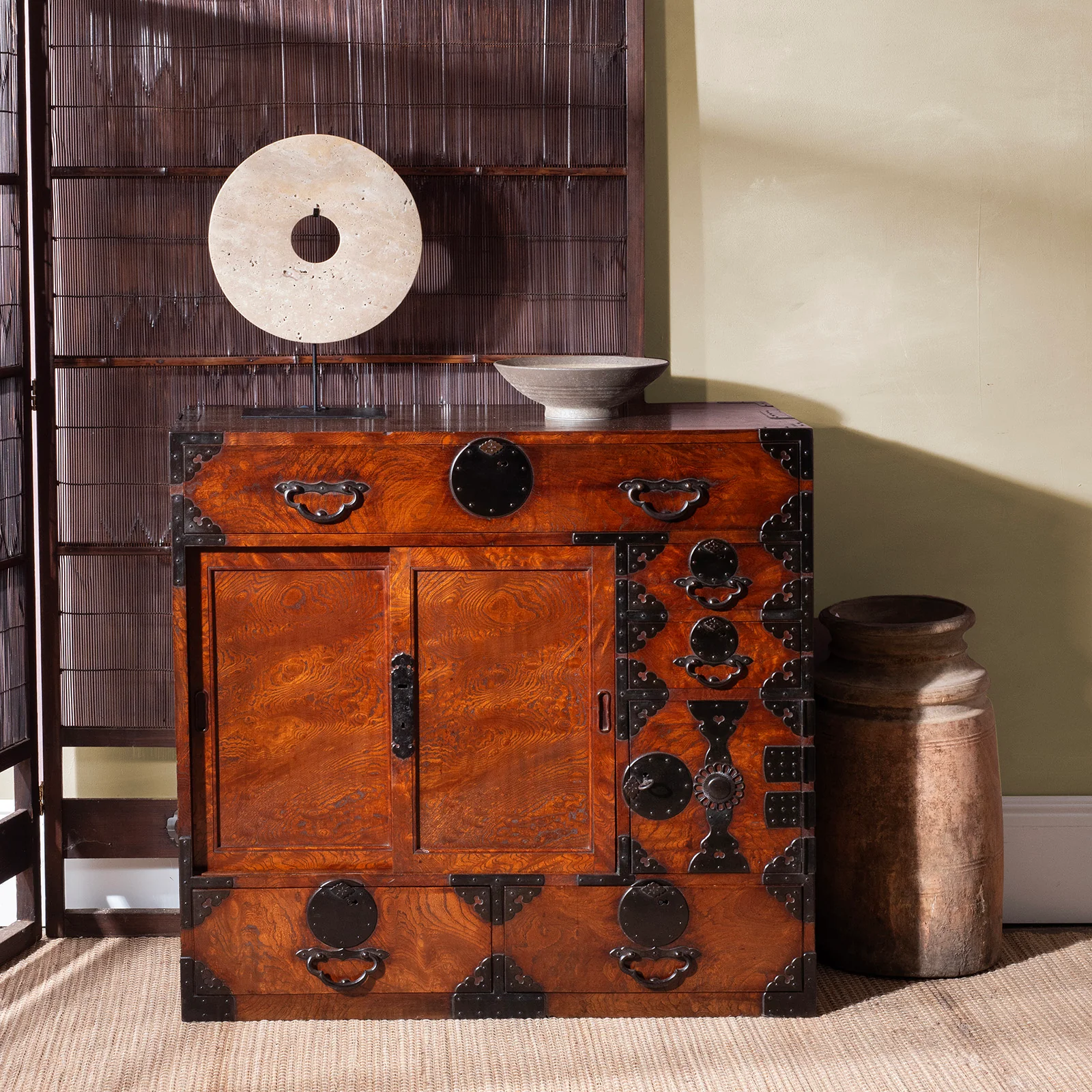
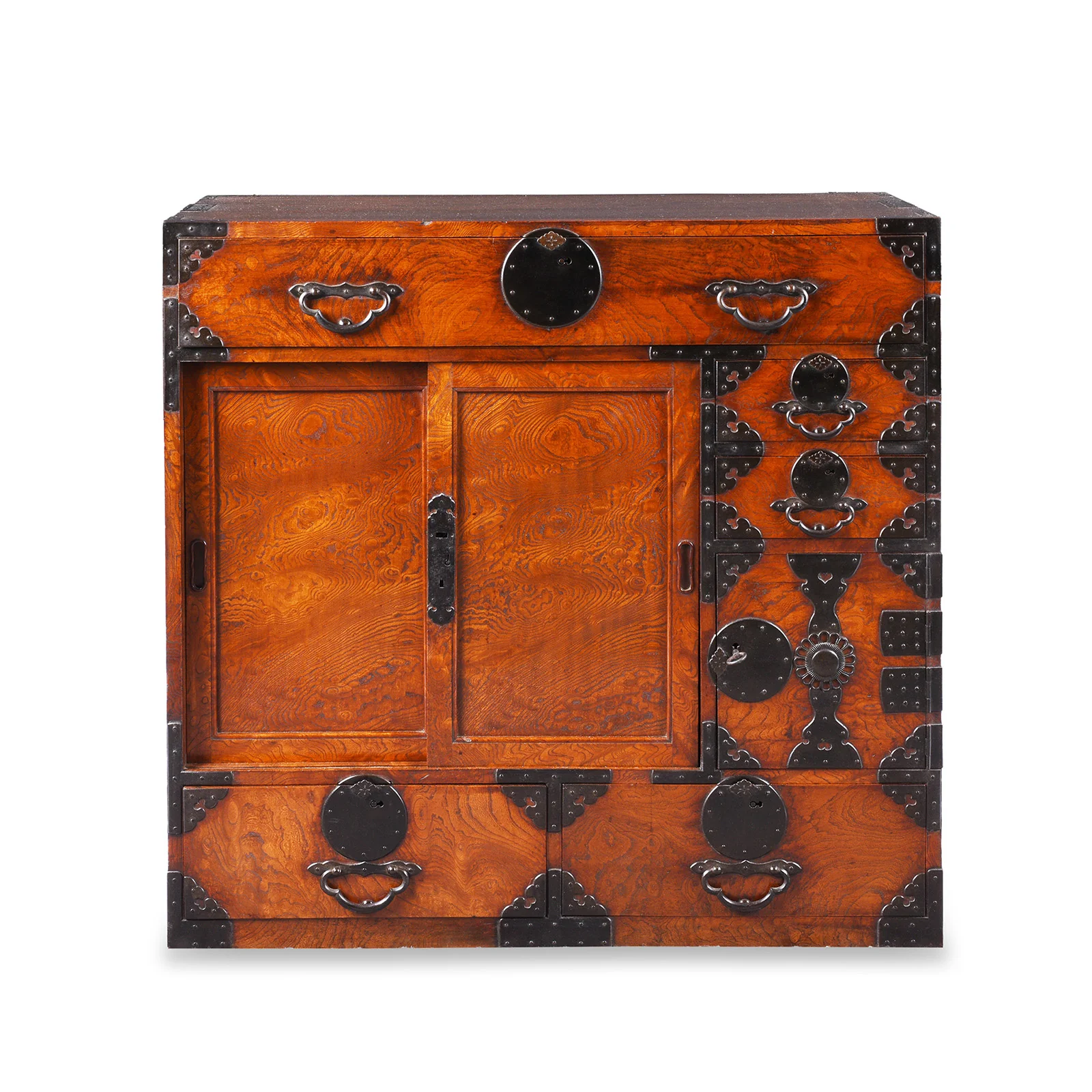
This Japanese tansu chest is a choba dansu (or cho dansu) - merchant chest dates from the late Meiji era (1868 - 1912). Cho dansu were used by merchants in shops for storing ledgers, money, and seals. The style of this tansu chest suggests it came from further north, nearer to Sakata.
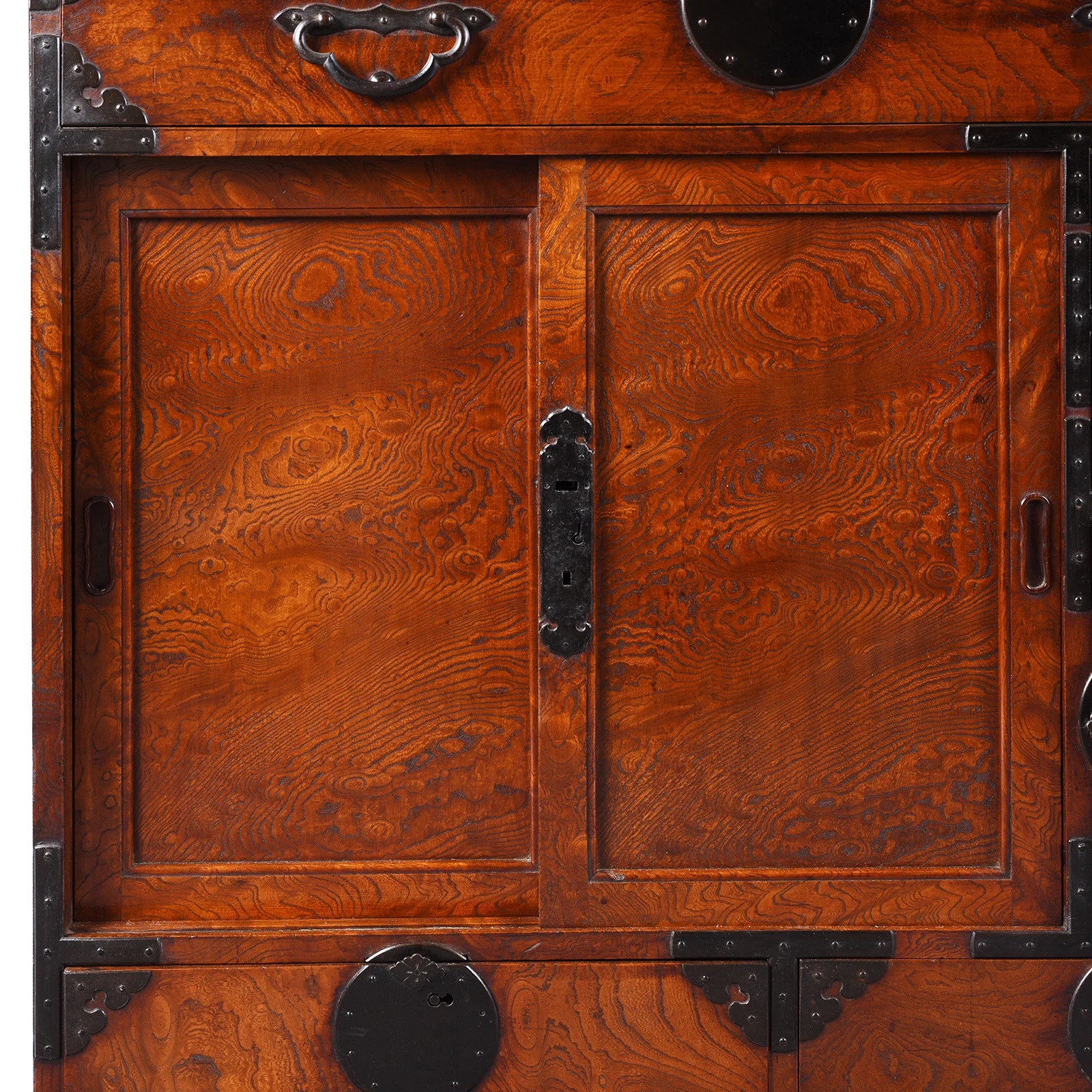
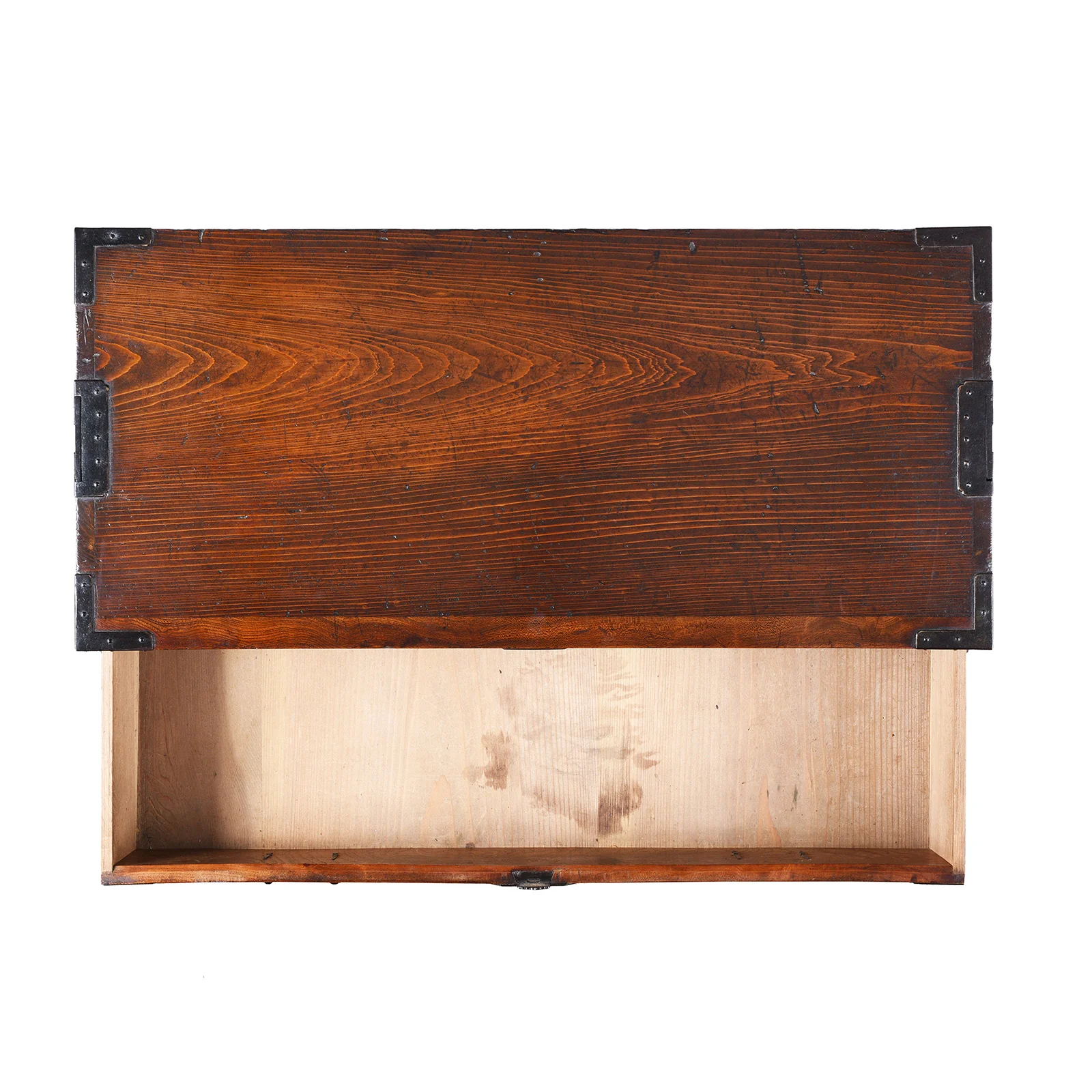
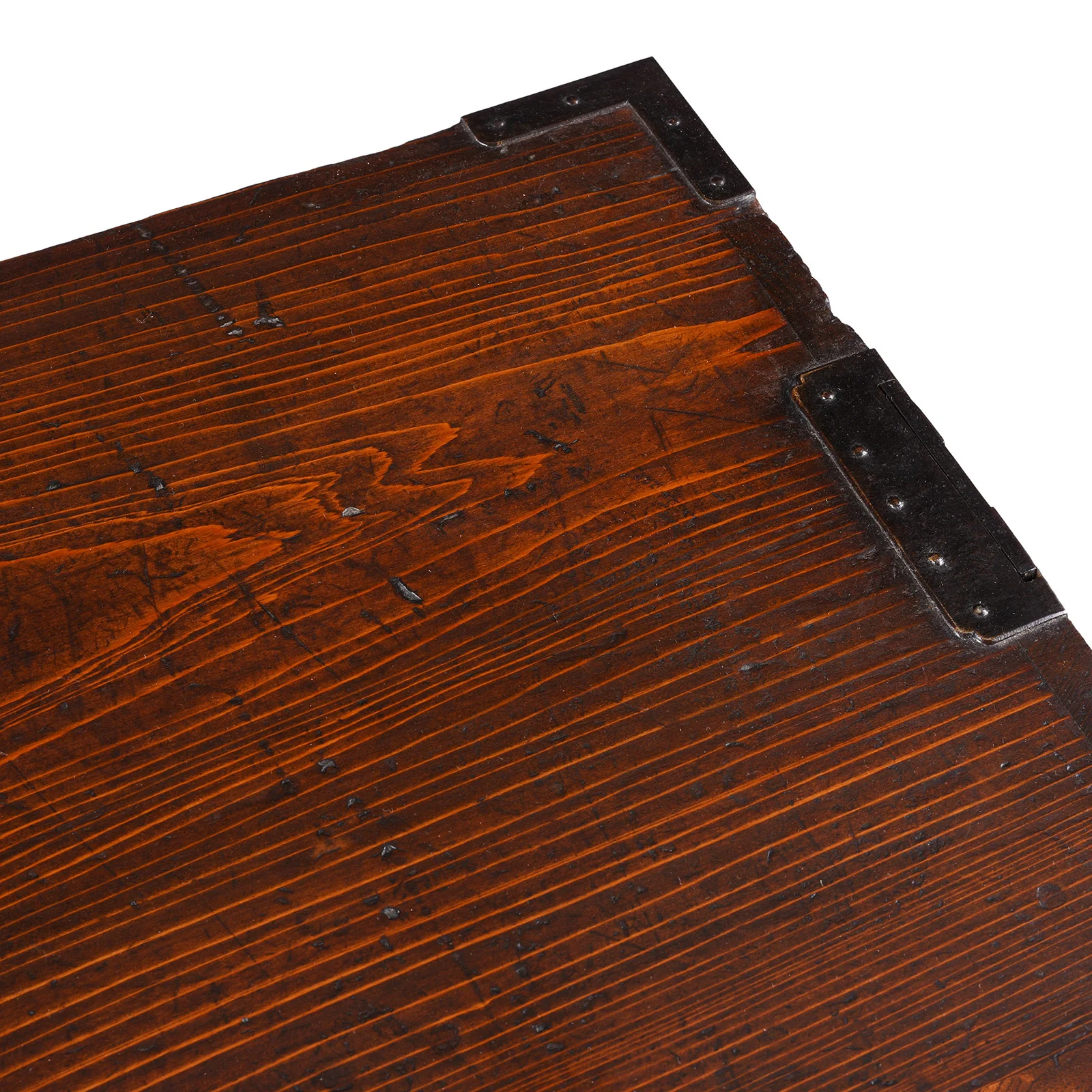
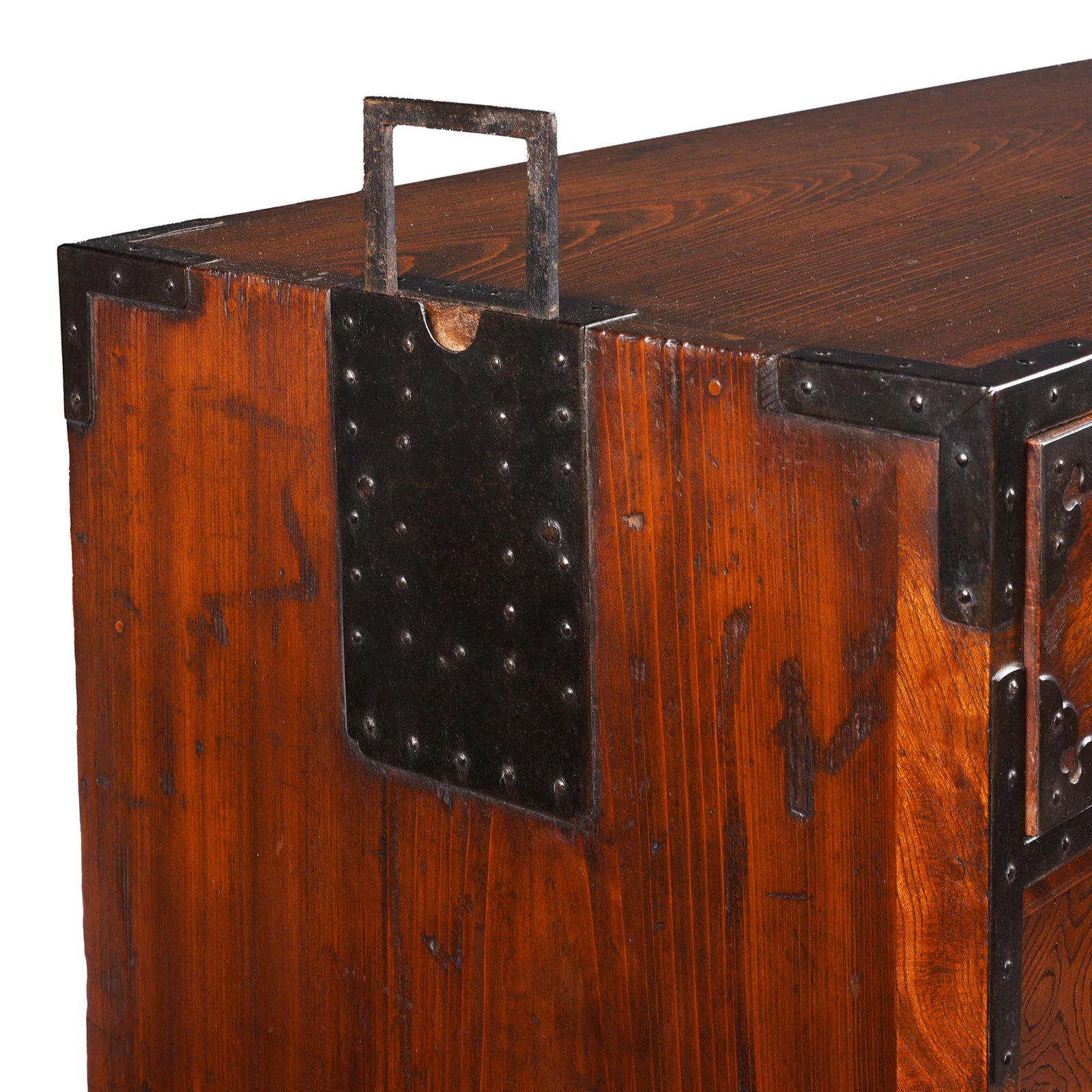
This piece has one long drawer at the top and six additional smaller drawers (two behind a lockable box). Two sliding doors conceal a large interior space with a single shelf. Two extendable carry handles make moving this piece easy. Crafted from solid keyaki (zelkova / red elm) with forged iron hardware. The beautifully grained wood has developed a wonderful patina over the years.
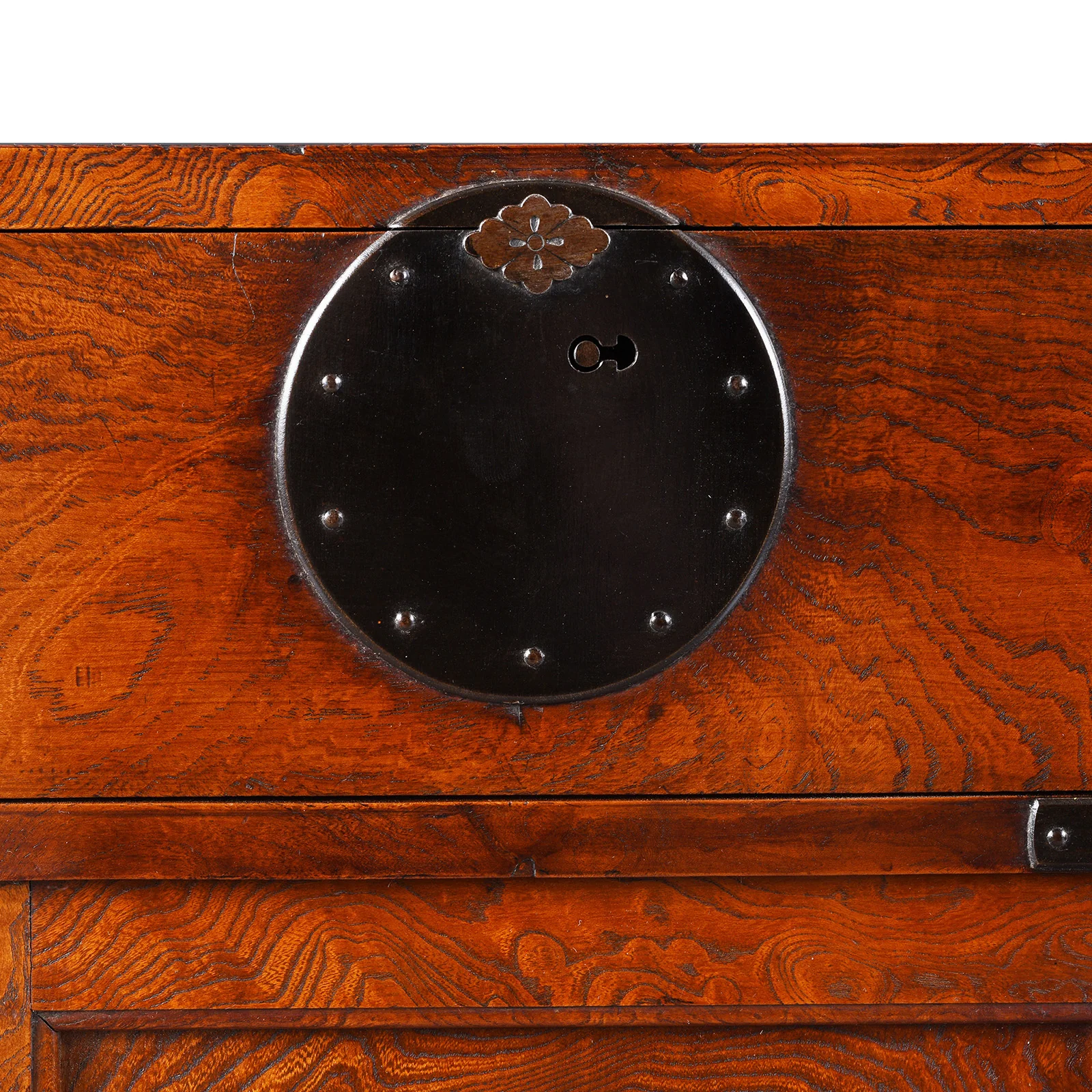
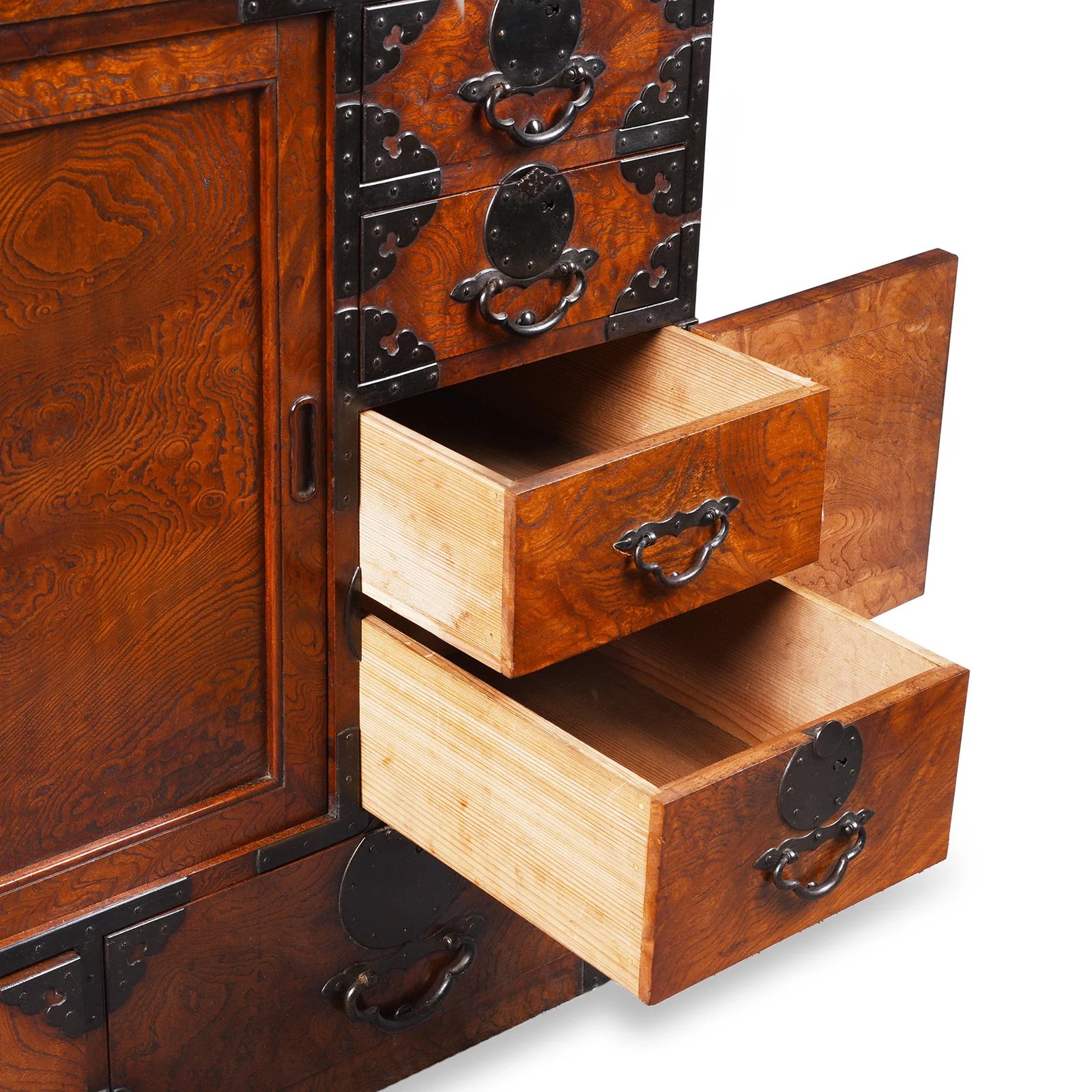
The iron handles are forged melon vine (mokku) shape. The detailed ironware is all black with an depicting a kamon (clan symbol). The corner hardware is in the shape of a tea seedpod hardware found on Meiji era Yonezawa chests.
Condition:
It should be noted that as is often the case with these red elm tansu chests, the drawer fronts have some bowing which has been partially mitigated in our workshop.
References:
For a similar piece and further information on choba dansu, see Japanese Cabinetry: The Art & Craft of Tansu by David Jackson & Dane Owen.
Original: $3,430.07
-65%$3,430.07
$1,200.52More Images



Japanese Choba Dansu - Late Meiji Era
This Japanese tansu chest is a choba dansu (or cho dansu) - merchant chest dates from the late Meiji era (1868 - 1912). Cho dansu were used by merchants in shops for storing ledgers, money, and seals. The style of this tansu chest suggests it came from further north, nearer to Sakata.
This piece has one long drawer at the top and six additional smaller drawers (two behind a lockable box). Two sliding doors conceal a large interior space with a single shelf. Two extendable carry handles make moving this piece easy. Crafted from solid keyaki (zelkova / red elm) with forged iron hardware. The beautifully grained wood has developed a wonderful patina over the years.
The iron handles are forged melon vine (mokku) shape. The detailed ironware is all black with an depicting a kamon (clan symbol). The corner hardware is in the shape of a tea seedpod hardware found on Meiji era Yonezawa chests.
Condition:
It should be noted that as is often the case with these red elm tansu chests, the drawer fronts have some bowing which has been partially mitigated in our workshop.
References:
For a similar piece and further information on choba dansu, see Japanese Cabinetry: The Art & Craft of Tansu by David Jackson & Dane Owen.
Product Information
Product Information
Shipping & Returns
Shipping & Returns
Description
This Japanese tansu chest is a choba dansu (or cho dansu) - merchant chest dates from the late Meiji era (1868 - 1912). Cho dansu were used by merchants in shops for storing ledgers, money, and seals. The style of this tansu chest suggests it came from further north, nearer to Sakata.
This piece has one long drawer at the top and six additional smaller drawers (two behind a lockable box). Two sliding doors conceal a large interior space with a single shelf. Two extendable carry handles make moving this piece easy. Crafted from solid keyaki (zelkova / red elm) with forged iron hardware. The beautifully grained wood has developed a wonderful patina over the years.
The iron handles are forged melon vine (mokku) shape. The detailed ironware is all black with an depicting a kamon (clan symbol). The corner hardware is in the shape of a tea seedpod hardware found on Meiji era Yonezawa chests.
Condition:
It should be noted that as is often the case with these red elm tansu chests, the drawer fronts have some bowing which has been partially mitigated in our workshop.
References:
For a similar piece and further information on choba dansu, see Japanese Cabinetry: The Art & Craft of Tansu by David Jackson & Dane Owen.