Tribal Carved Panel From Kullu - 19th Century
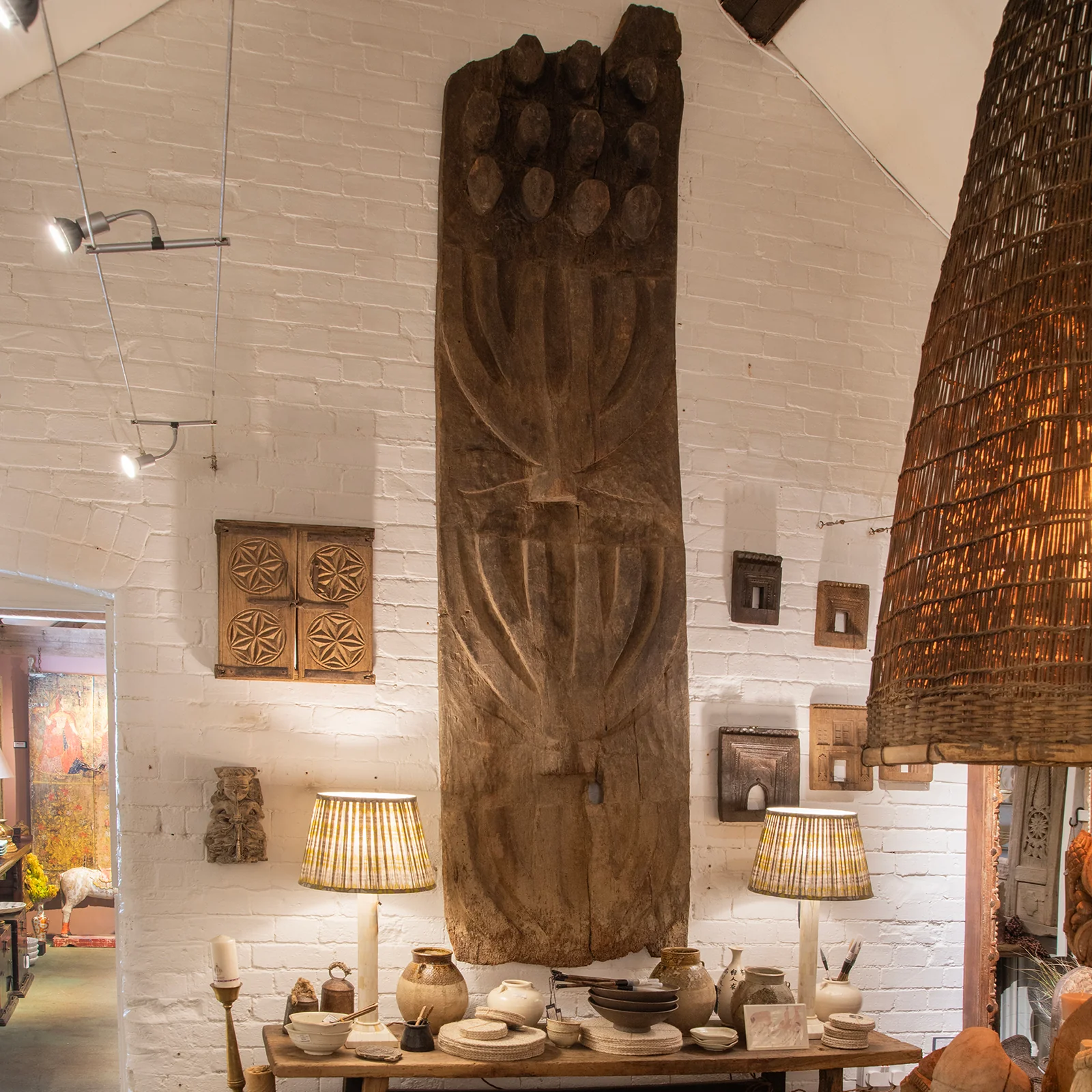
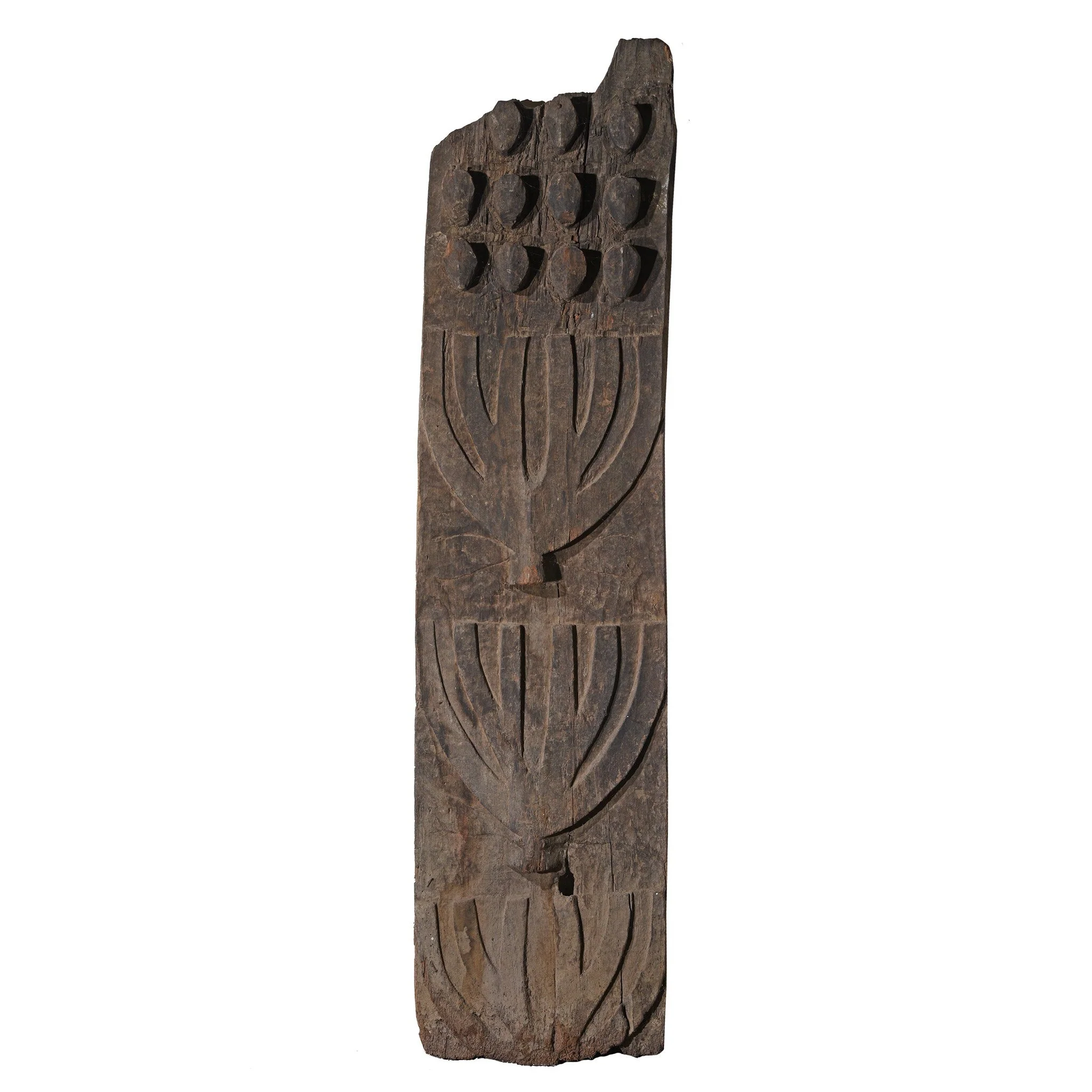
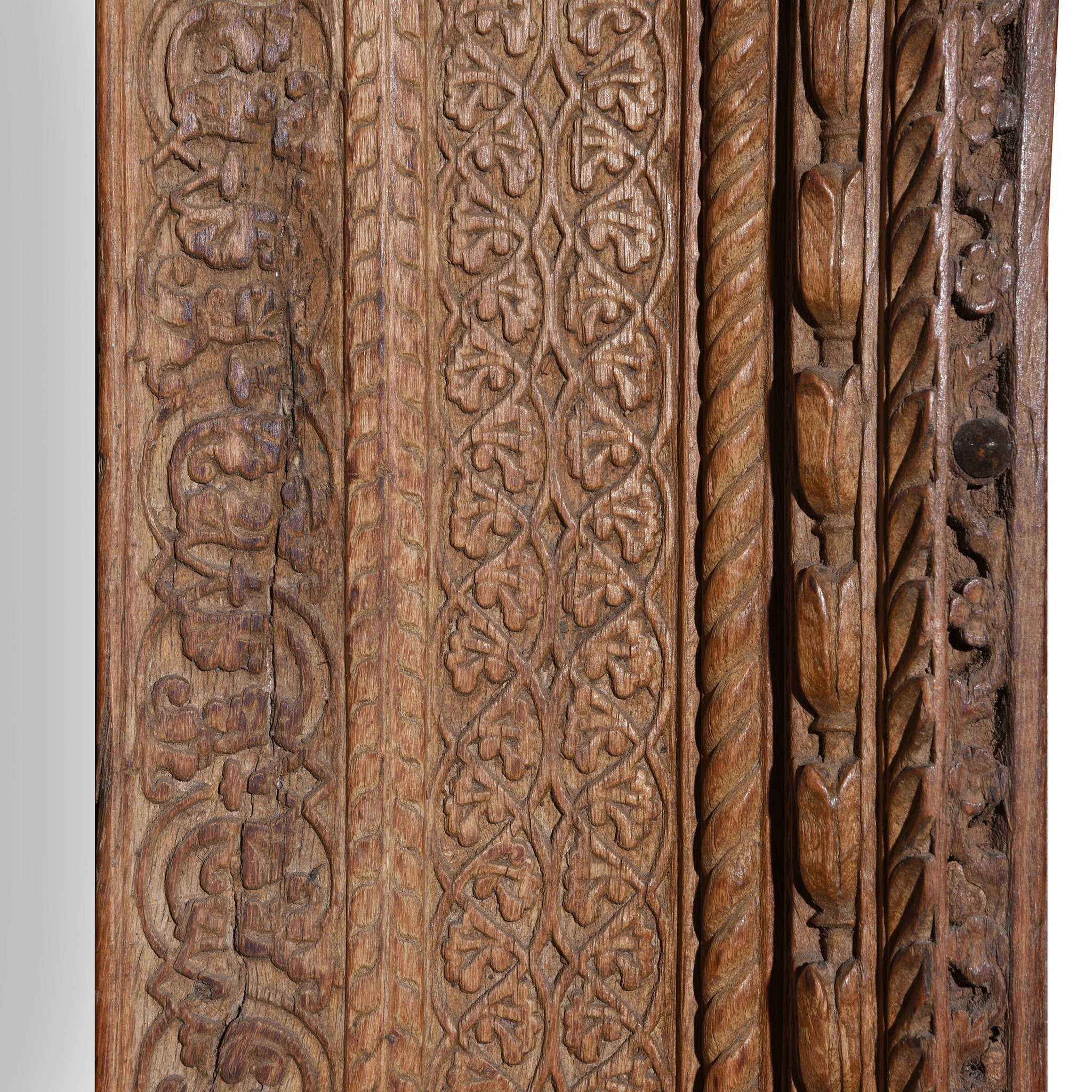
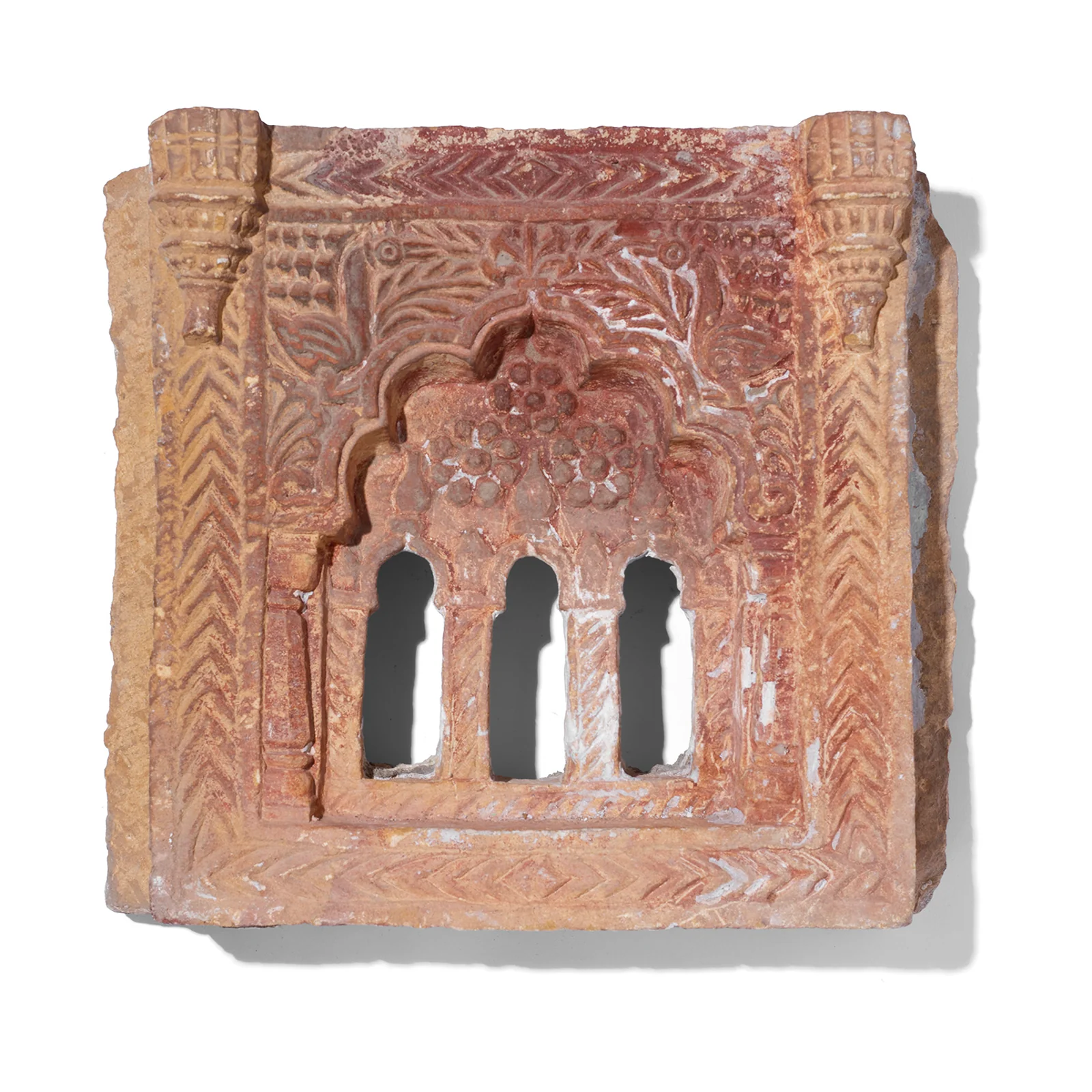
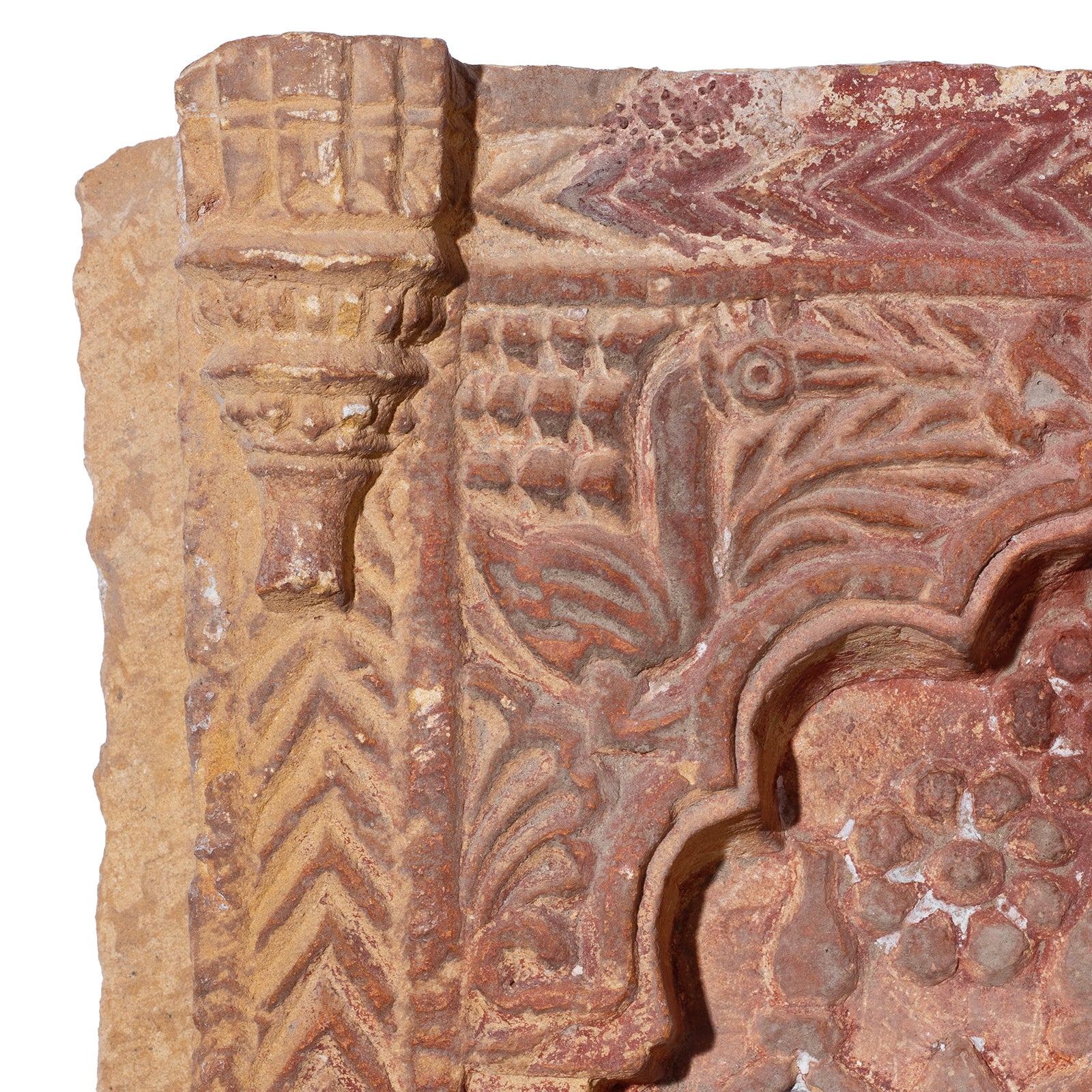
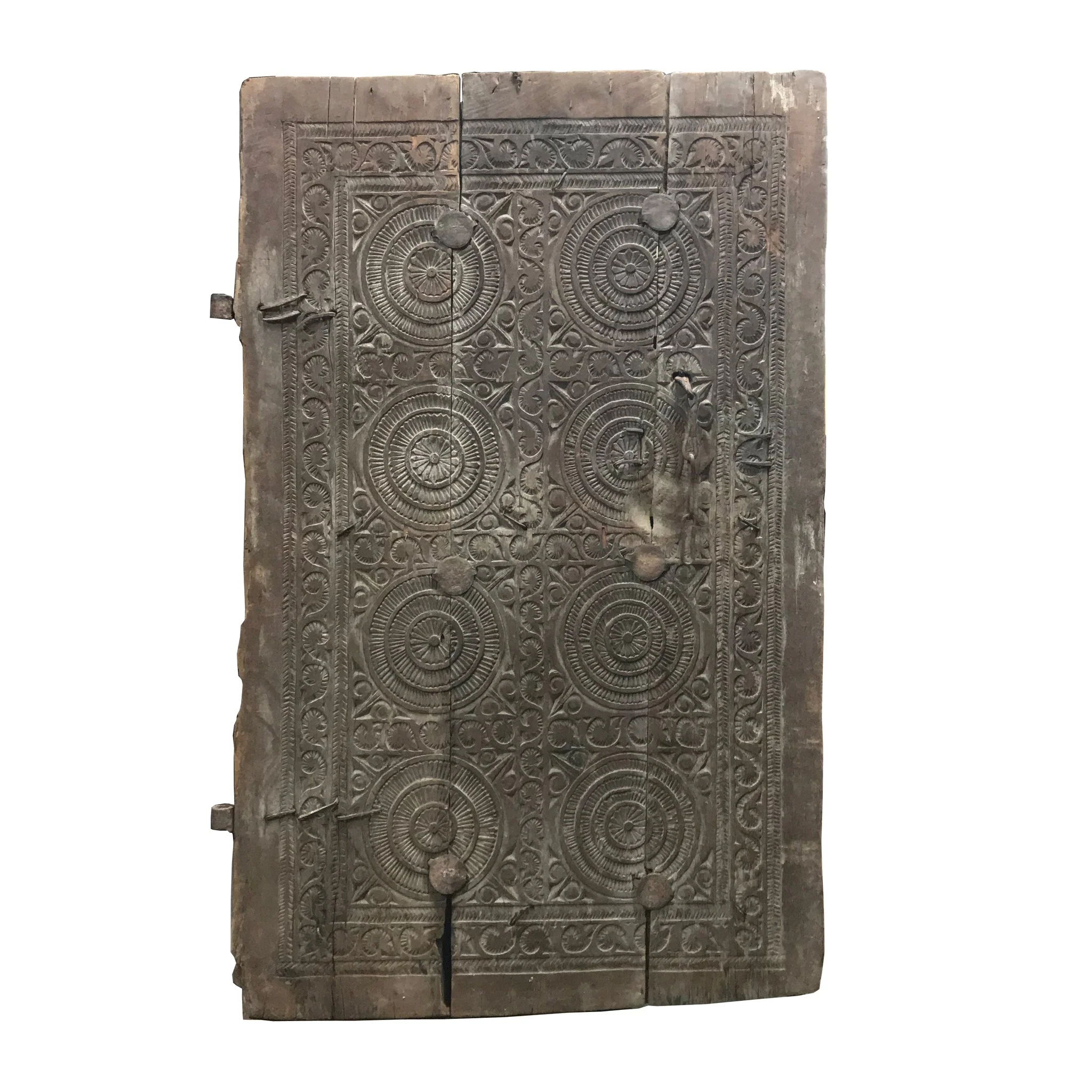
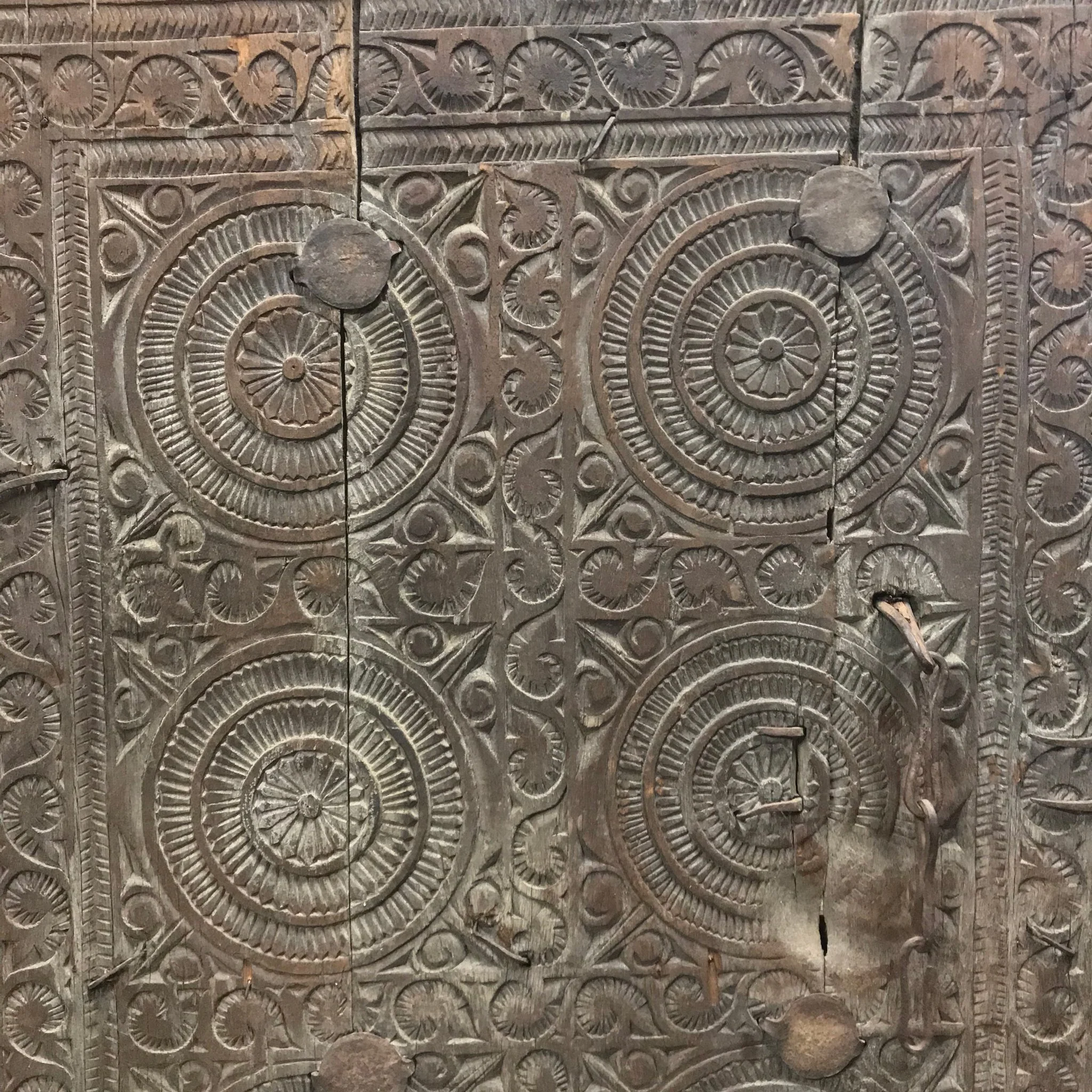
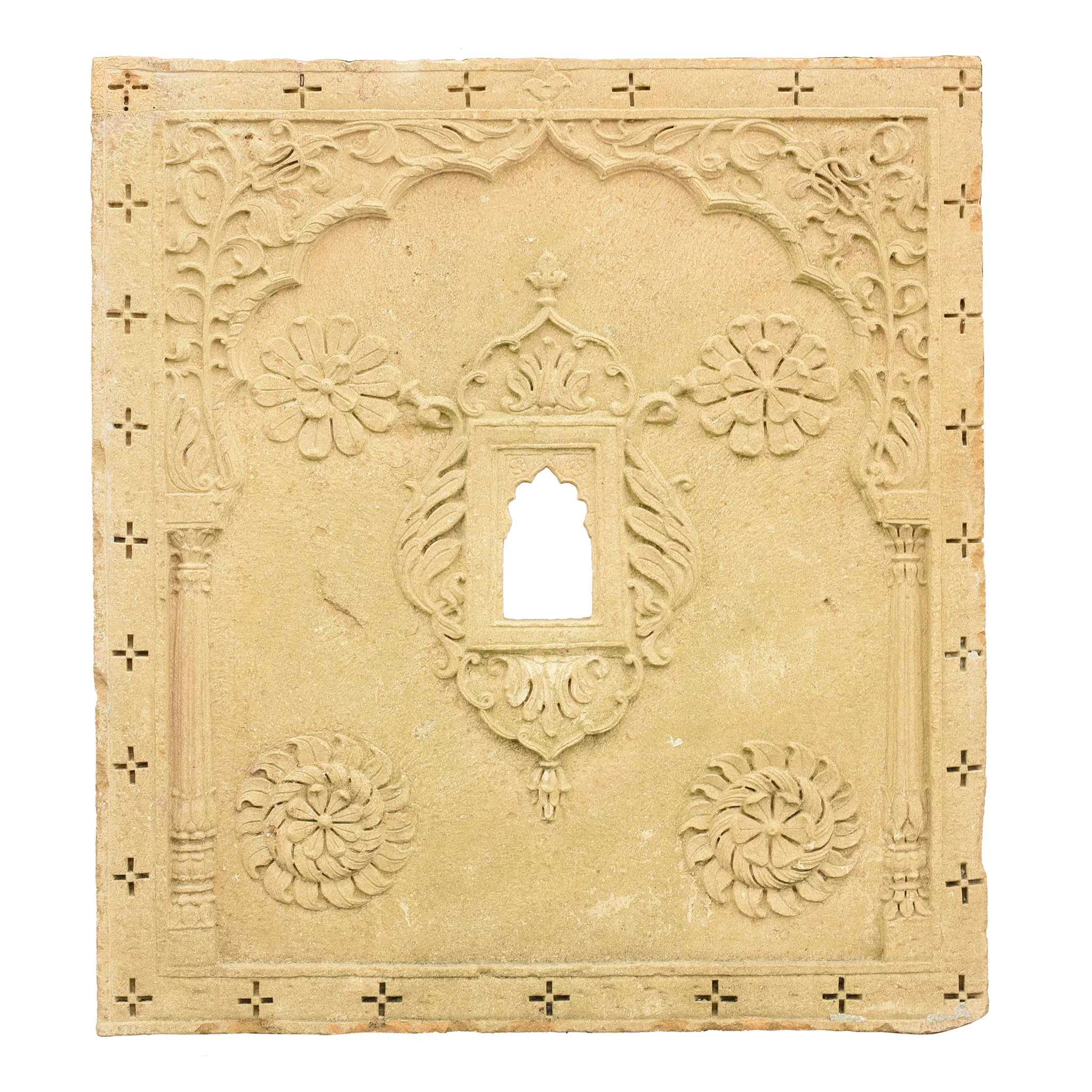
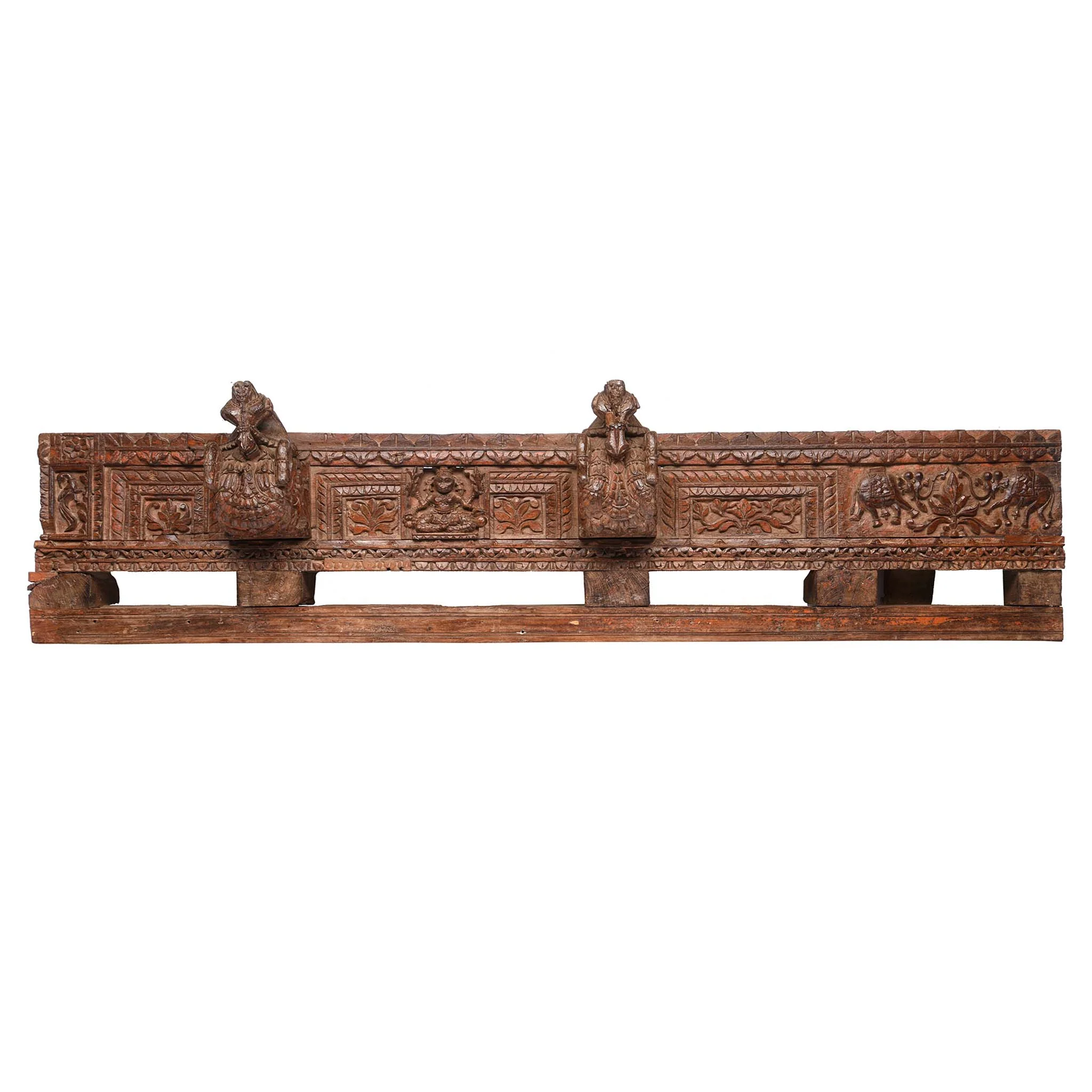
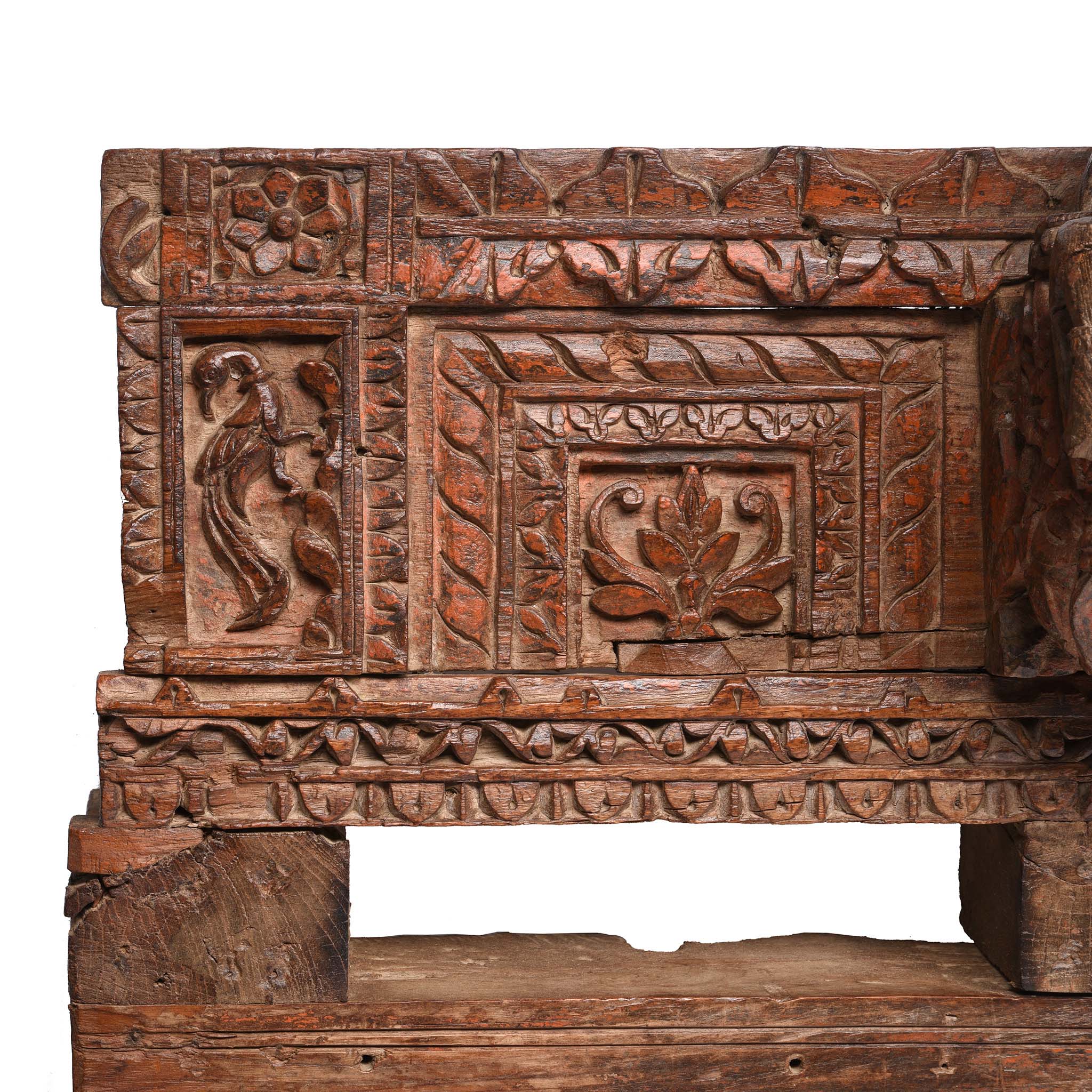
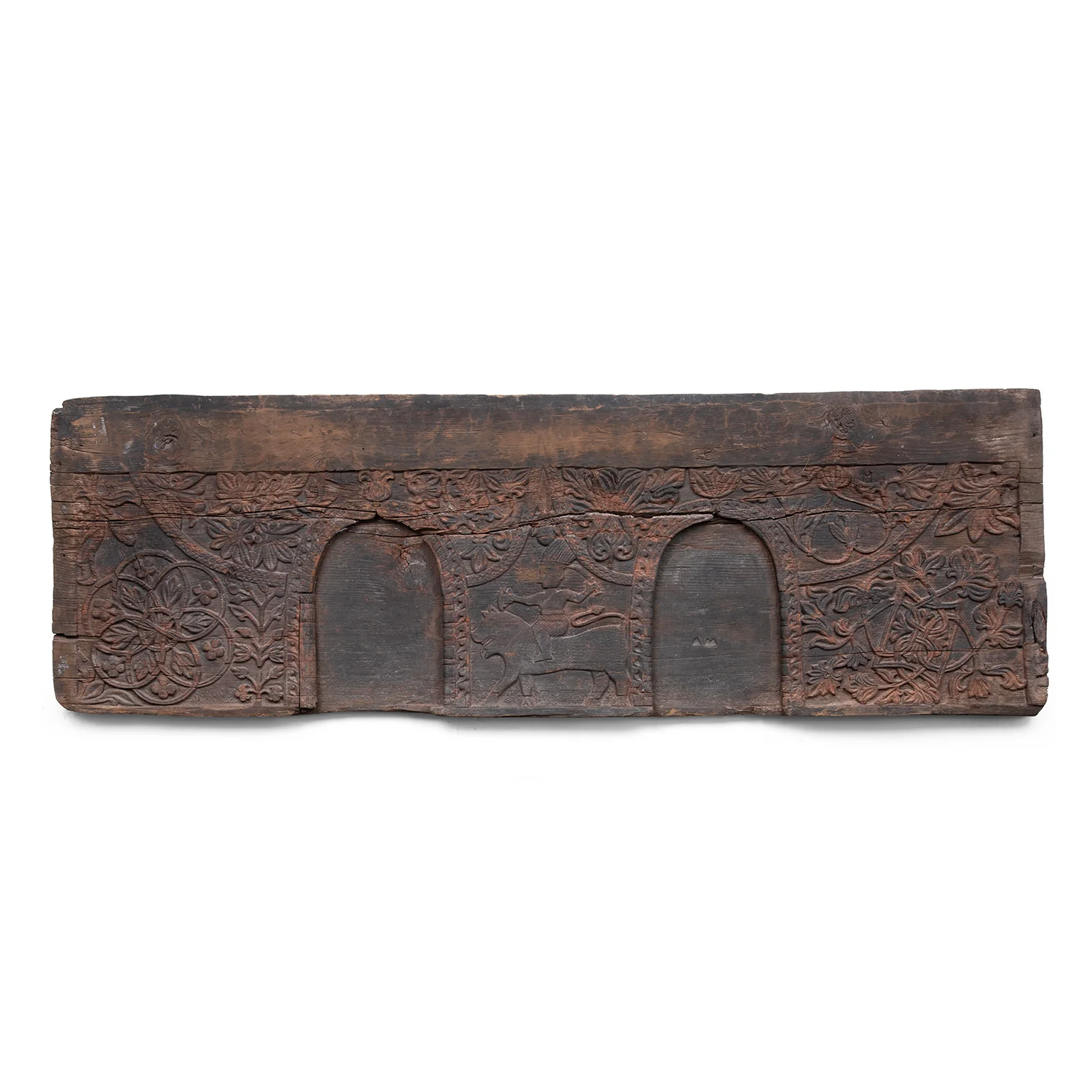
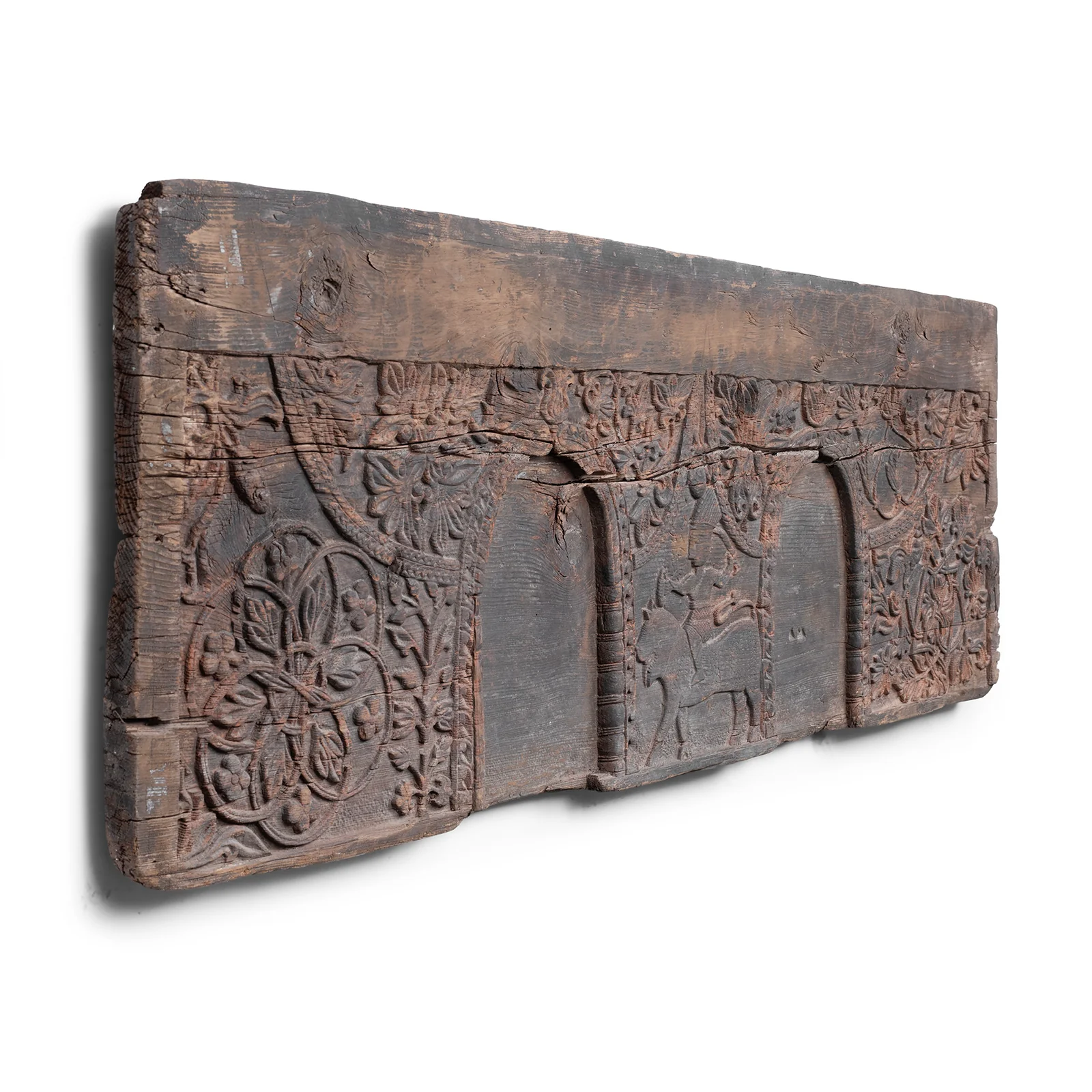
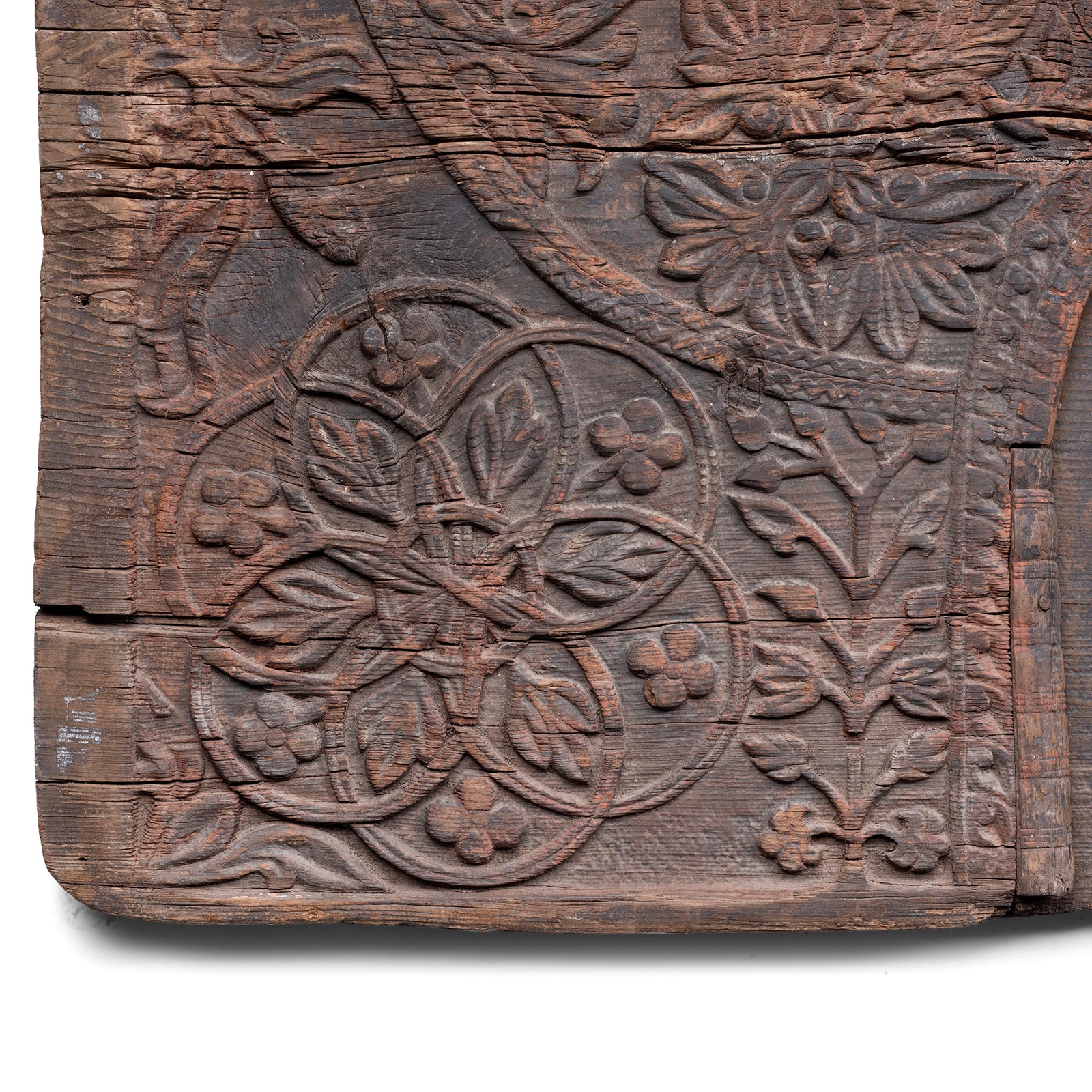
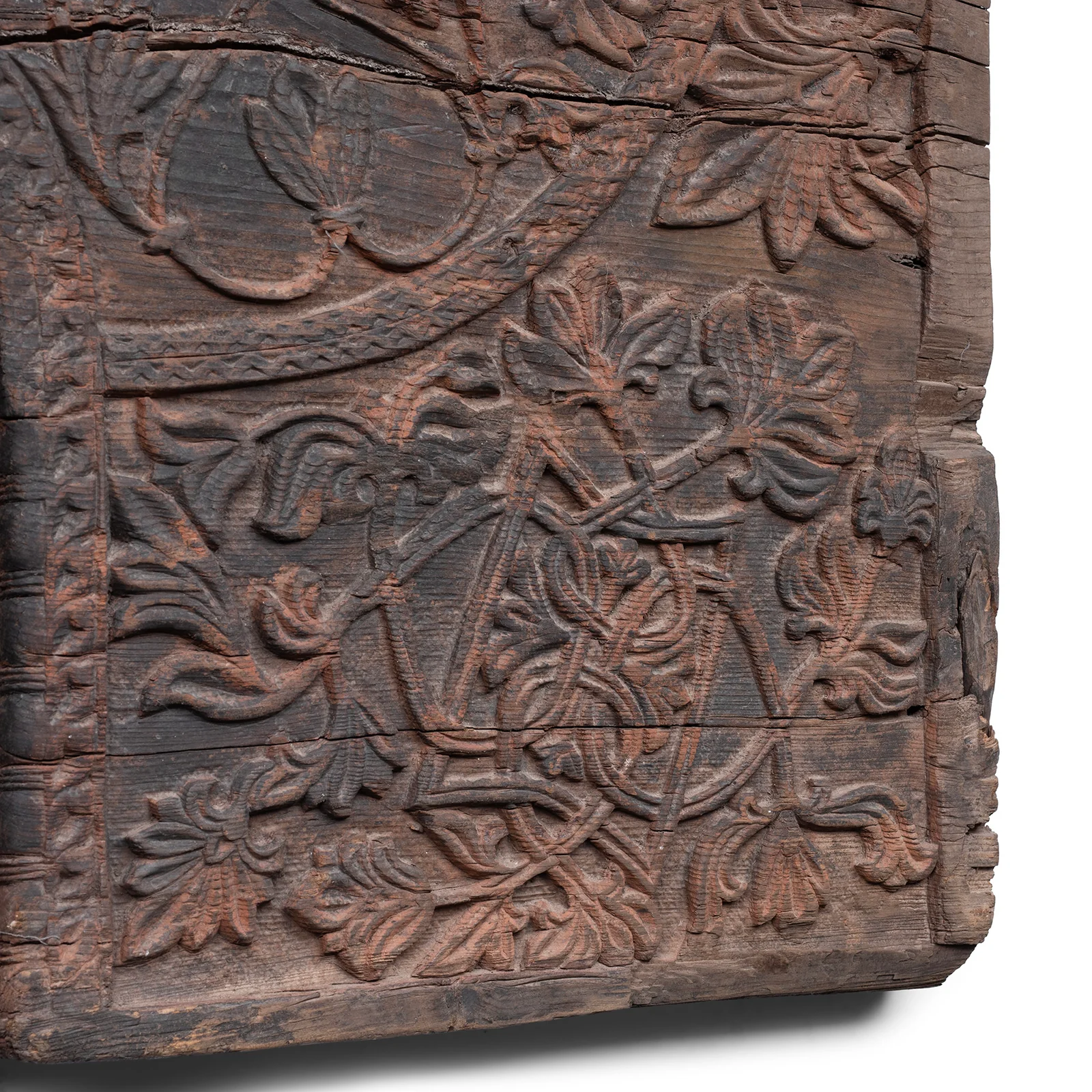
This remarkable 19th century cedar panel from the Kullu Valley in Himachal Pradesh is a powerful example of Himalayan tribal woodcarving. Richly worked by hand, the panel features intricate floral and foliate motifs framing a central arched scene of an armed rider mounted on a tiger. On the left a stylised endless knot can be seen. This bold and expressive carving is an evocative and symbolic composition rooted in local folklore and tradition with each element shaped through skilled hand tools, leaving behind a wonderfully textured surface.
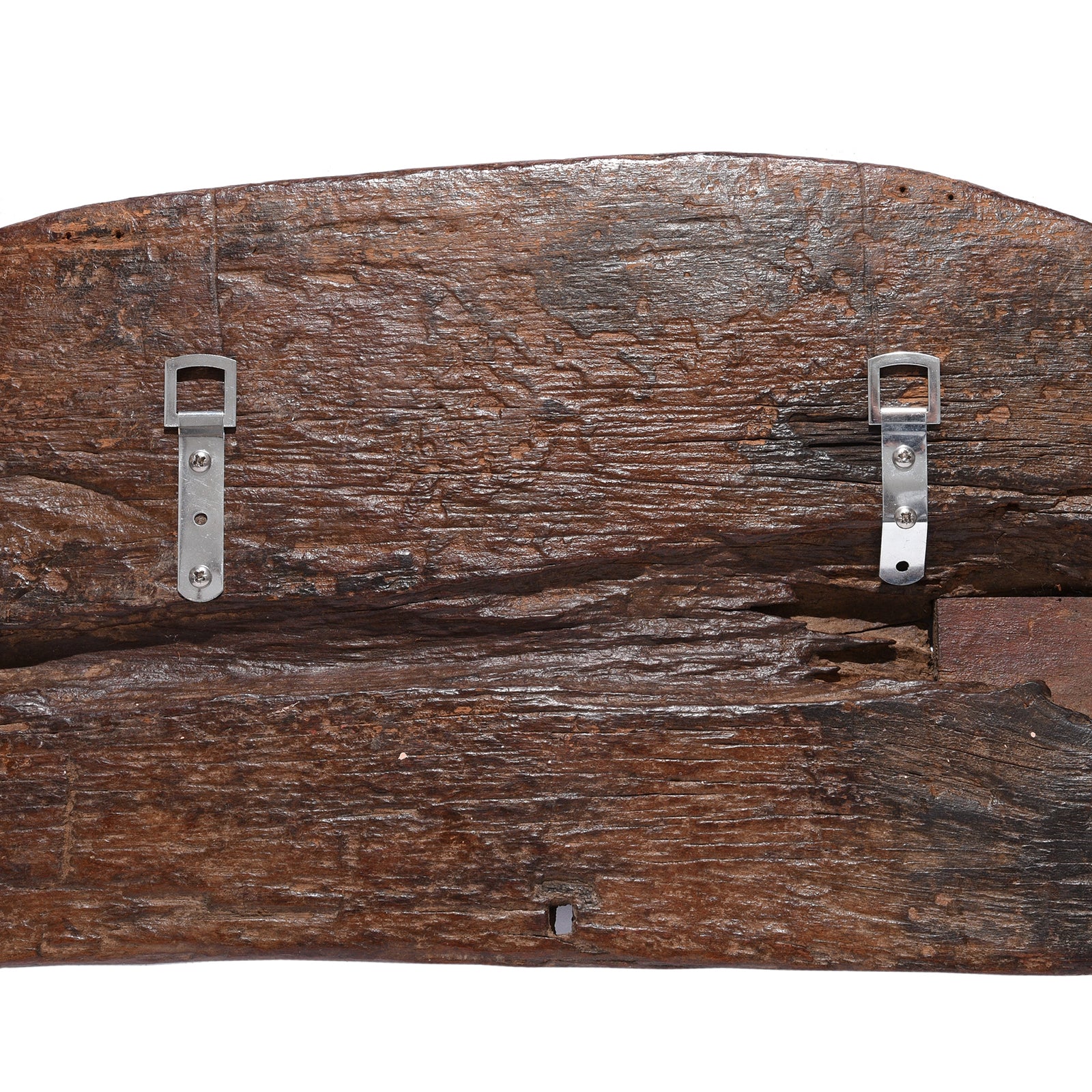
Carved from cedar, a timber prized in the Himalayan regions for its durability and resistance to insects, the panel has developed a deep, aged patina over time. Likely once part of a larger architectural element—such as a temple, doorway, or domestic shrine—it now serves as a striking decorative wall piece. Supplied with hangers to the rear, it is ready to display and brings both history and craftsmanship into a space.
- Origin: Kullu Valley, Himachal Pradesh, India
- Date: 19th Century
- Material: Cedar wood
- Features: Deep hand-carved floral motifs, central rider on tiger scene, architectural fragment, supplied with rear hangers
- Condition: Good antique condition with age-related wear, splits, and surface erosion consistent with age and use
- Dimensions: W167 x D3 x H54 cm
Original: $1,074.85
-65%$1,074.85
$376.20More Images

Tribal Carved Panel From Kullu - 19th Century
This remarkable 19th century cedar panel from the Kullu Valley in Himachal Pradesh is a powerful example of Himalayan tribal woodcarving. Richly worked by hand, the panel features intricate floral and foliate motifs framing a central arched scene of an armed rider mounted on a tiger. On the left a stylised endless knot can be seen. This bold and expressive carving is an evocative and symbolic composition rooted in local folklore and tradition with each element shaped through skilled hand tools, leaving behind a wonderfully textured surface.
Carved from cedar, a timber prized in the Himalayan regions for its durability and resistance to insects, the panel has developed a deep, aged patina over time. Likely once part of a larger architectural element—such as a temple, doorway, or domestic shrine—it now serves as a striking decorative wall piece. Supplied with hangers to the rear, it is ready to display and brings both history and craftsmanship into a space.
- Origin: Kullu Valley, Himachal Pradesh, India
- Date: 19th Century
- Material: Cedar wood
- Features: Deep hand-carved floral motifs, central rider on tiger scene, architectural fragment, supplied with rear hangers
- Condition: Good antique condition with age-related wear, splits, and surface erosion consistent with age and use
- Dimensions: W167 x D3 x H54 cm
Product Information
Product Information
Shipping & Returns
Shipping & Returns
Description
This remarkable 19th century cedar panel from the Kullu Valley in Himachal Pradesh is a powerful example of Himalayan tribal woodcarving. Richly worked by hand, the panel features intricate floral and foliate motifs framing a central arched scene of an armed rider mounted on a tiger. On the left a stylised endless knot can be seen. This bold and expressive carving is an evocative and symbolic composition rooted in local folklore and tradition with each element shaped through skilled hand tools, leaving behind a wonderfully textured surface.
Carved from cedar, a timber prized in the Himalayan regions for its durability and resistance to insects, the panel has developed a deep, aged patina over time. Likely once part of a larger architectural element—such as a temple, doorway, or domestic shrine—it now serves as a striking decorative wall piece. Supplied with hangers to the rear, it is ready to display and brings both history and craftsmanship into a space.
- Origin: Kullu Valley, Himachal Pradesh, India
- Date: 19th Century
- Material: Cedar wood
- Features: Deep hand-carved floral motifs, central rider on tiger scene, architectural fragment, supplied with rear hangers
- Condition: Good antique condition with age-related wear, splits, and surface erosion consistent with age and use
- Dimensions: W167 x D3 x H54 cm