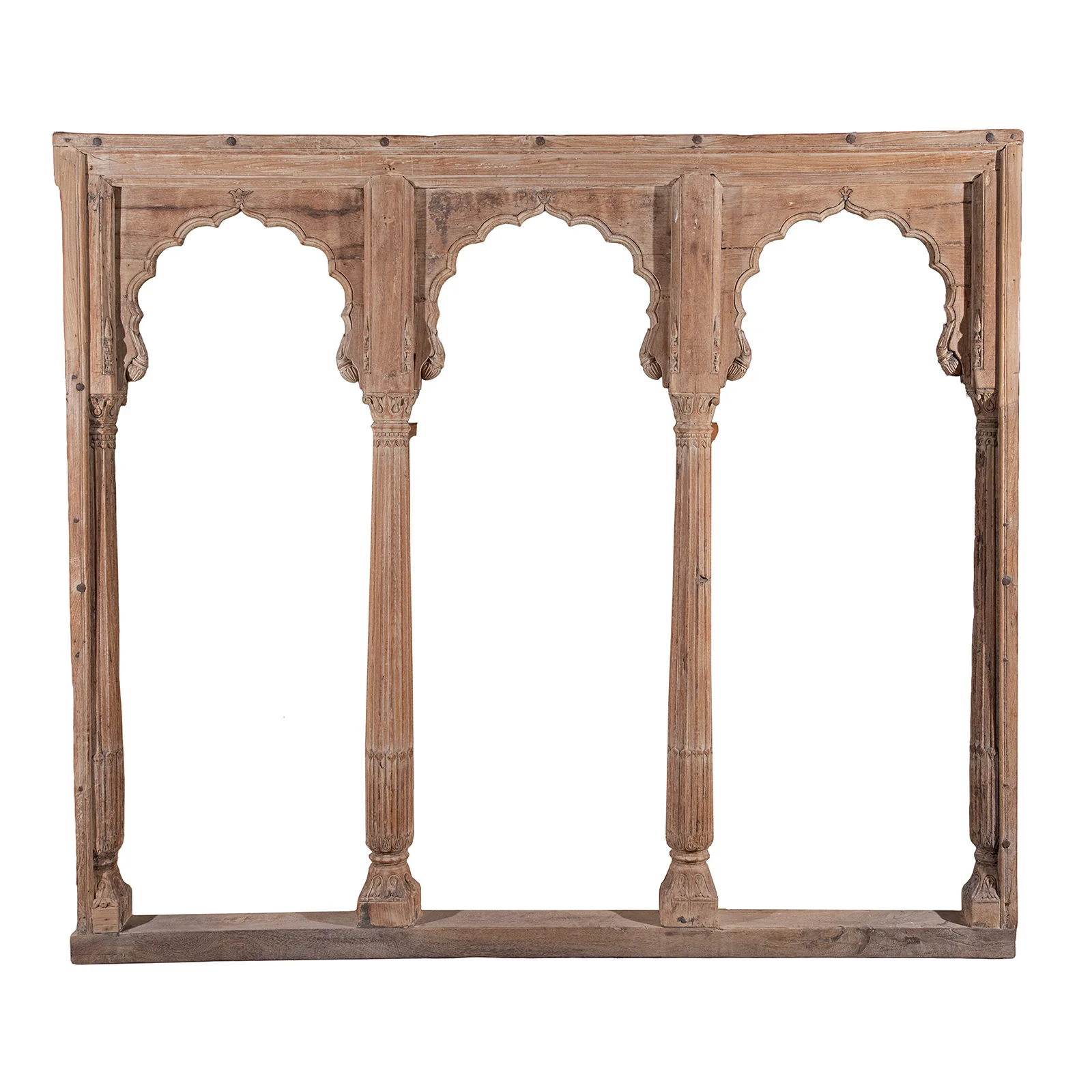
Carved Teak Triple Arch From Madyha Pradesh - 19th Century
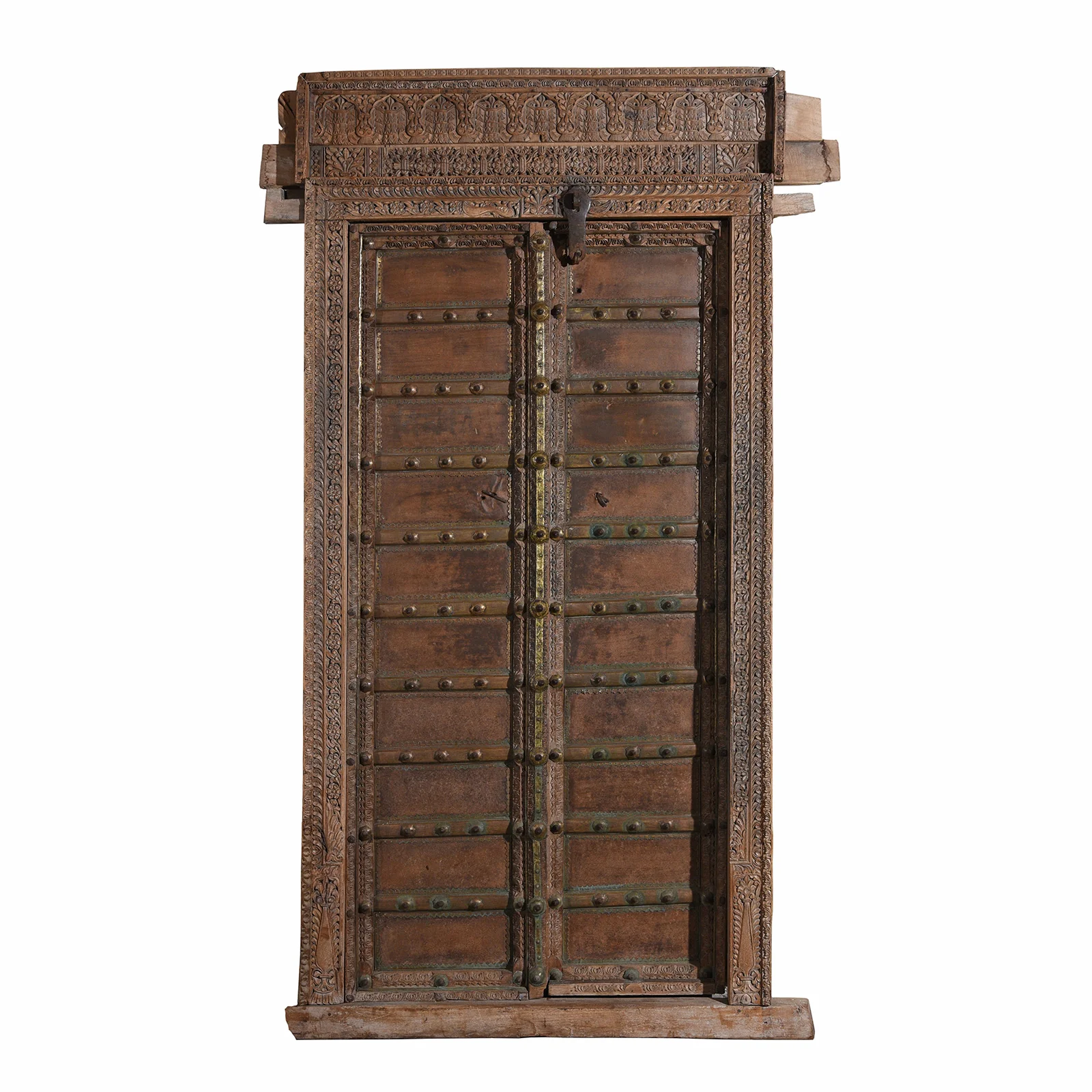
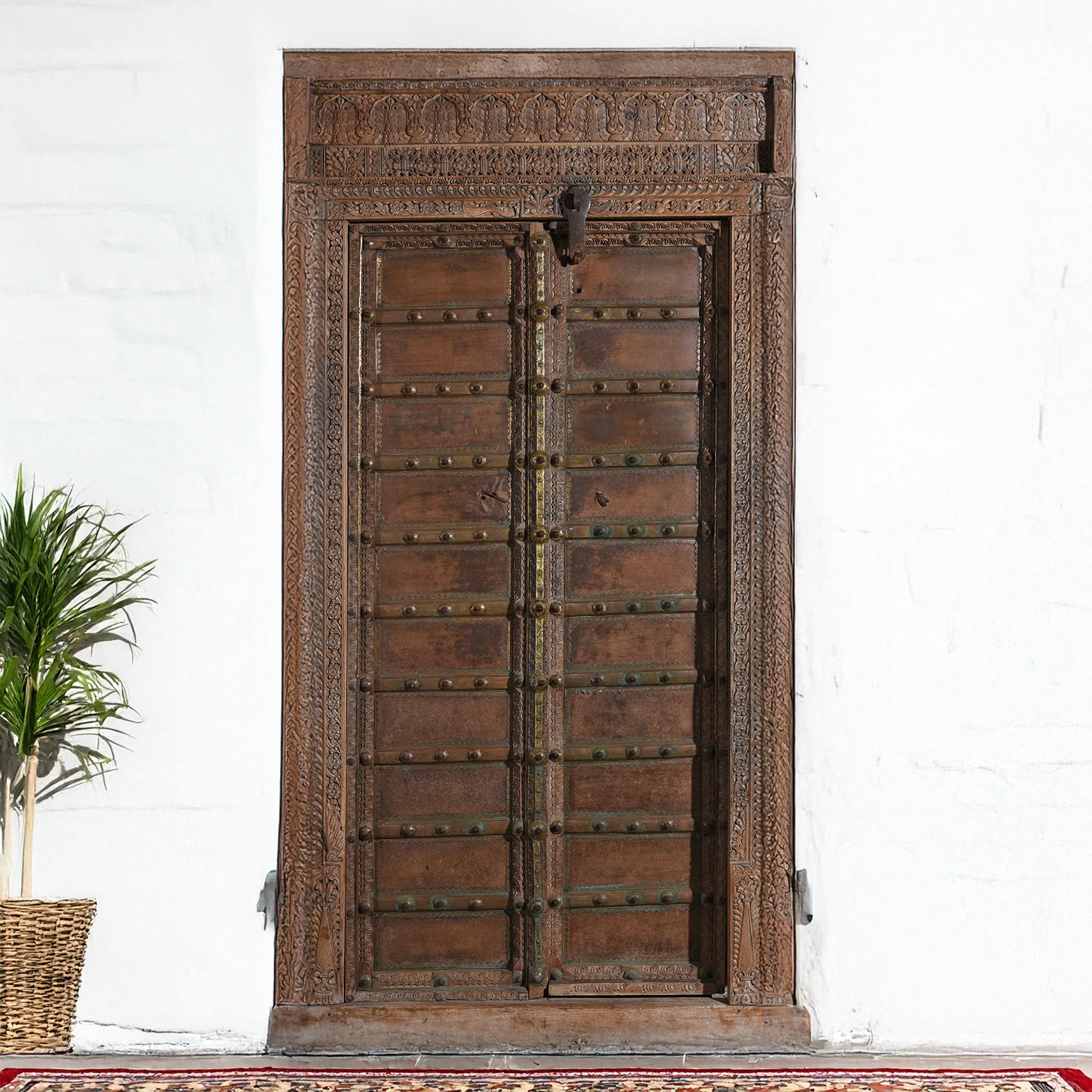
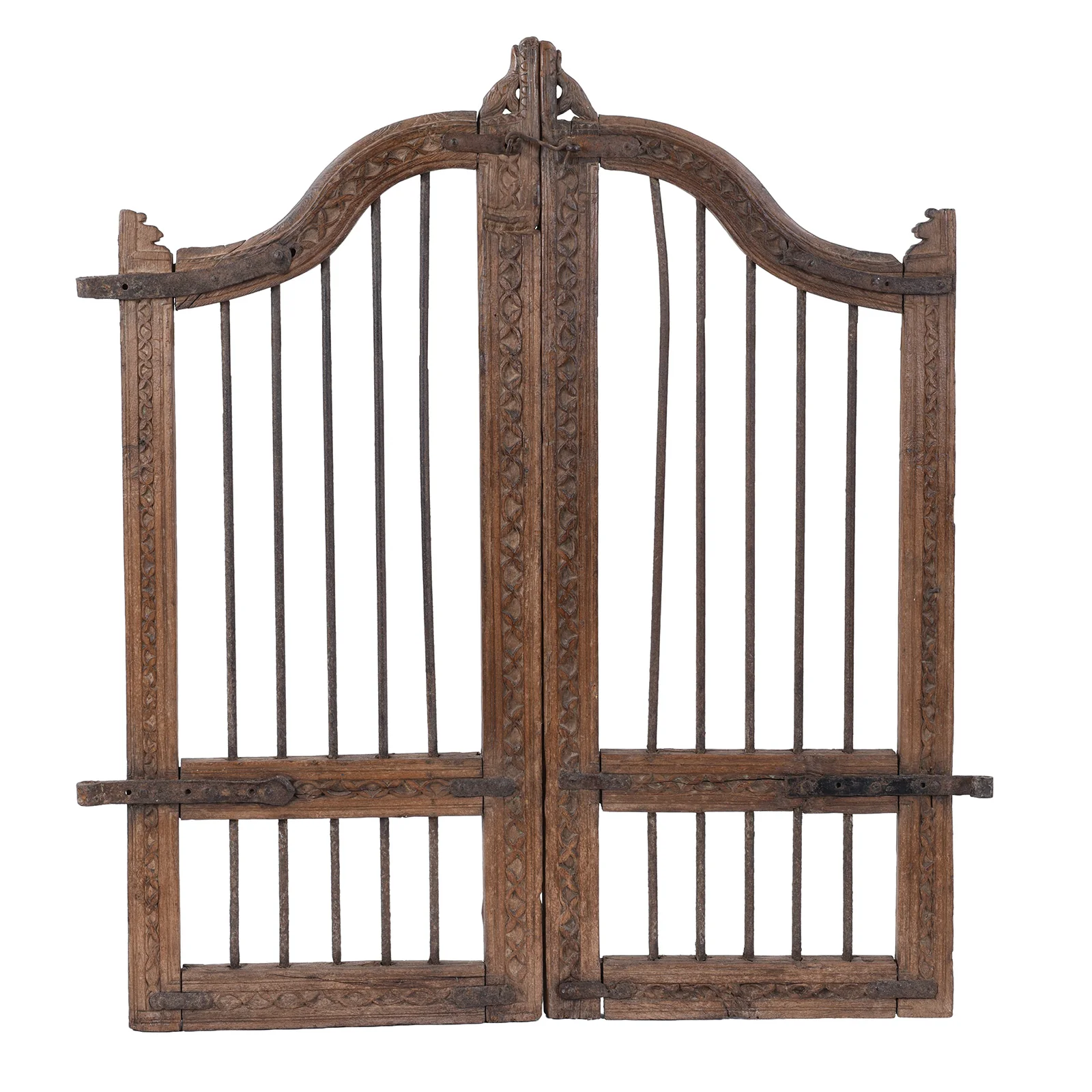
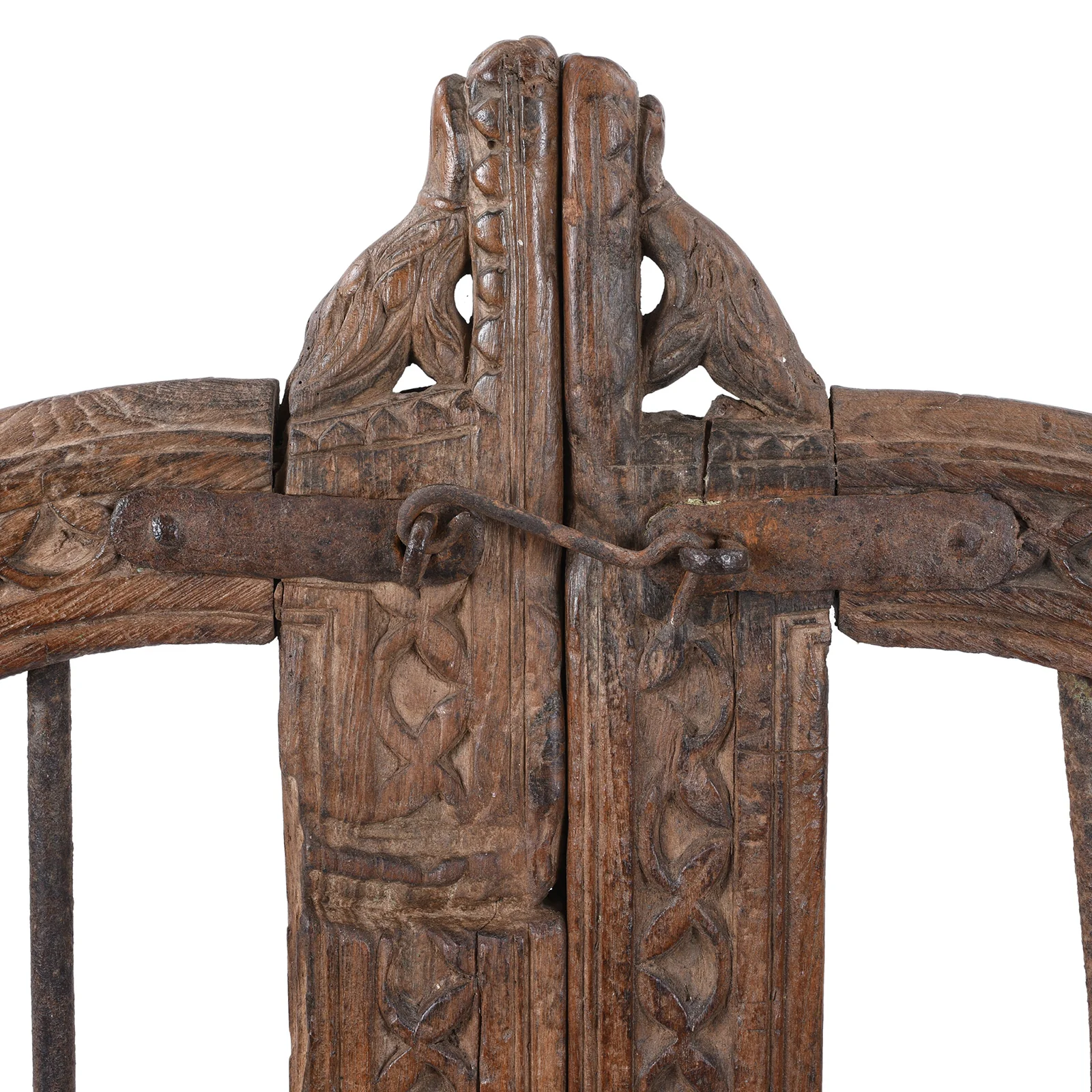
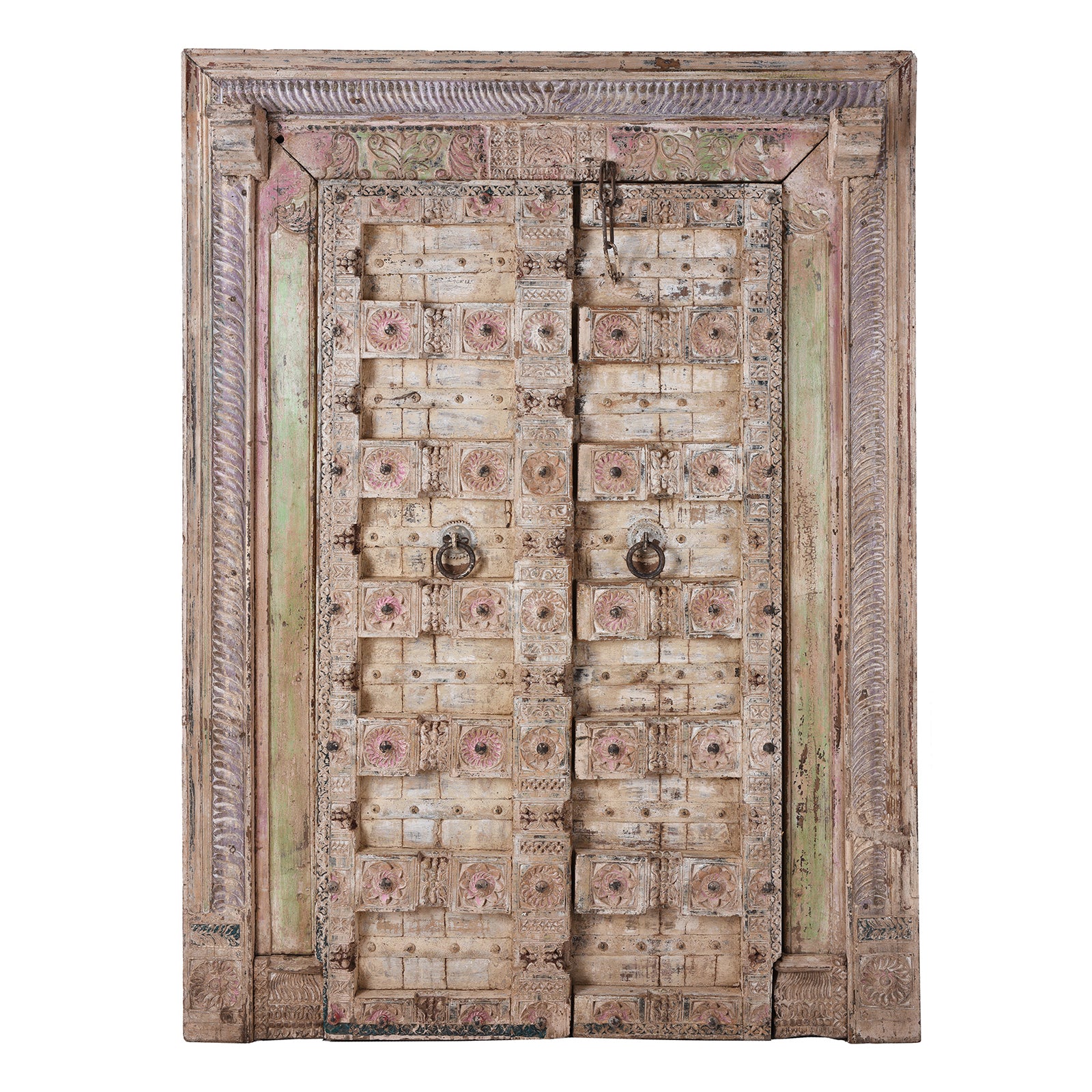
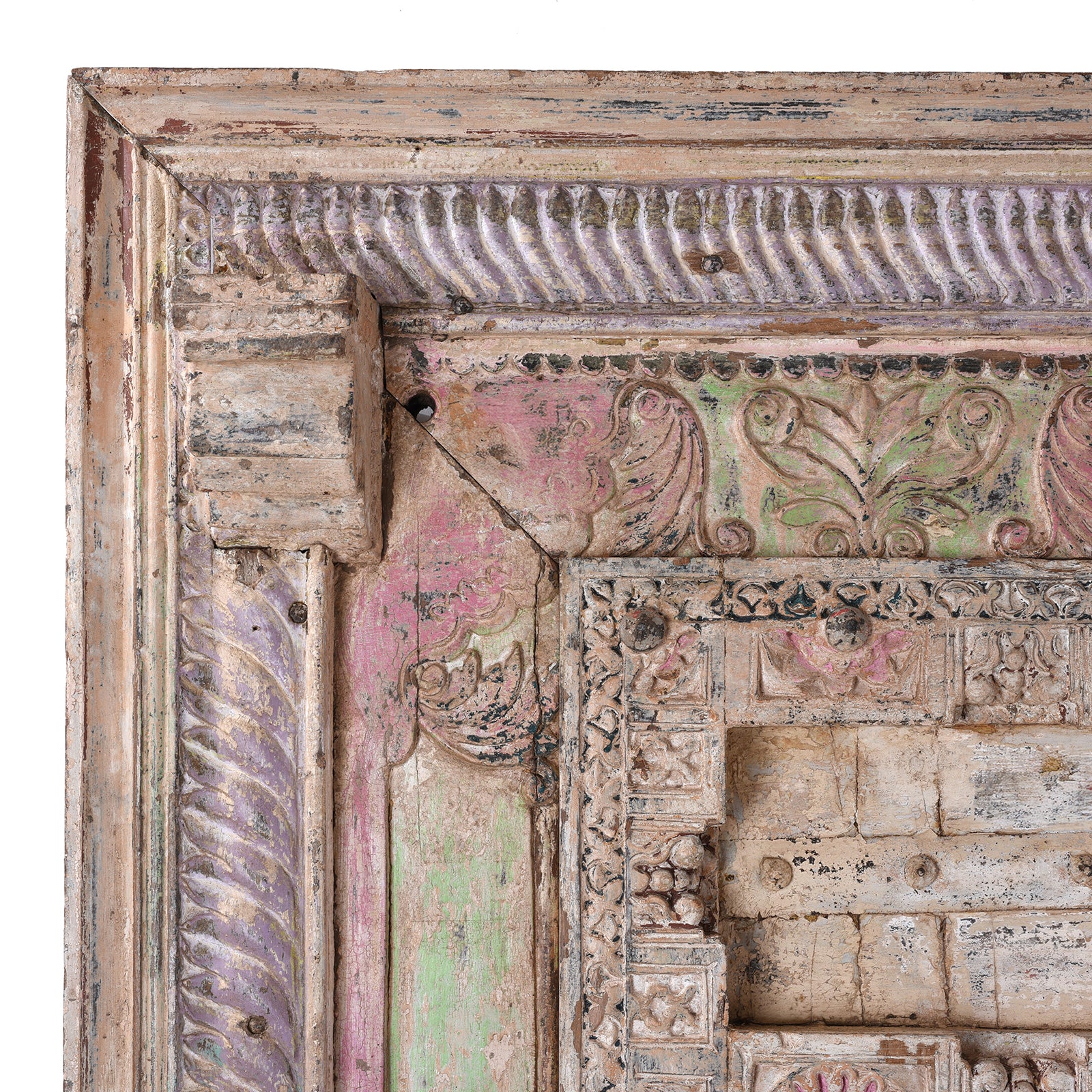
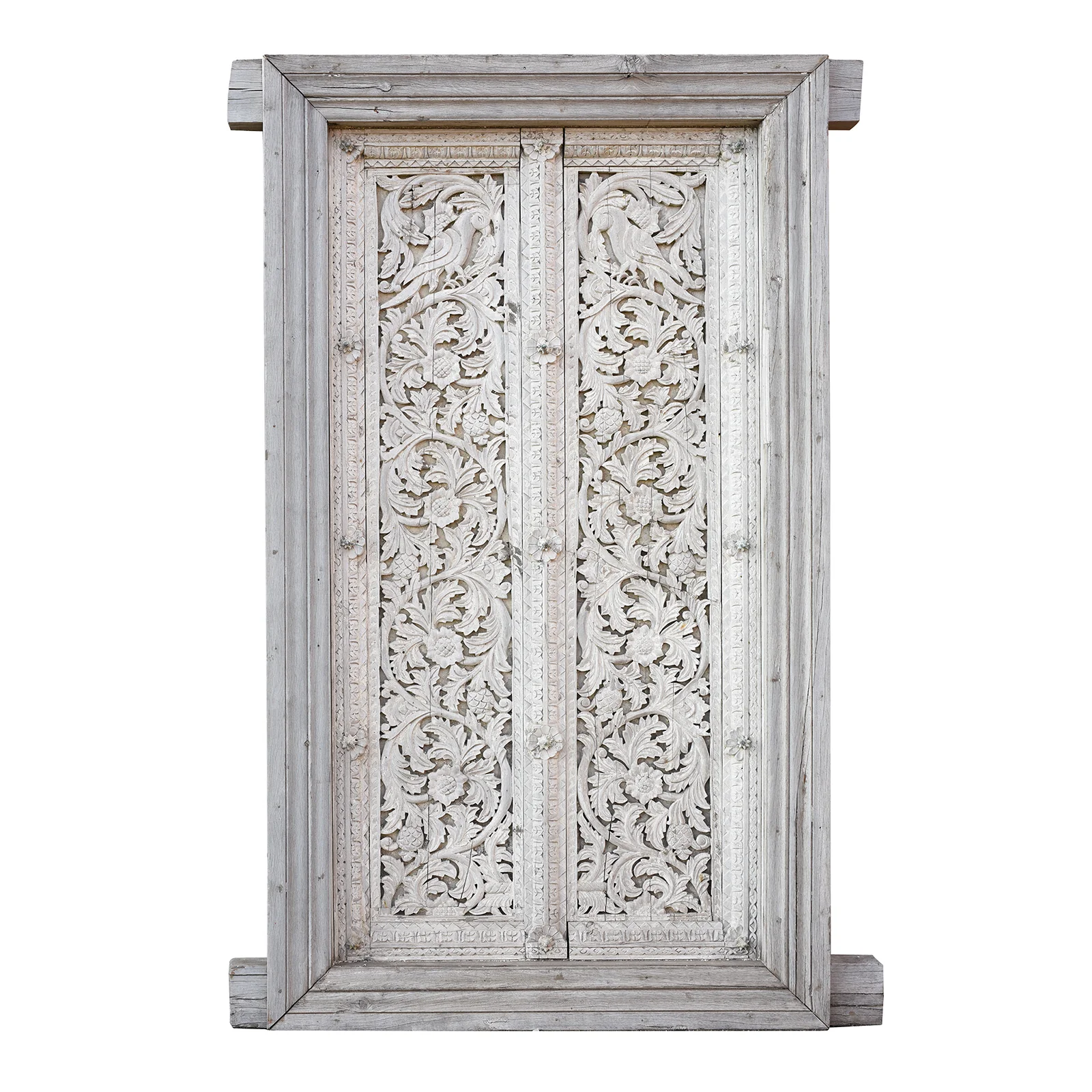
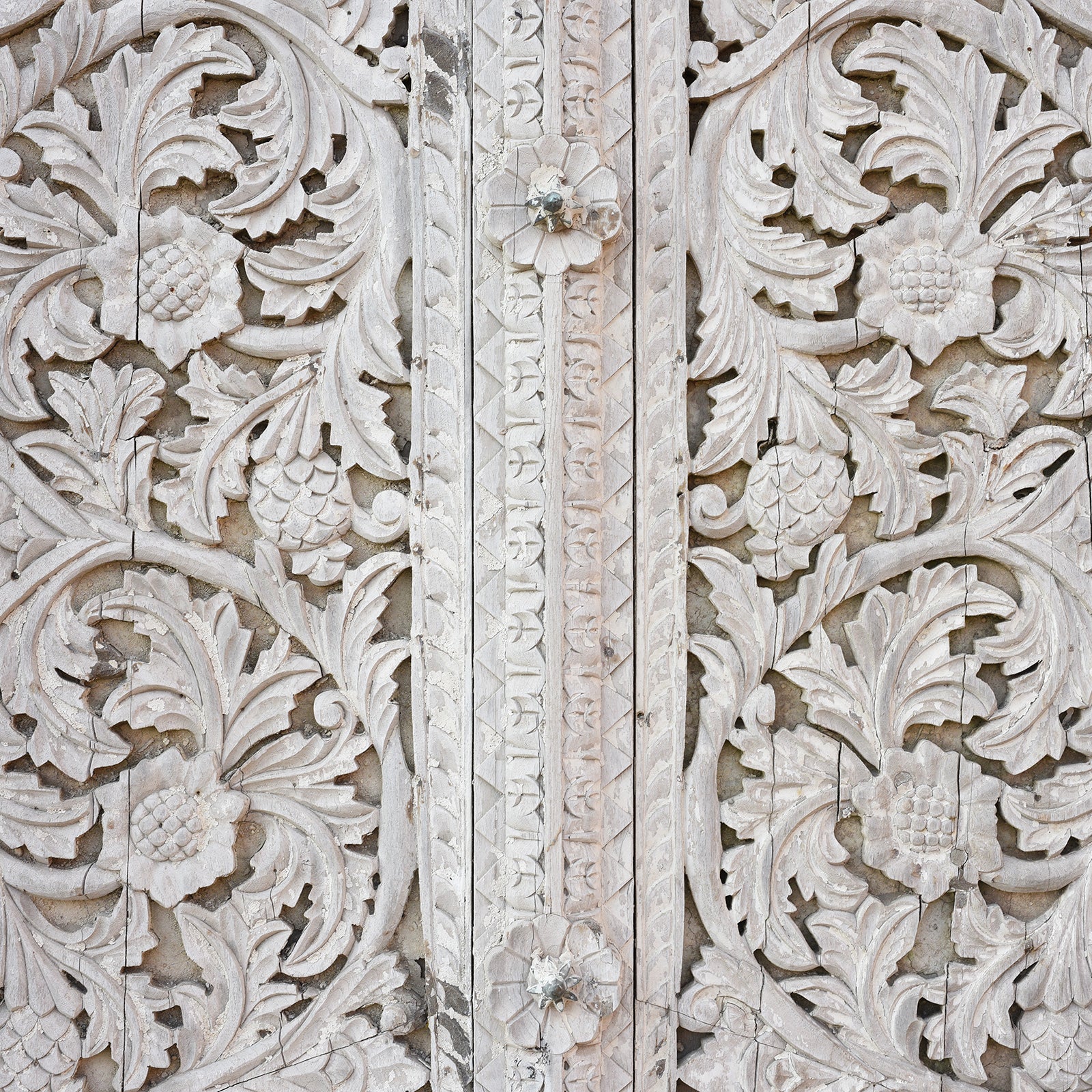
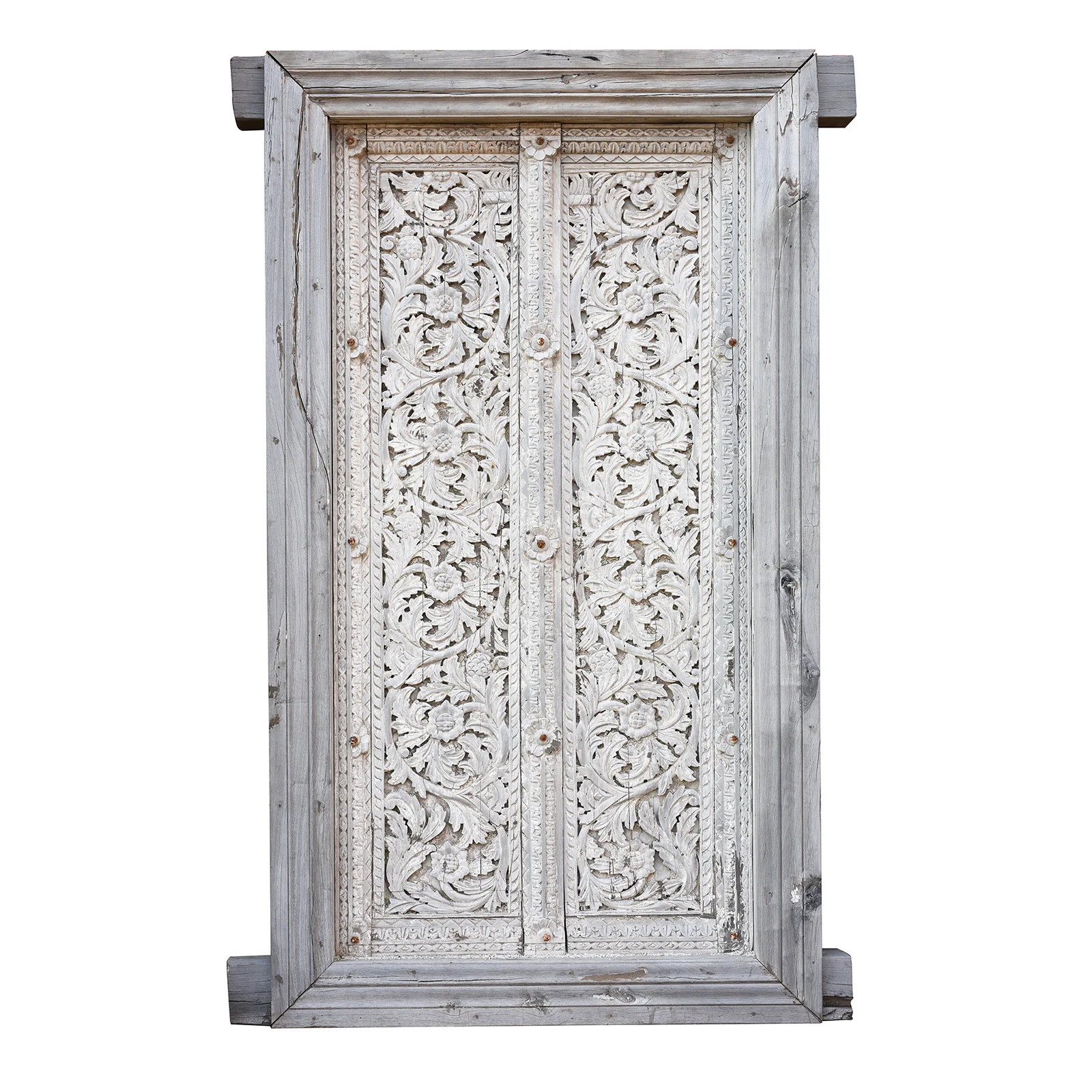
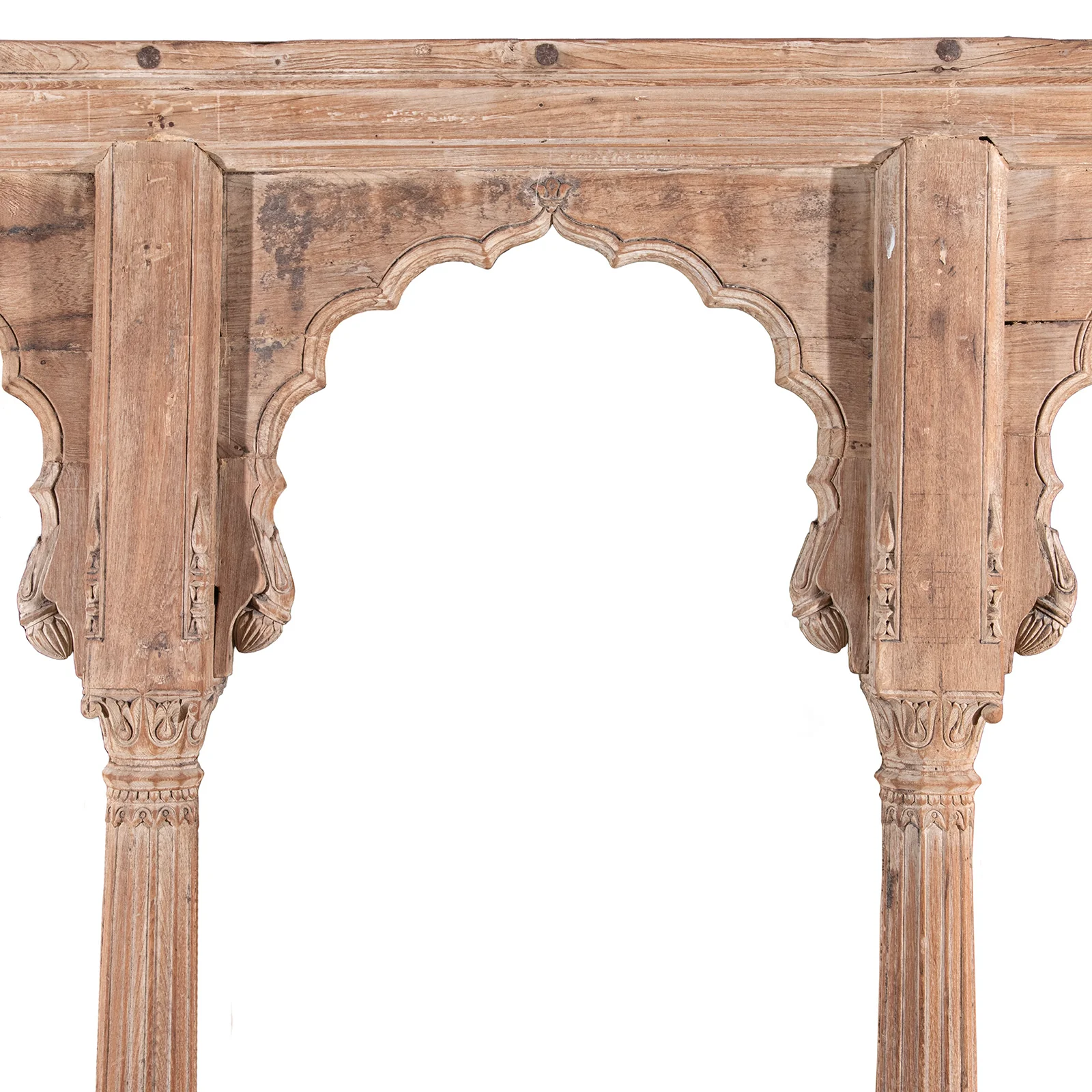
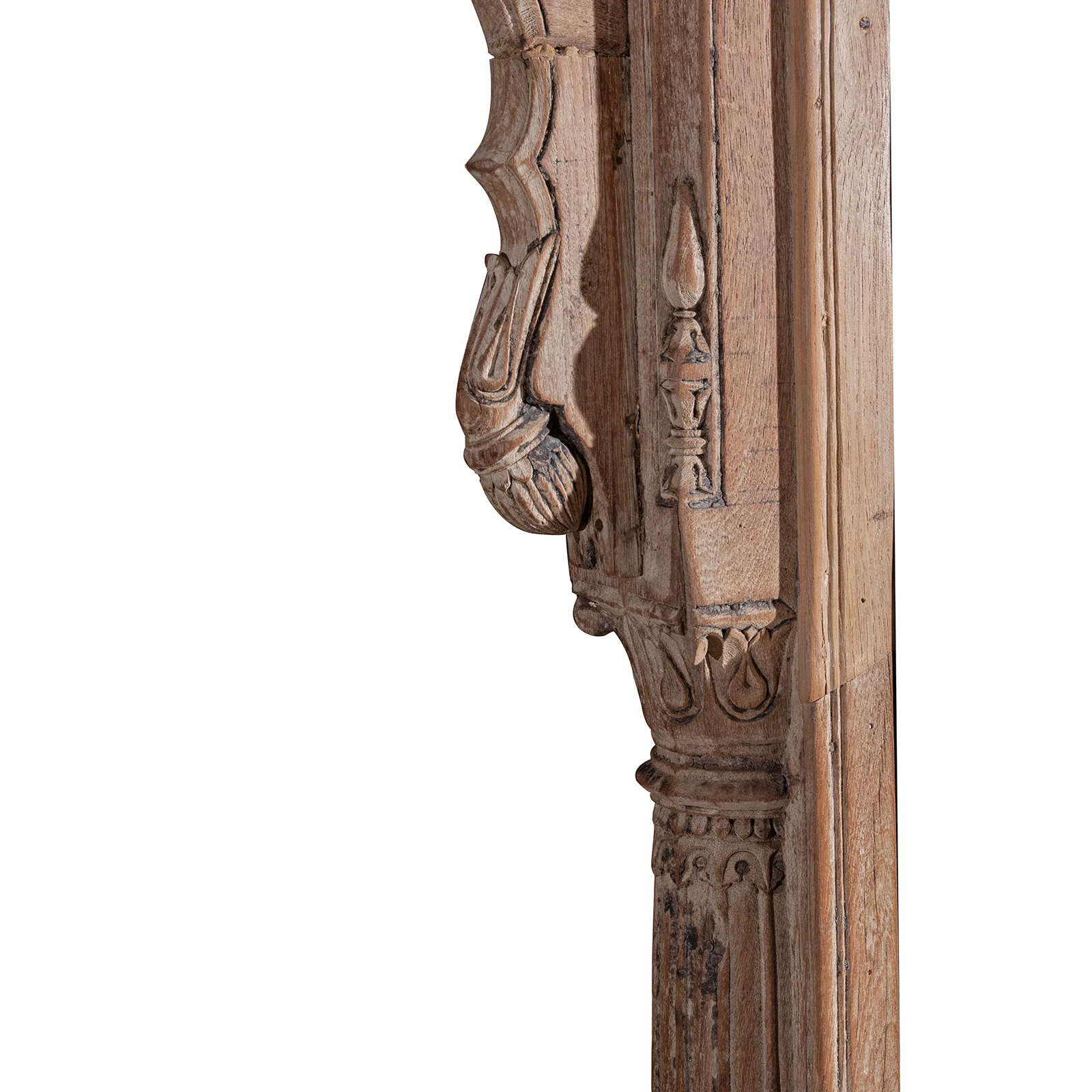
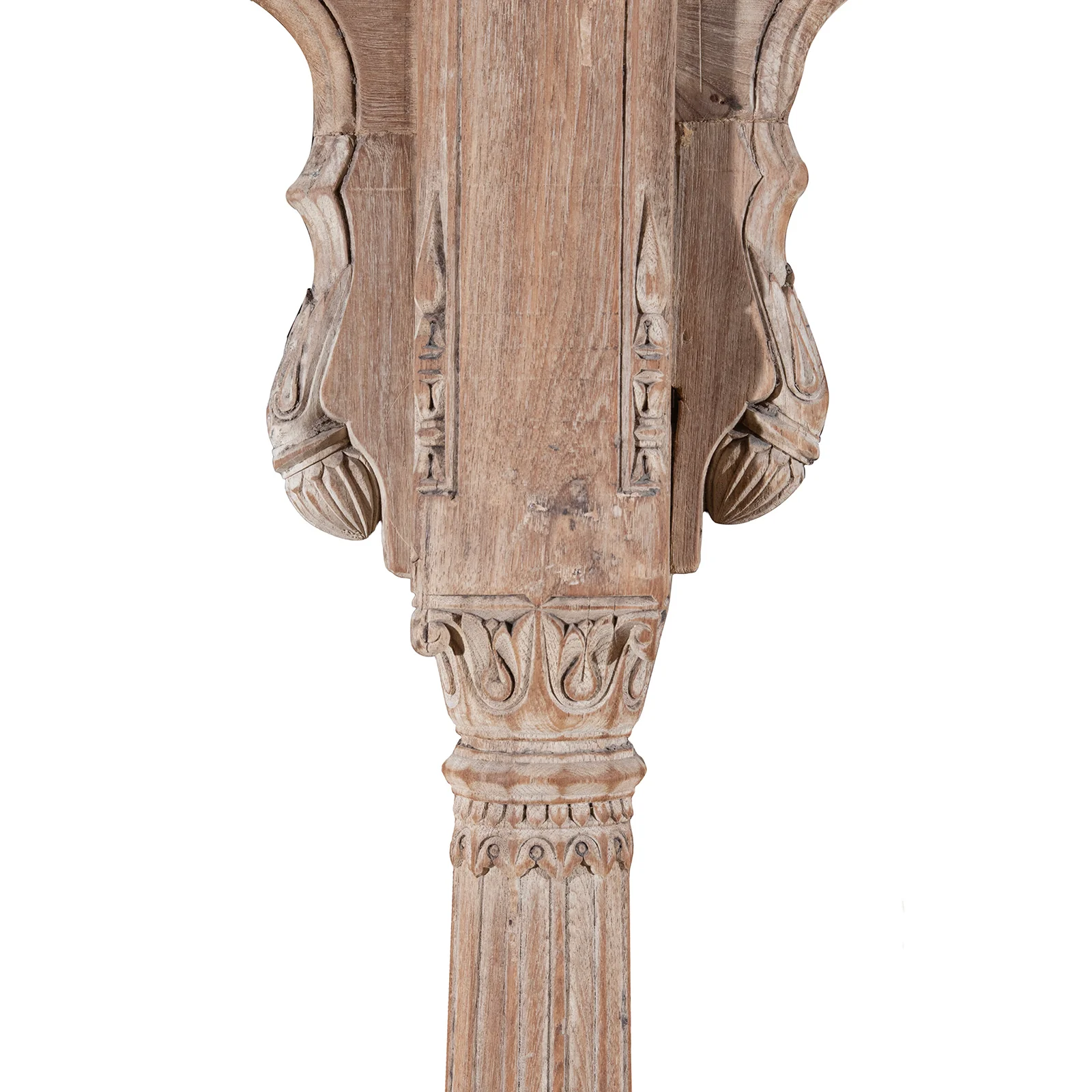
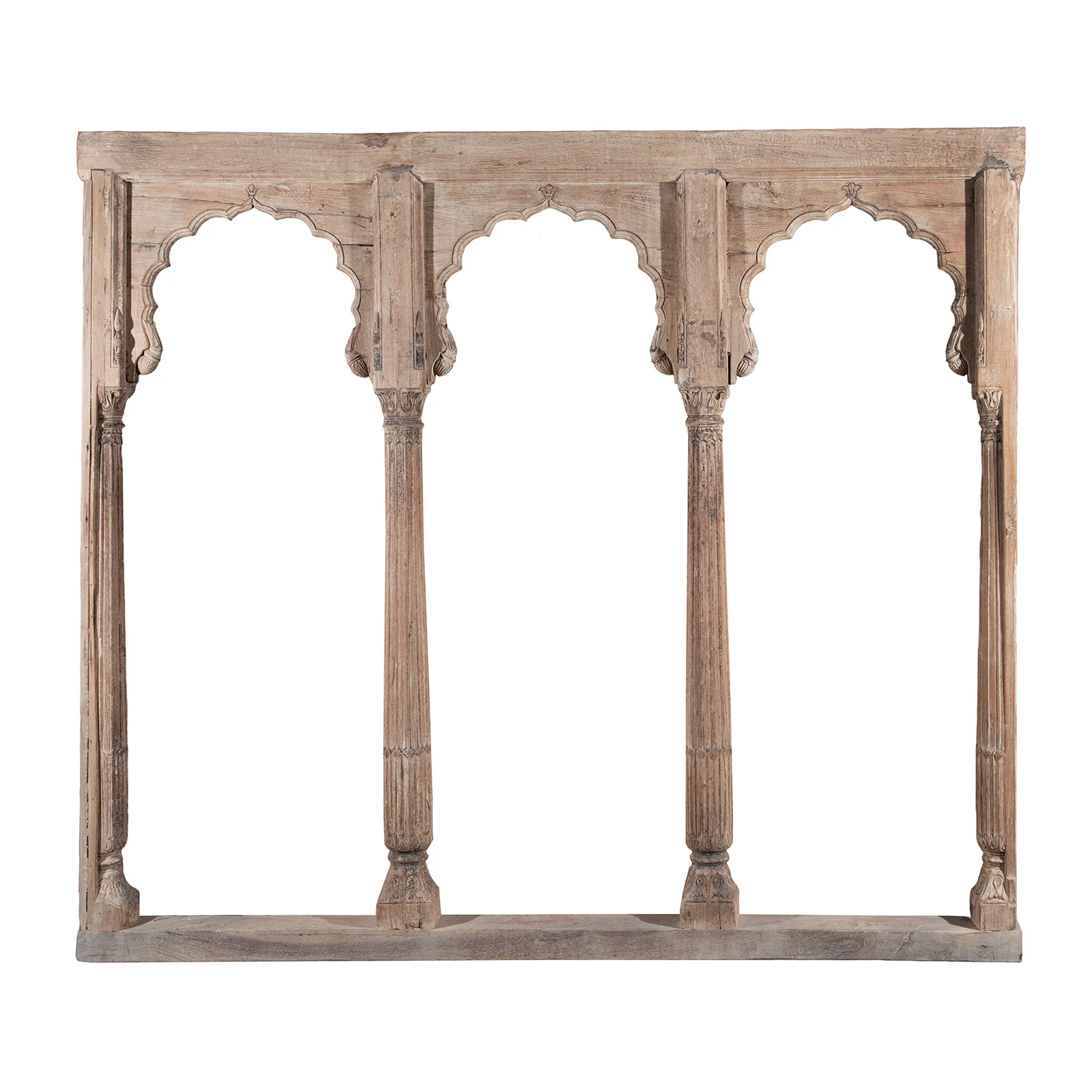
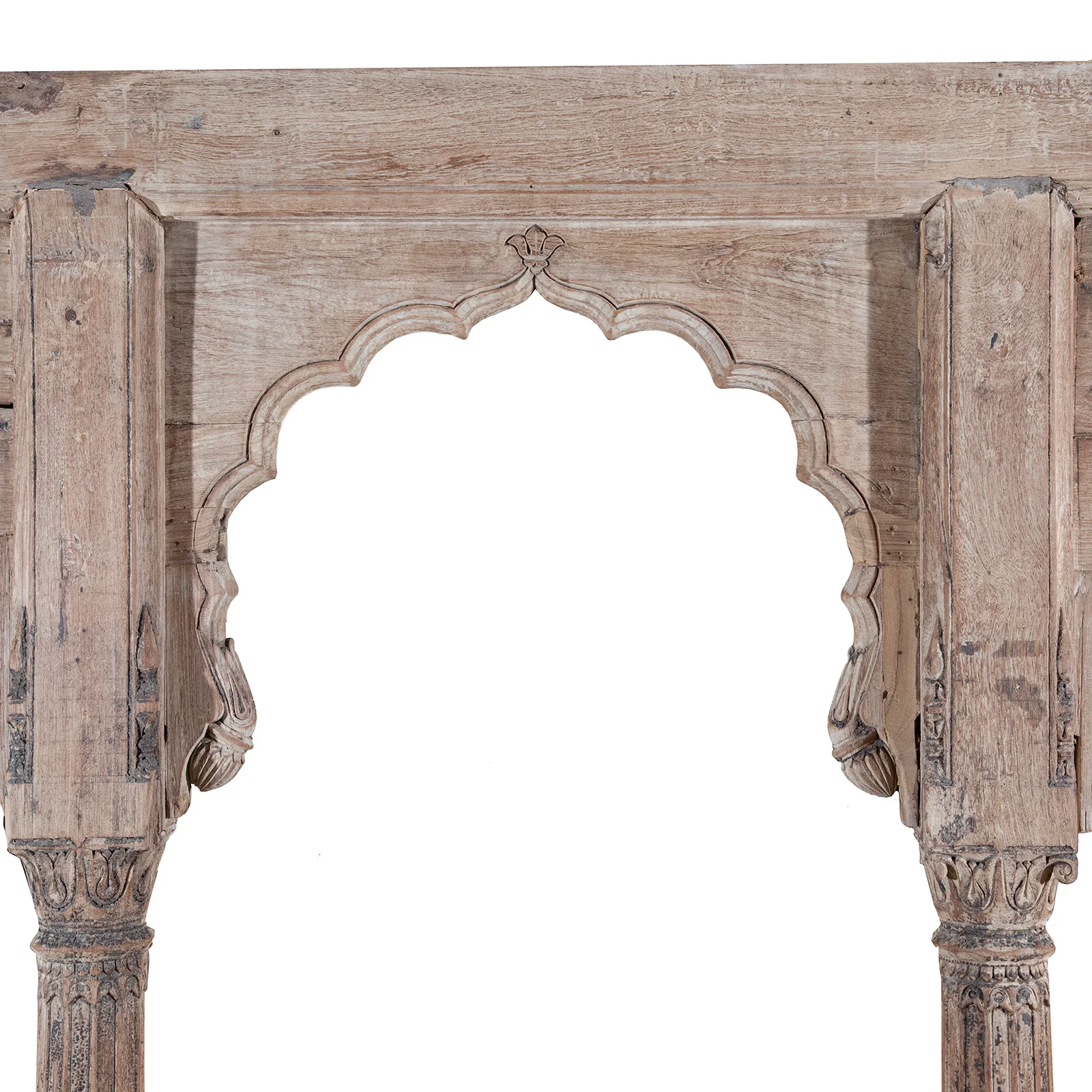
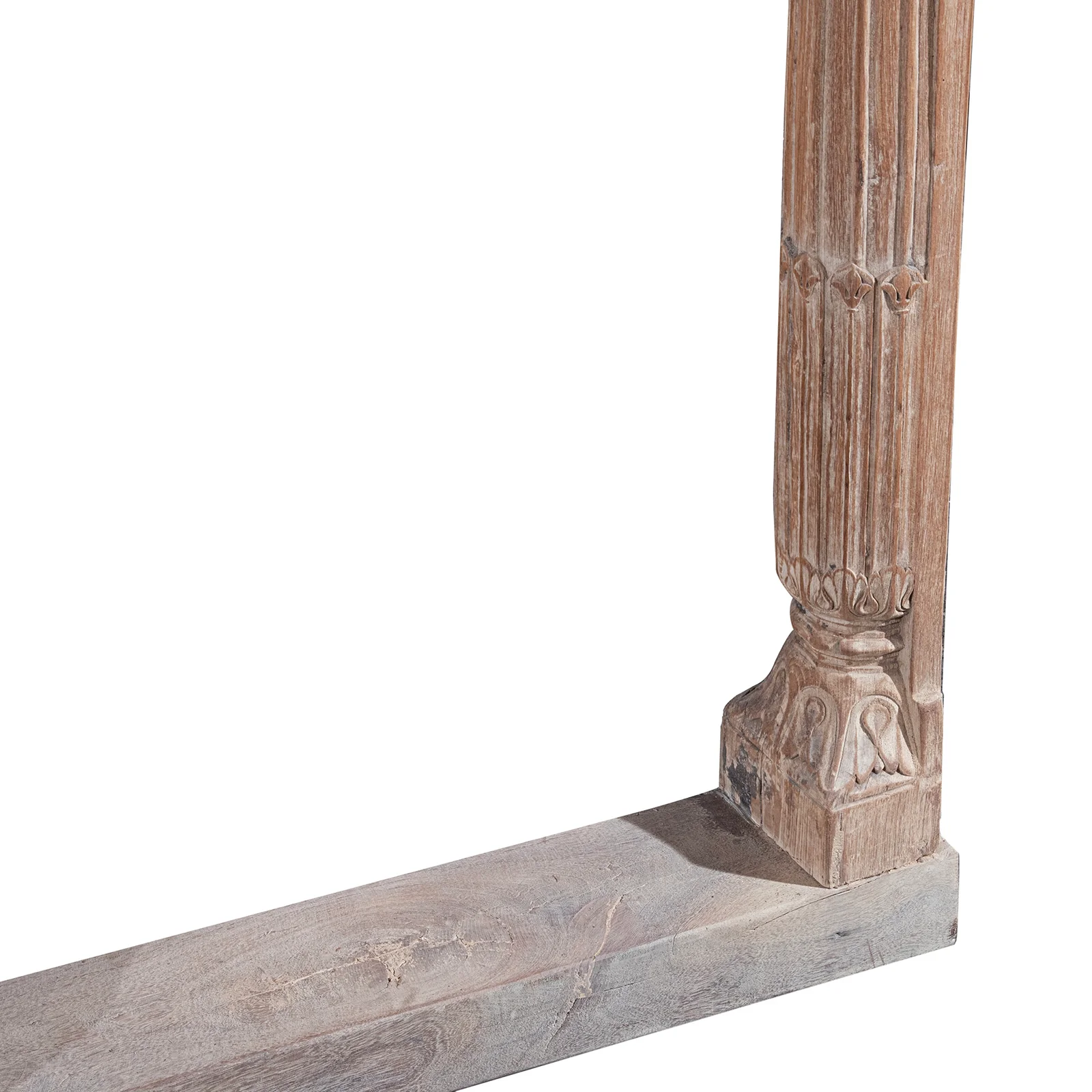
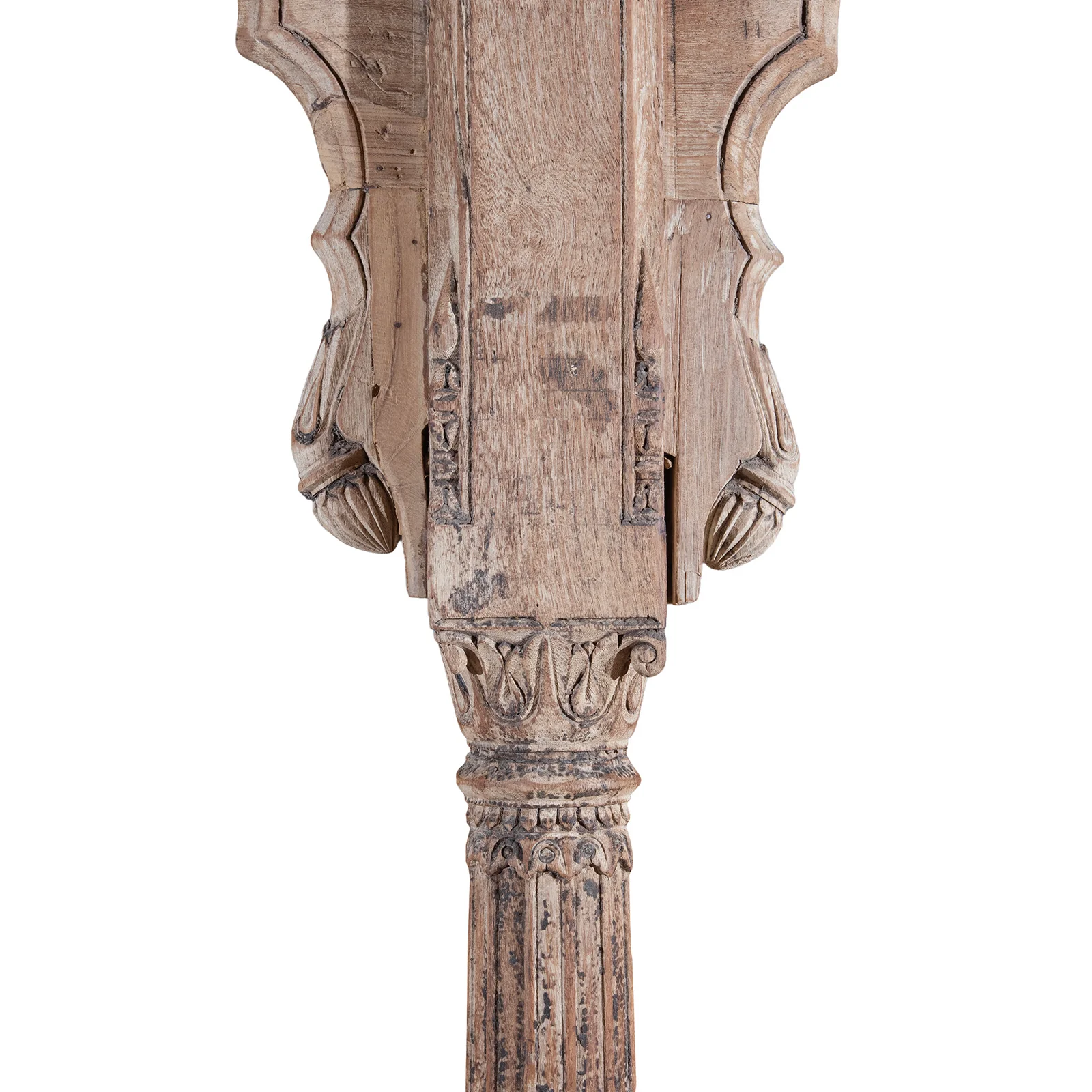
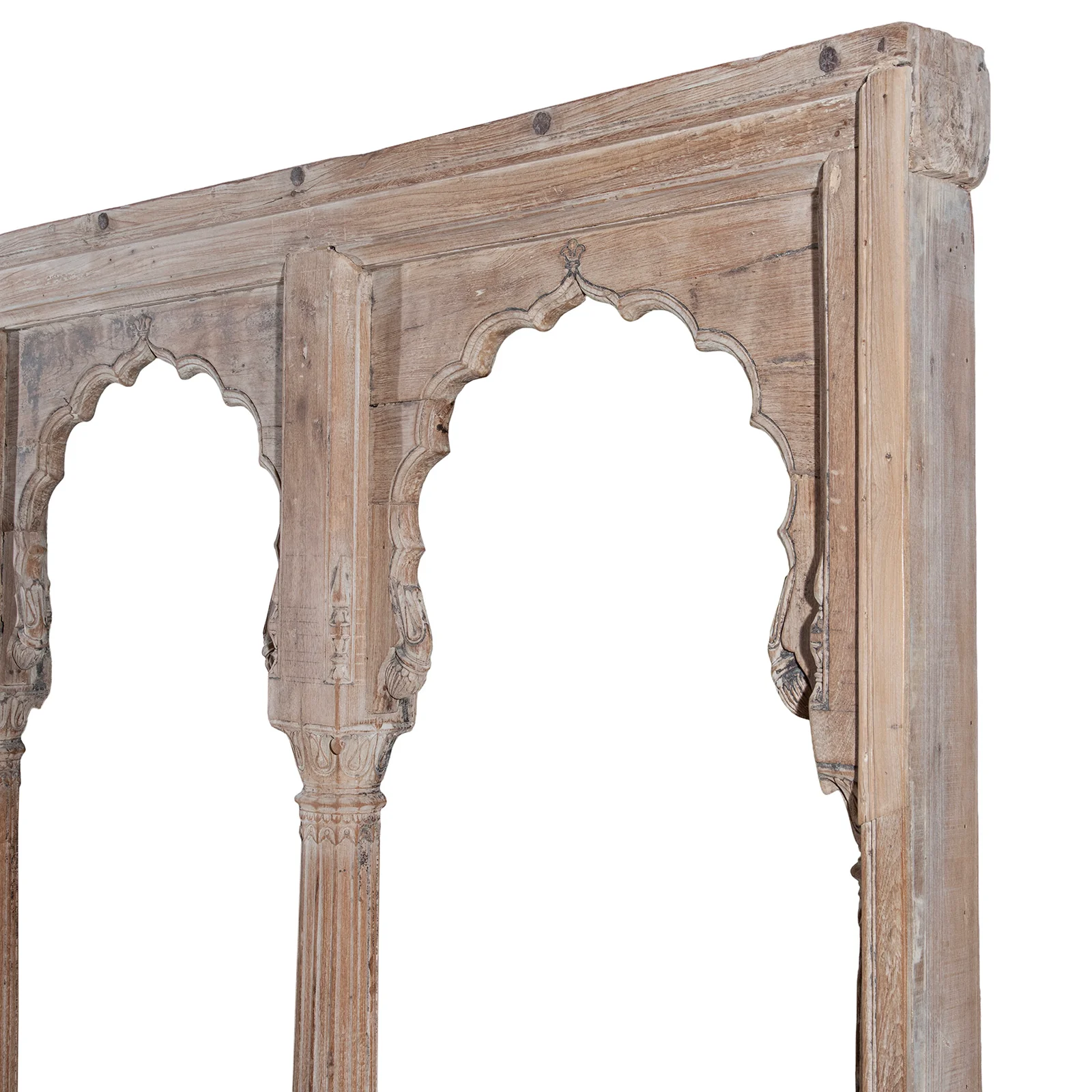
This magnificent early 19th century Indian archway from Madhya Pradesh is a striking example of Mughal-influenced architectural carving. Handcrafted from solid teak, the structure features three elegant cusped arches supported by finely carved, fluted columns with lotus-form capitals and detailed bases. The harmonious proportions and scalloped arch profiles reflect the enduring influence of Mughal design, where refined geometry meets flowing ornament.
What makes this piece particularly unusual is that it is fully carved on both sides — a rare and highly desirable feature. Designed to be viewed in the round, it would originally have formed part of an interior architectural scheme, allowing light and movement to pass between spaces while maintaining a sense of grandeur and separation. The teak has developed a soft, bleached patina over time, with visible grain, subtle surface wear and historic character that speak to its age and authenticity.
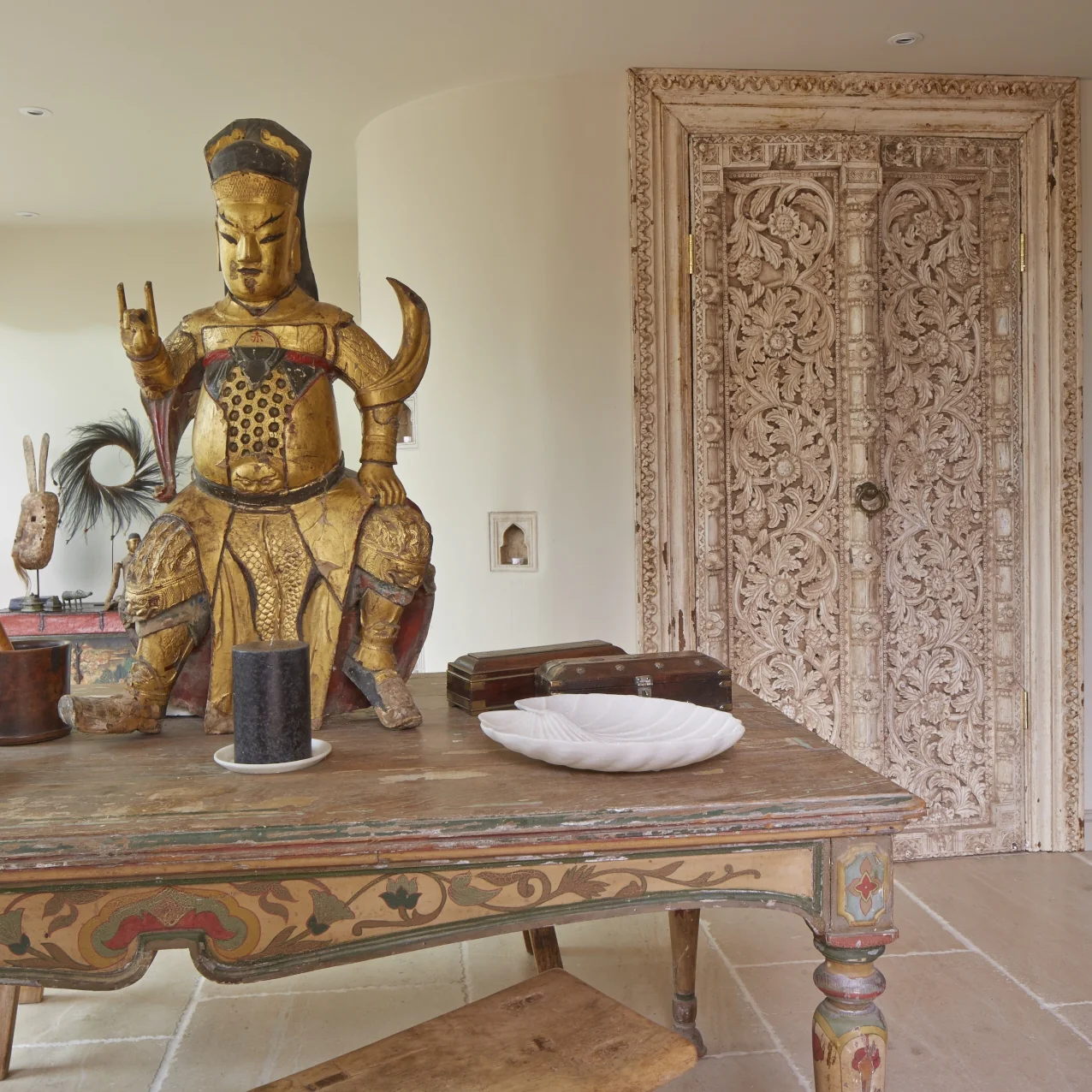
Today, this double-sided archway makes an extraordinary statement piece. Whether used as a room divider, architectural backdrop or dramatic wall feature, it has the power to transform an interior with its scale, craftsmanship and sculptural presence.
- Origin: Madhya Pradesh, India
- Date: Early 19th century
- Material: Hand carved teak wood
- Features: Triple cusped Mughal-style arches; fluted columns; carved capitals and bases; double-sided carving; original architectural element
- Condition: Antique condition with age-related wear, surface variation and patina consistent with architectural use
- Dimensions: W214 x D13 x H188 cm
Original: $2,858.17
-65%$2,858.17
$1,000.36More Images
Carved Teak Triple Arch From Madyha Pradesh - 19th Century
This magnificent early 19th century Indian archway from Madhya Pradesh is a striking example of Mughal-influenced architectural carving. Handcrafted from solid teak, the structure features three elegant cusped arches supported by finely carved, fluted columns with lotus-form capitals and detailed bases. The harmonious proportions and scalloped arch profiles reflect the enduring influence of Mughal design, where refined geometry meets flowing ornament.
What makes this piece particularly unusual is that it is fully carved on both sides — a rare and highly desirable feature. Designed to be viewed in the round, it would originally have formed part of an interior architectural scheme, allowing light and movement to pass between spaces while maintaining a sense of grandeur and separation. The teak has developed a soft, bleached patina over time, with visible grain, subtle surface wear and historic character that speak to its age and authenticity.
Today, this double-sided archway makes an extraordinary statement piece. Whether used as a room divider, architectural backdrop or dramatic wall feature, it has the power to transform an interior with its scale, craftsmanship and sculptural presence.
- Origin: Madhya Pradesh, India
- Date: Early 19th century
- Material: Hand carved teak wood
- Features: Triple cusped Mughal-style arches; fluted columns; carved capitals and bases; double-sided carving; original architectural element
- Condition: Antique condition with age-related wear, surface variation and patina consistent with architectural use
- Dimensions: W214 x D13 x H188 cm
Product Information
Product Information
Shipping & Returns
Shipping & Returns
Description
This magnificent early 19th century Indian archway from Madhya Pradesh is a striking example of Mughal-influenced architectural carving. Handcrafted from solid teak, the structure features three elegant cusped arches supported by finely carved, fluted columns with lotus-form capitals and detailed bases. The harmonious proportions and scalloped arch profiles reflect the enduring influence of Mughal design, where refined geometry meets flowing ornament.
What makes this piece particularly unusual is that it is fully carved on both sides — a rare and highly desirable feature. Designed to be viewed in the round, it would originally have formed part of an interior architectural scheme, allowing light and movement to pass between spaces while maintaining a sense of grandeur and separation. The teak has developed a soft, bleached patina over time, with visible grain, subtle surface wear and historic character that speak to its age and authenticity.
Today, this double-sided archway makes an extraordinary statement piece. Whether used as a room divider, architectural backdrop or dramatic wall feature, it has the power to transform an interior with its scale, craftsmanship and sculptural presence.
- Origin: Madhya Pradesh, India
- Date: Early 19th century
- Material: Hand carved teak wood
- Features: Triple cusped Mughal-style arches; fluted columns; carved capitals and bases; double-sided carving; original architectural element
- Condition: Antique condition with age-related wear, surface variation and patina consistent with architectural use
- Dimensions: W214 x D13 x H188 cm