Bleached Teak Rajasthani Mirror - 19th Century
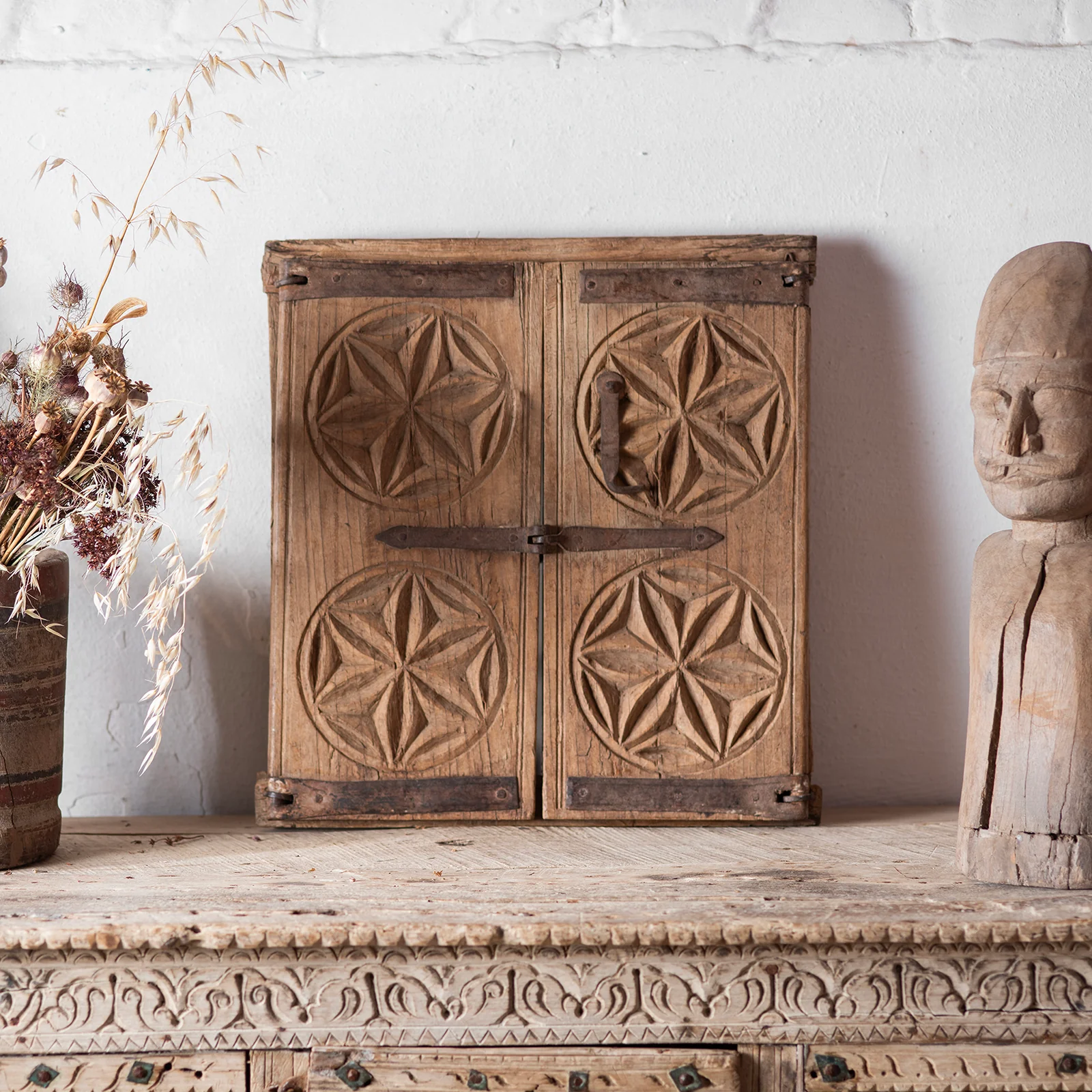
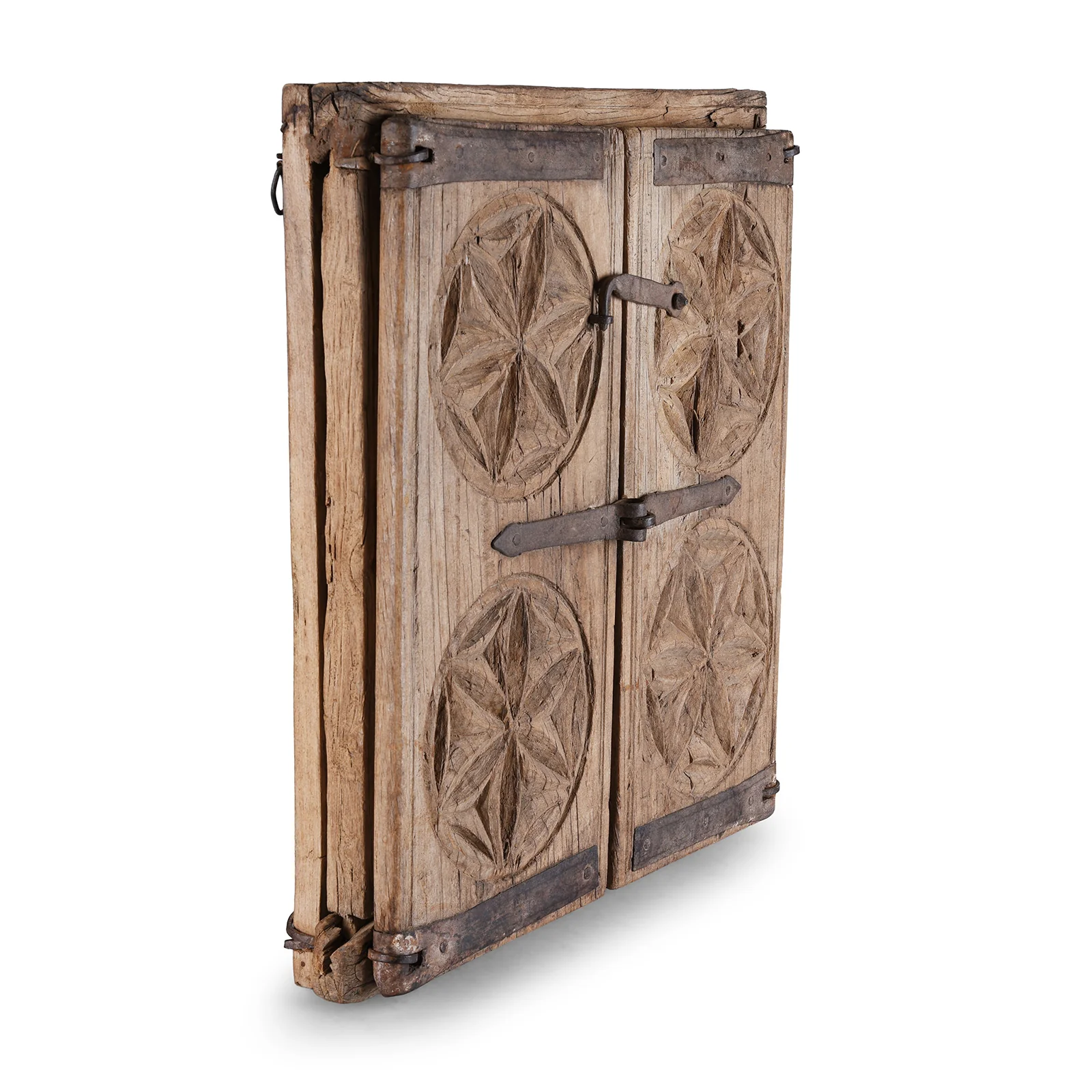
This 19th-century mirror has been made from an original pair of teak cupboard shutters from Rajasthan, most likely from the Jaisalmer region. Once part of a built-in wall cabinet, the doors have been repurposed to form a compact mirror, retaining their original structure and hardware.
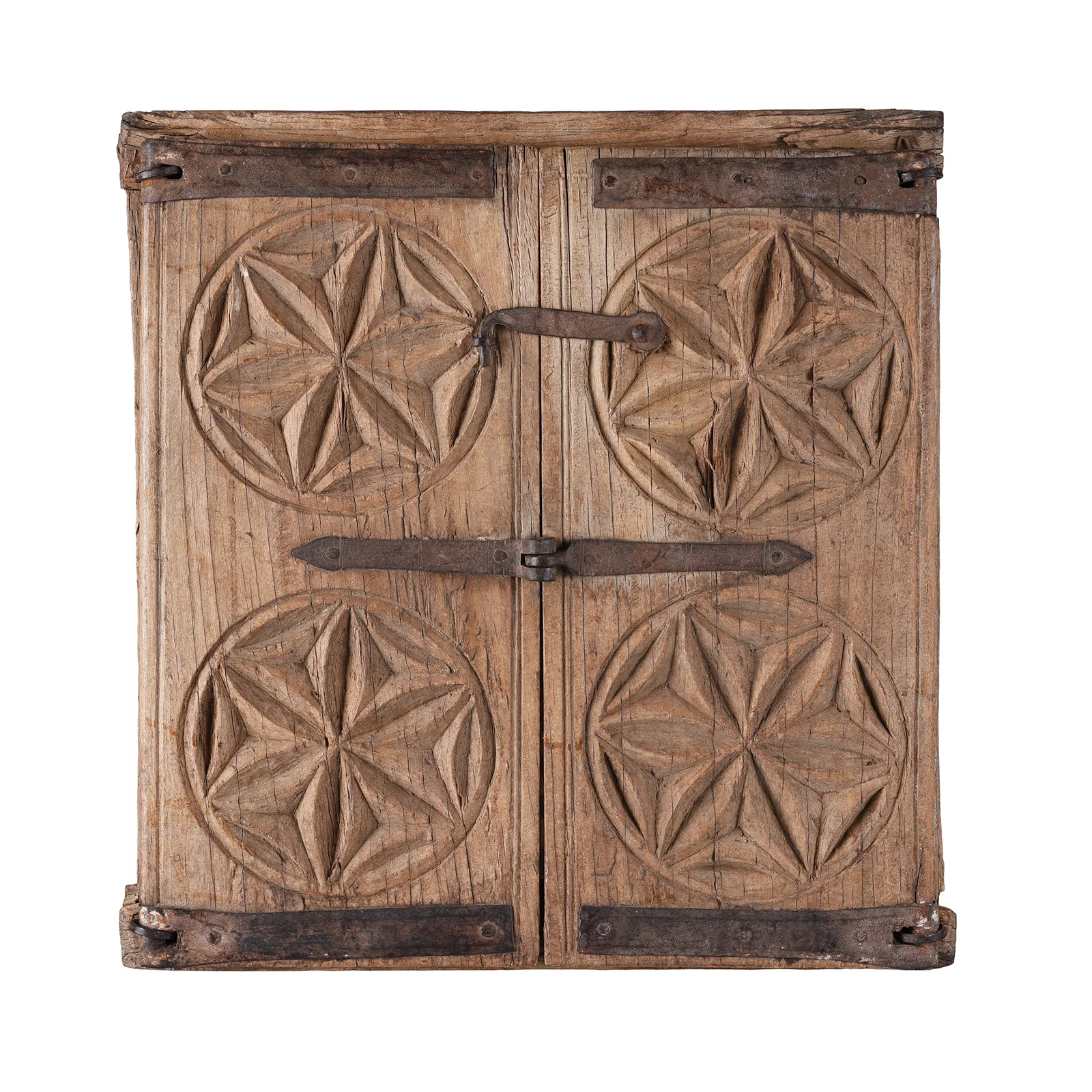
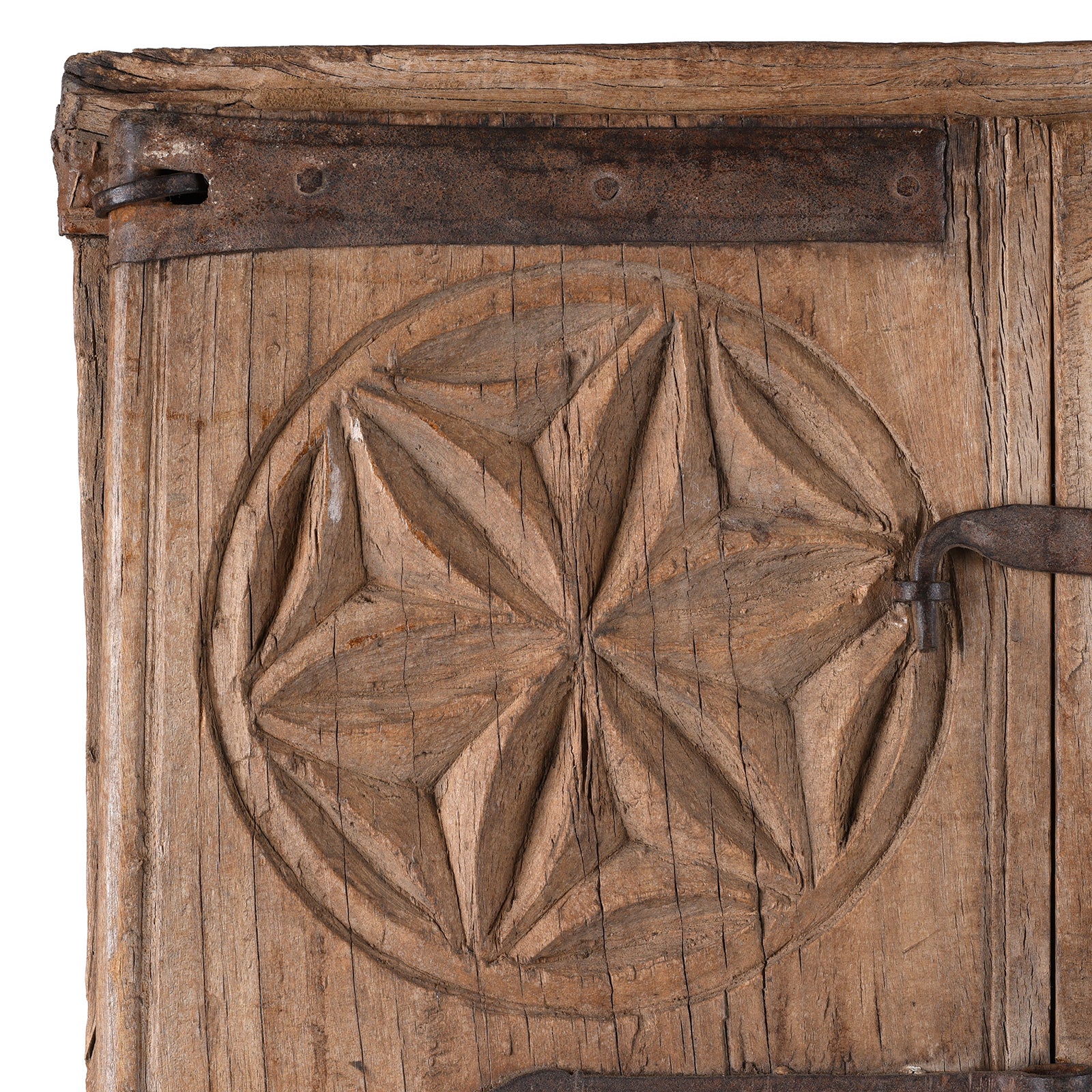
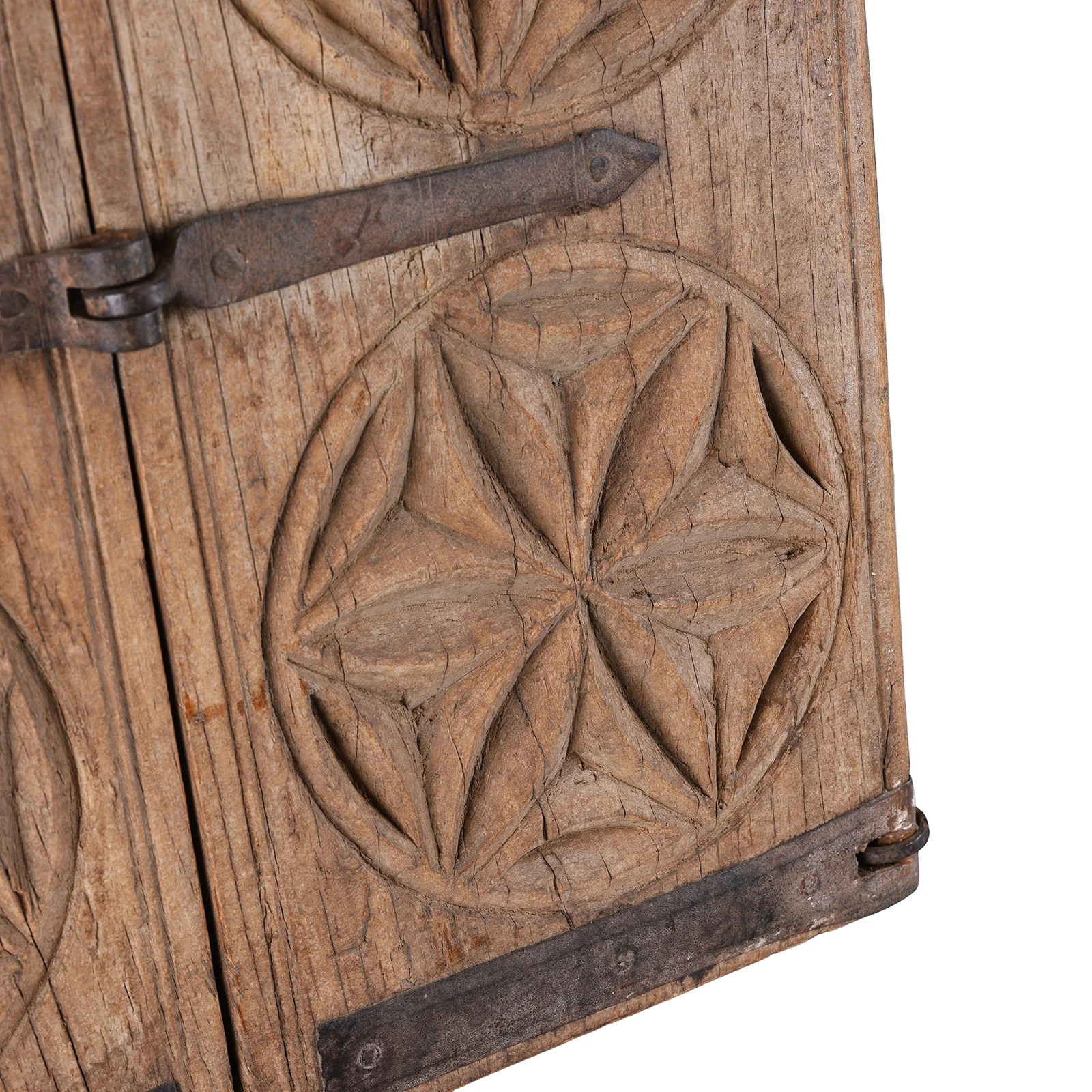
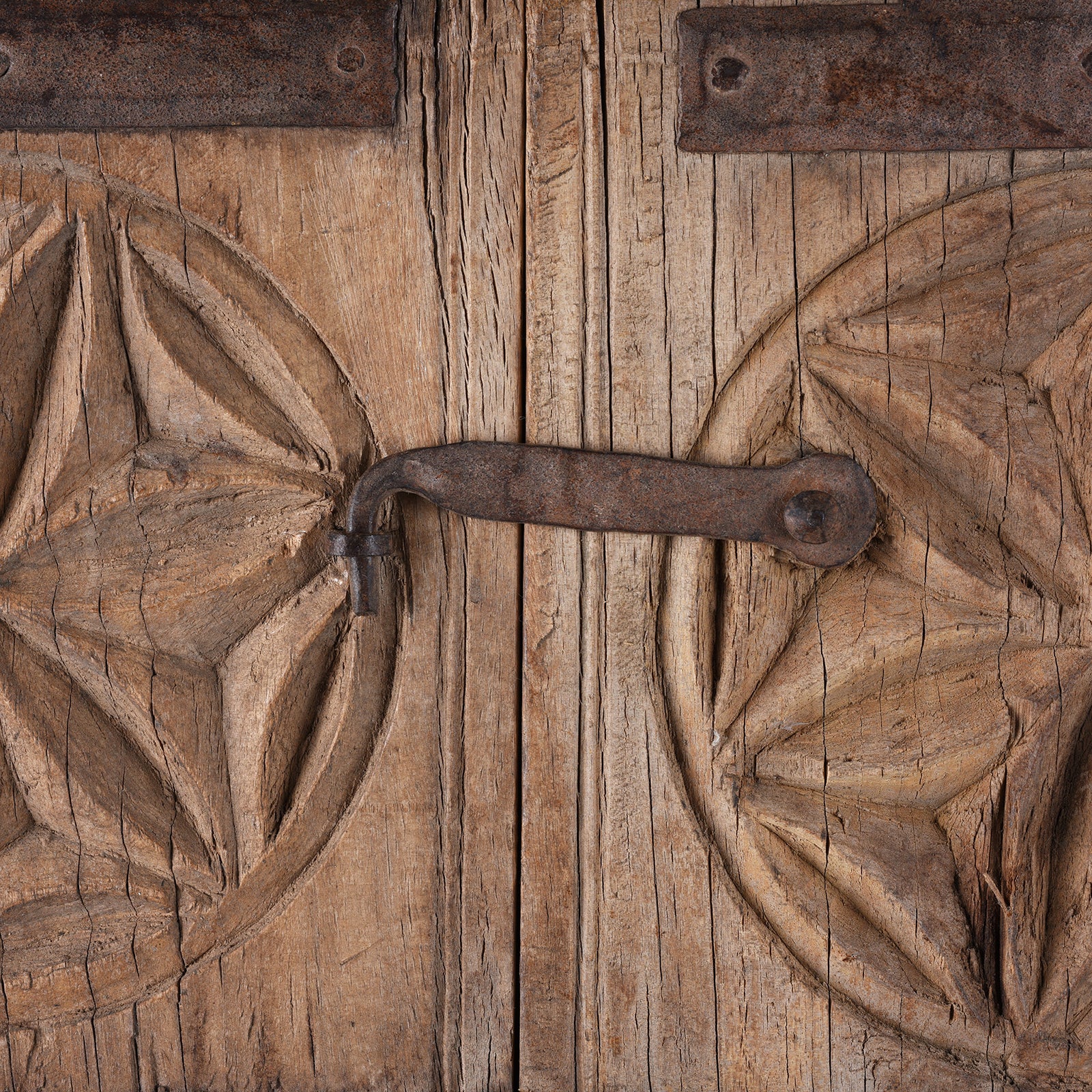
The front is defined by deeply carved lotus rosettes, a motif widely used in Jaisalmer’s architecture. The lotus is a symbol of purity and renewal, and in this context also carries an auspicious, protective meaning, which is why it appears so prominently on domestic elements such as doors and cupboards. The repeated circular carvings give the piece a strong, rhythmic surface that would have originally been both decorative and symbolic.
The teak has naturally lightened over time through exposure to heat and sunlight, leaving a dry, bleached surface that highlights the grain and age of the wood. Original iron strap hinges and latch remain in place, reinforcing its origin as a working architectural element.
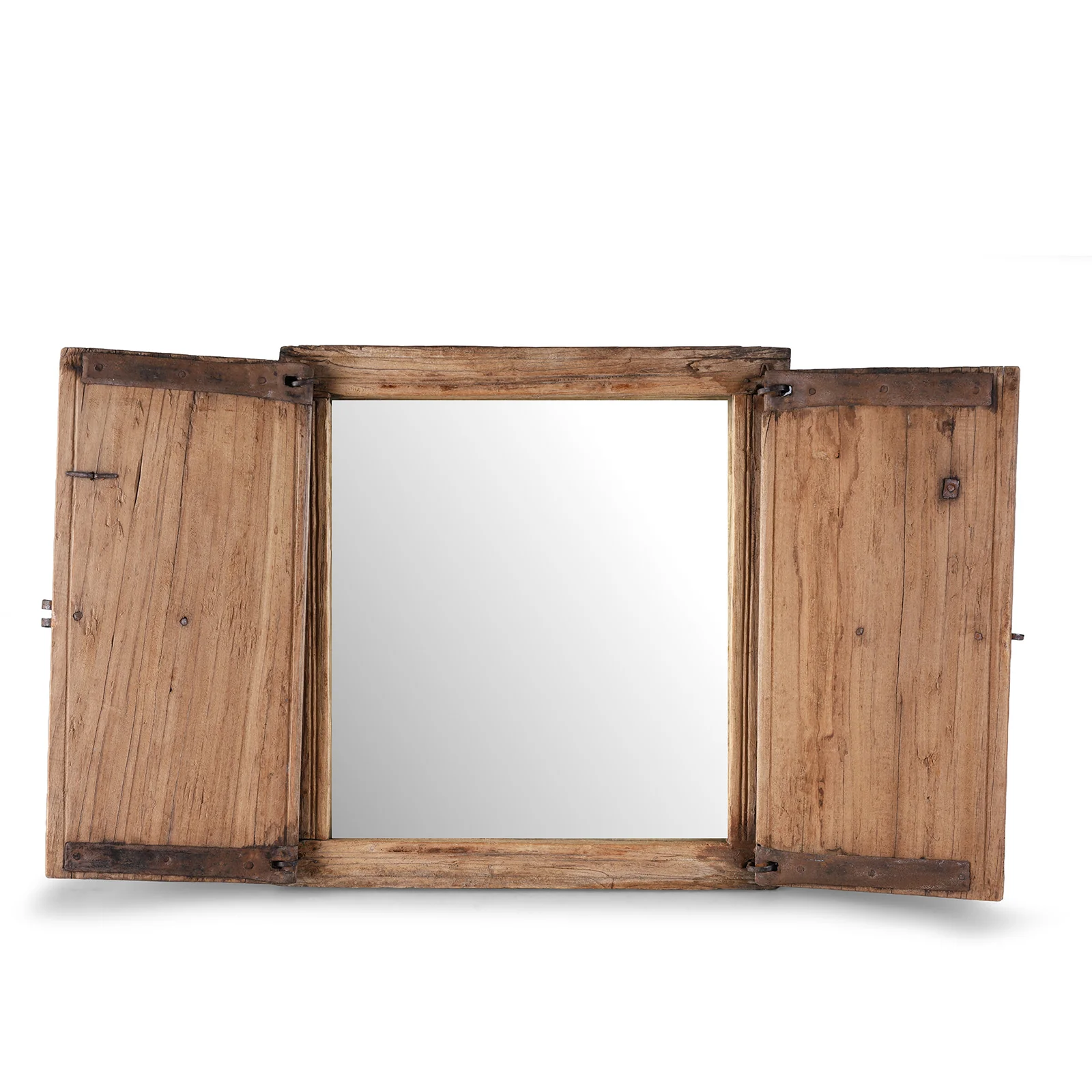
When opened, the shutters reveal a central mirror, making it a practical piece for everyday use. It works well in a hallway, bathroom, or smaller space where something with depth and character is needed.
- Origin: Rajasthan, India (Jaisalmer region)
- Date: 19th Century
- Materials: Teak wood, glass mirror, iron hardware
- Features: Hand-carved lotus motifs, original iron hinges and latch, opening shutter design, repurposed architectural element
- Condition: Good antique condition with age-related wear and patina consistent with use. Restored in our UK workshops.
- Dimensions: Width 43 × Depth 8 × Height 46 cm
A practical and characterful mirror made from 19th-century Rajasthani architectural elements, with strong carved detail and original hardware.
Original: $348.82
-65%$348.82
$122.09More Images
Bleached Teak Rajasthani Mirror - 19th Century
This 19th-century mirror has been made from an original pair of teak cupboard shutters from Rajasthan, most likely from the Jaisalmer region. Once part of a built-in wall cabinet, the doors have been repurposed to form a compact mirror, retaining their original structure and hardware.
The front is defined by deeply carved lotus rosettes, a motif widely used in Jaisalmer’s architecture. The lotus is a symbol of purity and renewal, and in this context also carries an auspicious, protective meaning, which is why it appears so prominently on domestic elements such as doors and cupboards. The repeated circular carvings give the piece a strong, rhythmic surface that would have originally been both decorative and symbolic.
The teak has naturally lightened over time through exposure to heat and sunlight, leaving a dry, bleached surface that highlights the grain and age of the wood. Original iron strap hinges and latch remain in place, reinforcing its origin as a working architectural element.
When opened, the shutters reveal a central mirror, making it a practical piece for everyday use. It works well in a hallway, bathroom, or smaller space where something with depth and character is needed.
- Origin: Rajasthan, India (Jaisalmer region)
- Date: 19th Century
- Materials: Teak wood, glass mirror, iron hardware
- Features: Hand-carved lotus motifs, original iron hinges and latch, opening shutter design, repurposed architectural element
- Condition: Good antique condition with age-related wear and patina consistent with use. Restored in our UK workshops.
- Dimensions: Width 43 × Depth 8 × Height 46 cm
A practical and characterful mirror made from 19th-century Rajasthani architectural elements, with strong carved detail and original hardware.
Product Information
Product Information
Shipping & Returns
Shipping & Returns
Description
This 19th-century mirror has been made from an original pair of teak cupboard shutters from Rajasthan, most likely from the Jaisalmer region. Once part of a built-in wall cabinet, the doors have been repurposed to form a compact mirror, retaining their original structure and hardware.
The front is defined by deeply carved lotus rosettes, a motif widely used in Jaisalmer’s architecture. The lotus is a symbol of purity and renewal, and in this context also carries an auspicious, protective meaning, which is why it appears so prominently on domestic elements such as doors and cupboards. The repeated circular carvings give the piece a strong, rhythmic surface that would have originally been both decorative and symbolic.
The teak has naturally lightened over time through exposure to heat and sunlight, leaving a dry, bleached surface that highlights the grain and age of the wood. Original iron strap hinges and latch remain in place, reinforcing its origin as a working architectural element.
When opened, the shutters reveal a central mirror, making it a practical piece for everyday use. It works well in a hallway, bathroom, or smaller space where something with depth and character is needed.
- Origin: Rajasthan, India (Jaisalmer region)
- Date: 19th Century
- Materials: Teak wood, glass mirror, iron hardware
- Features: Hand-carved lotus motifs, original iron hinges and latch, opening shutter design, repurposed architectural element
- Condition: Good antique condition with age-related wear and patina consistent with use. Restored in our UK workshops.
- Dimensions: Width 43 × Depth 8 × Height 46 cm
A practical and characterful mirror made from 19th-century Rajasthani architectural elements, with strong carved detail and original hardware.