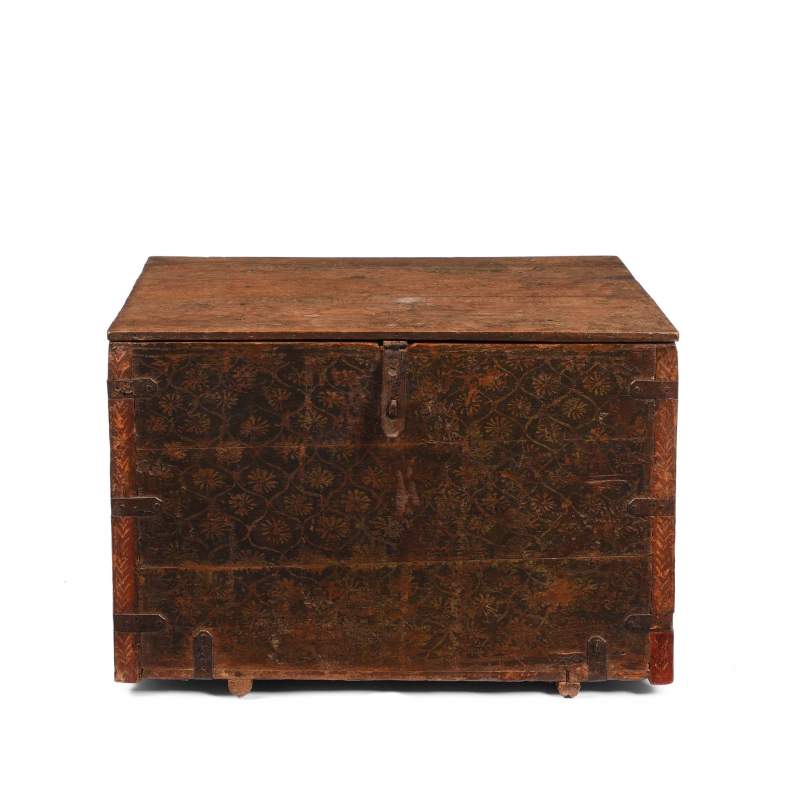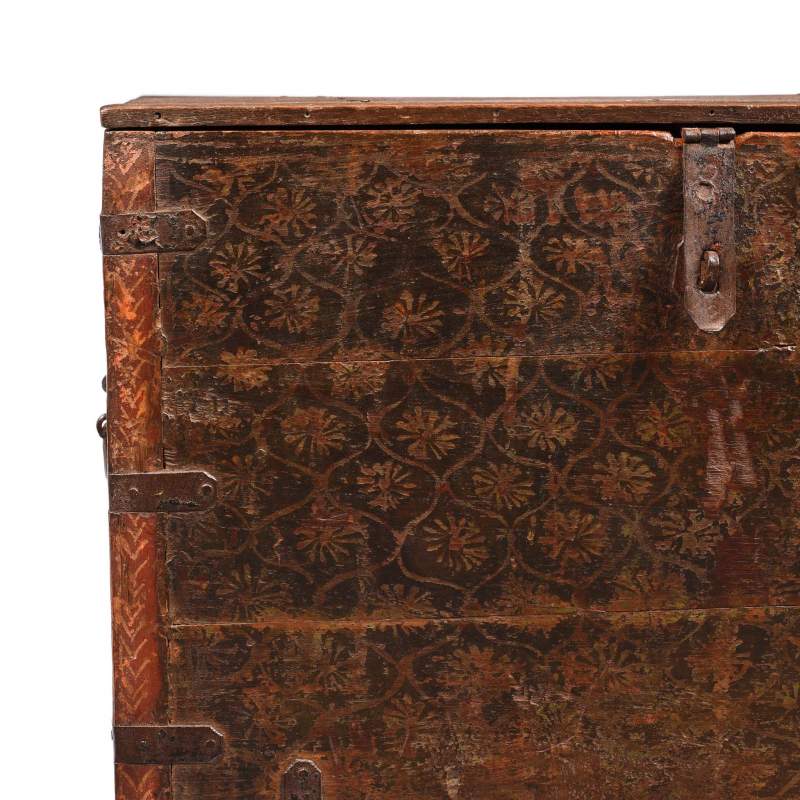
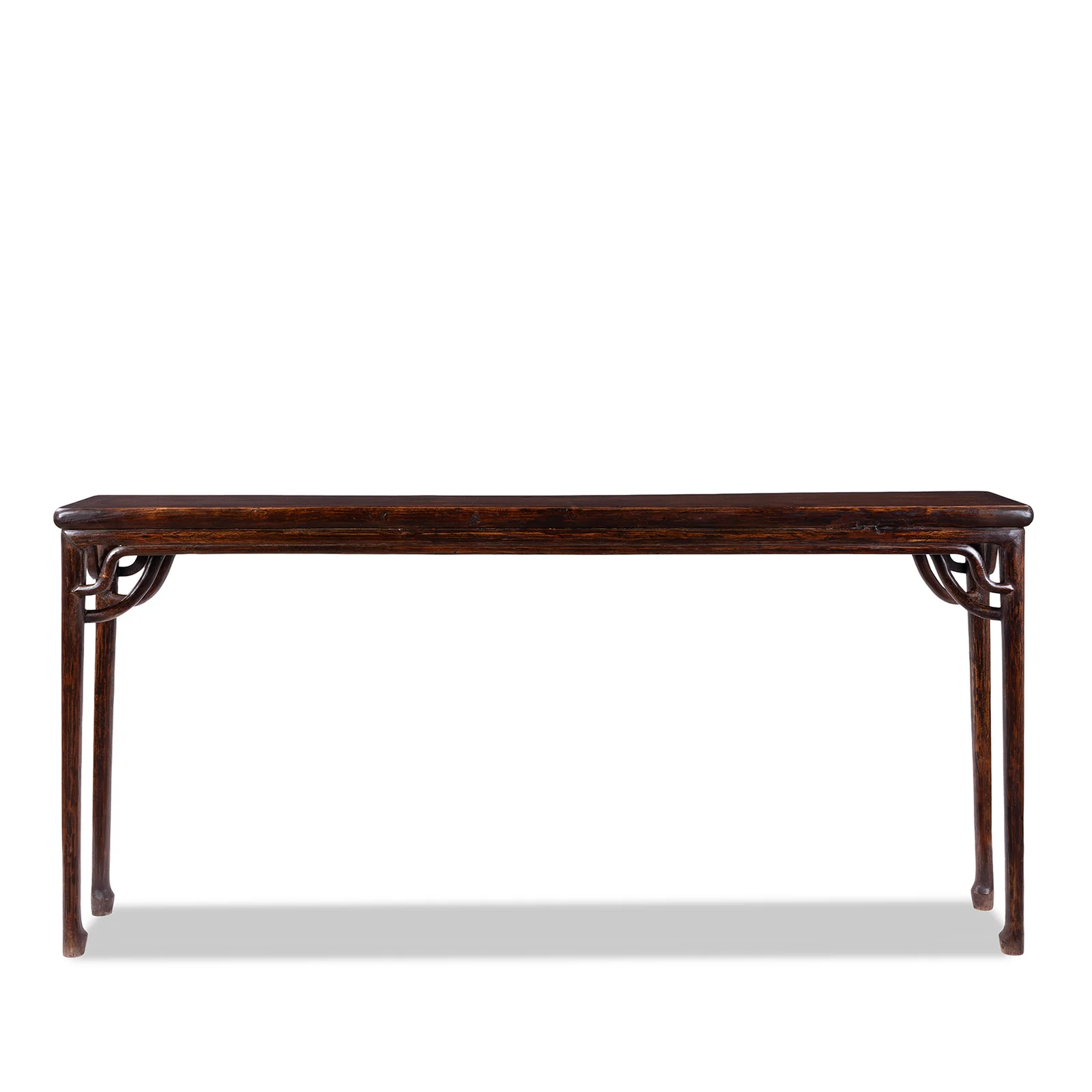
Poplar Altar Table From Hebei - 19th Century
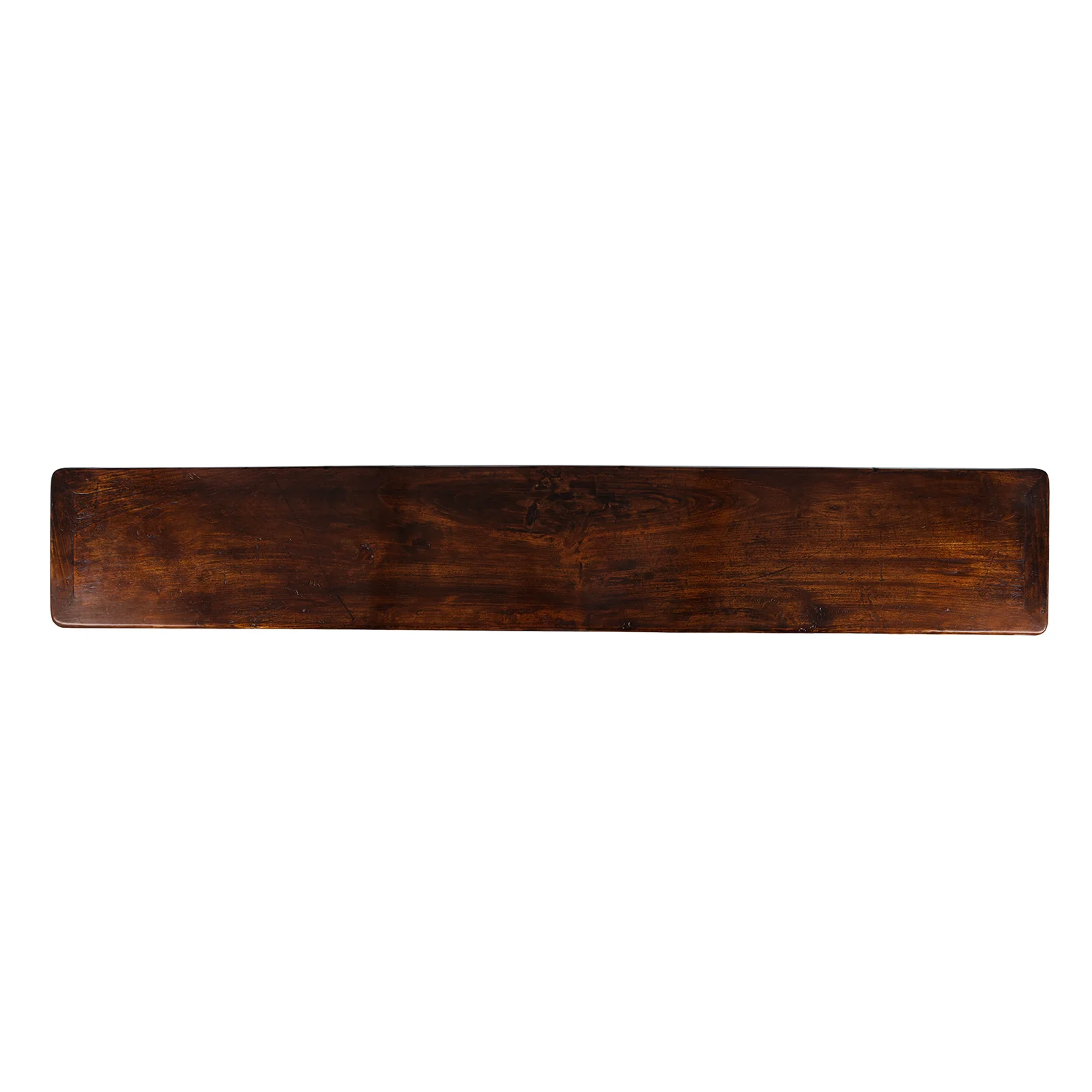
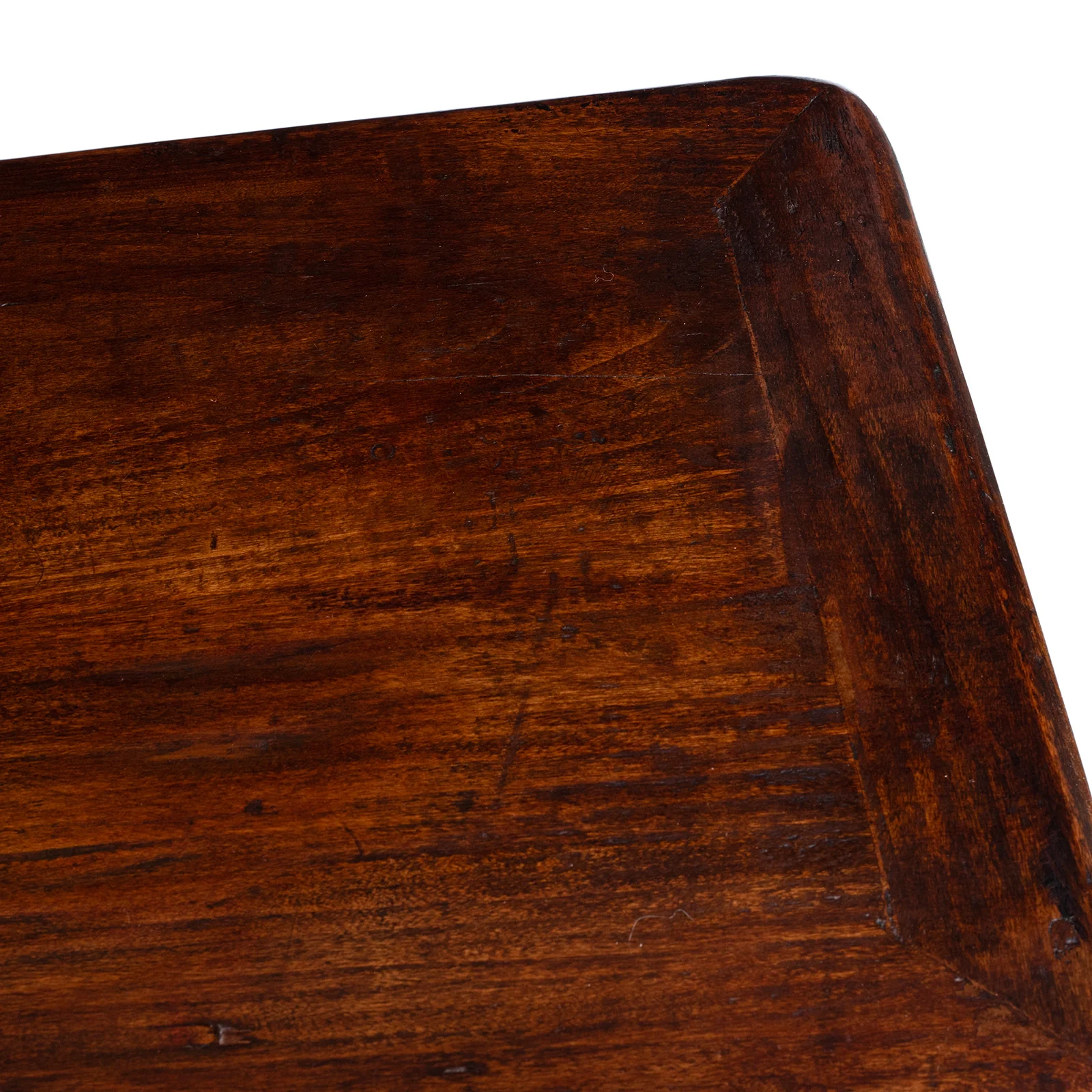
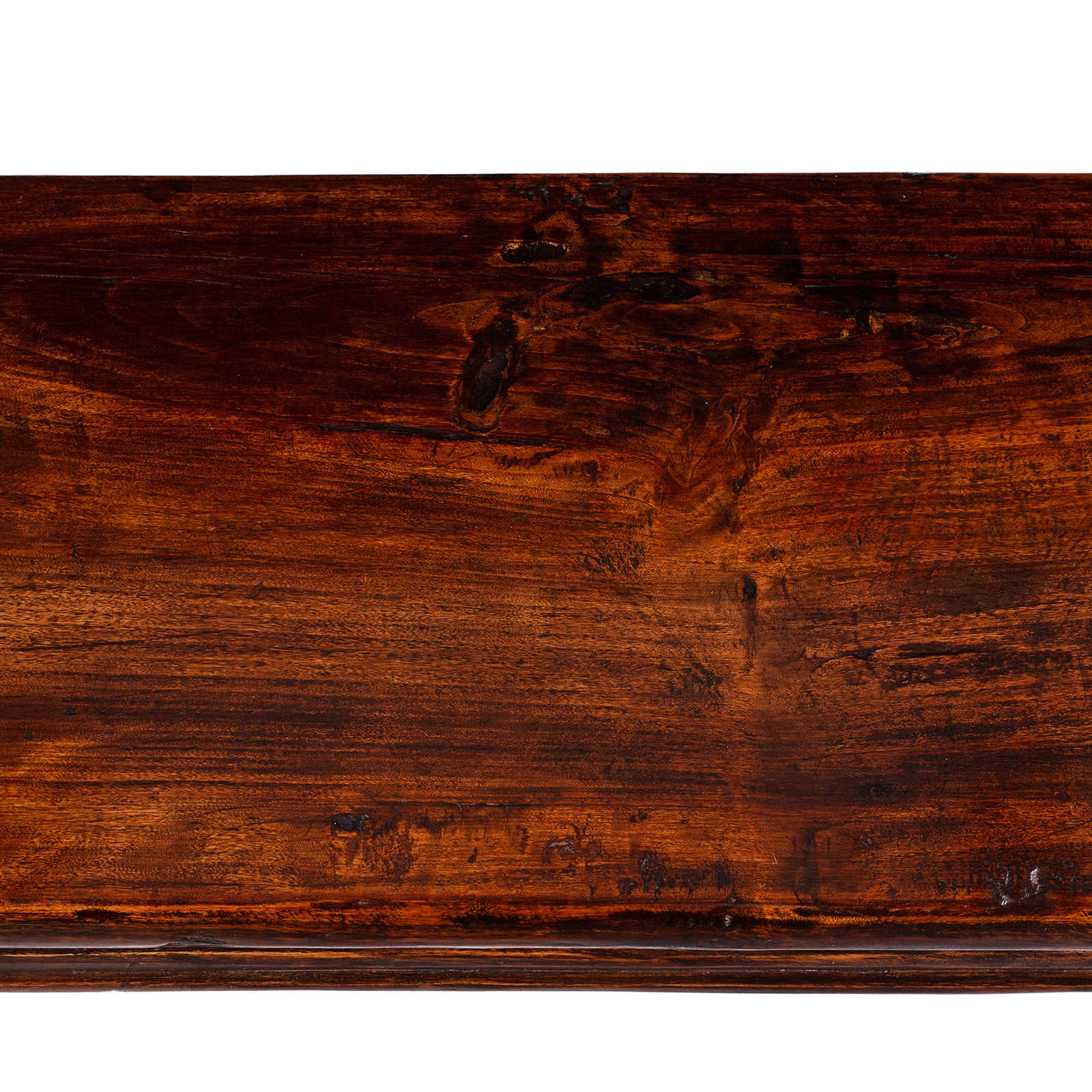
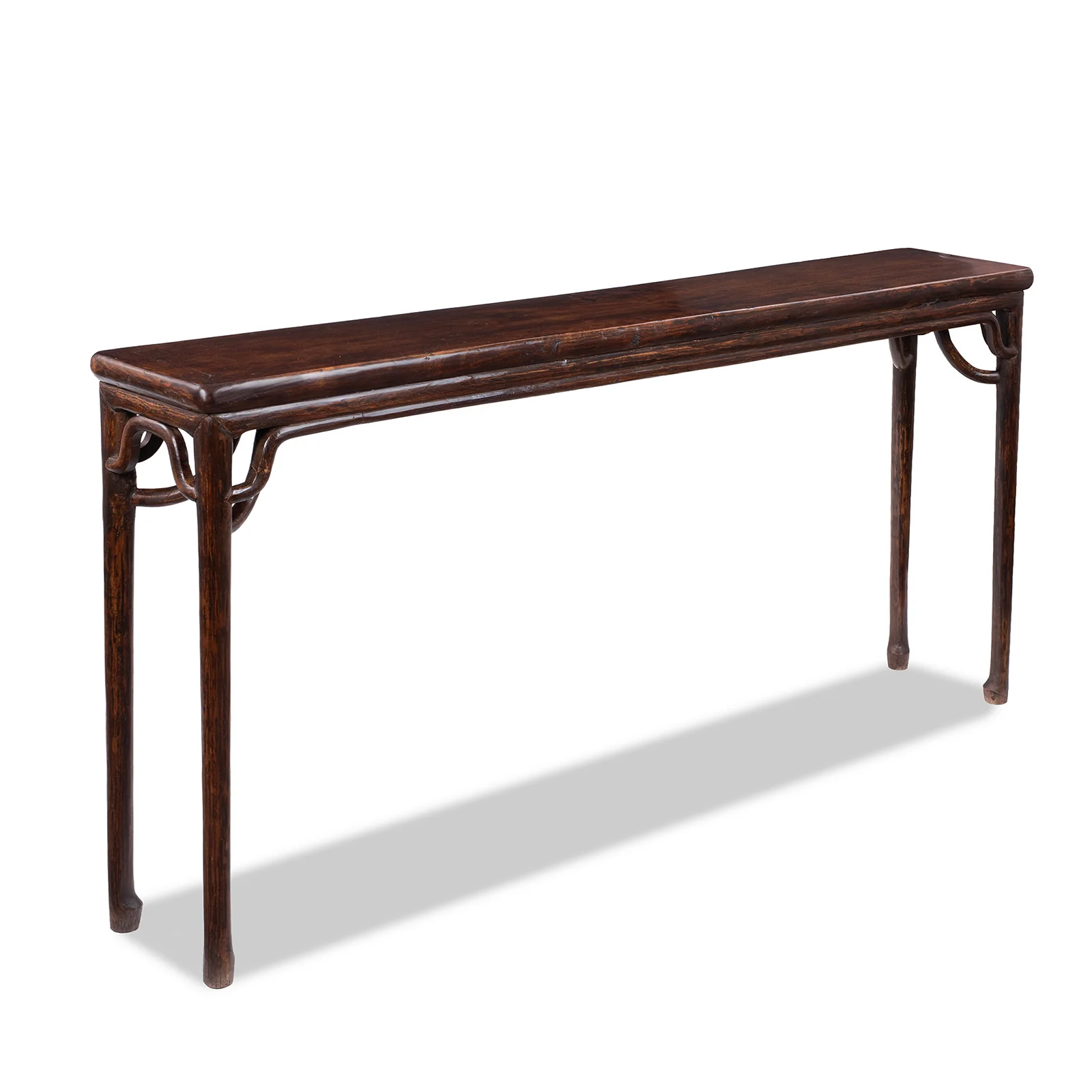
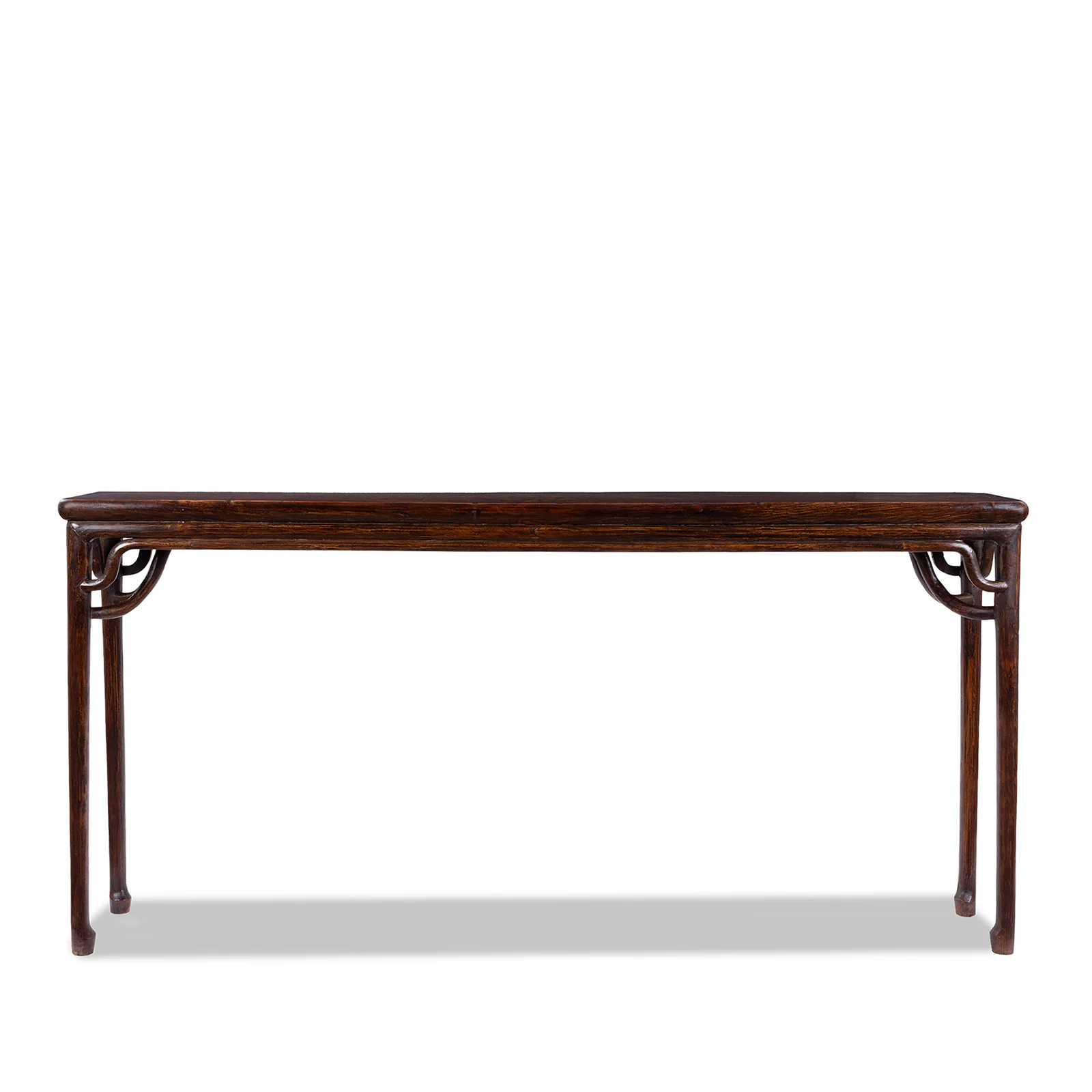
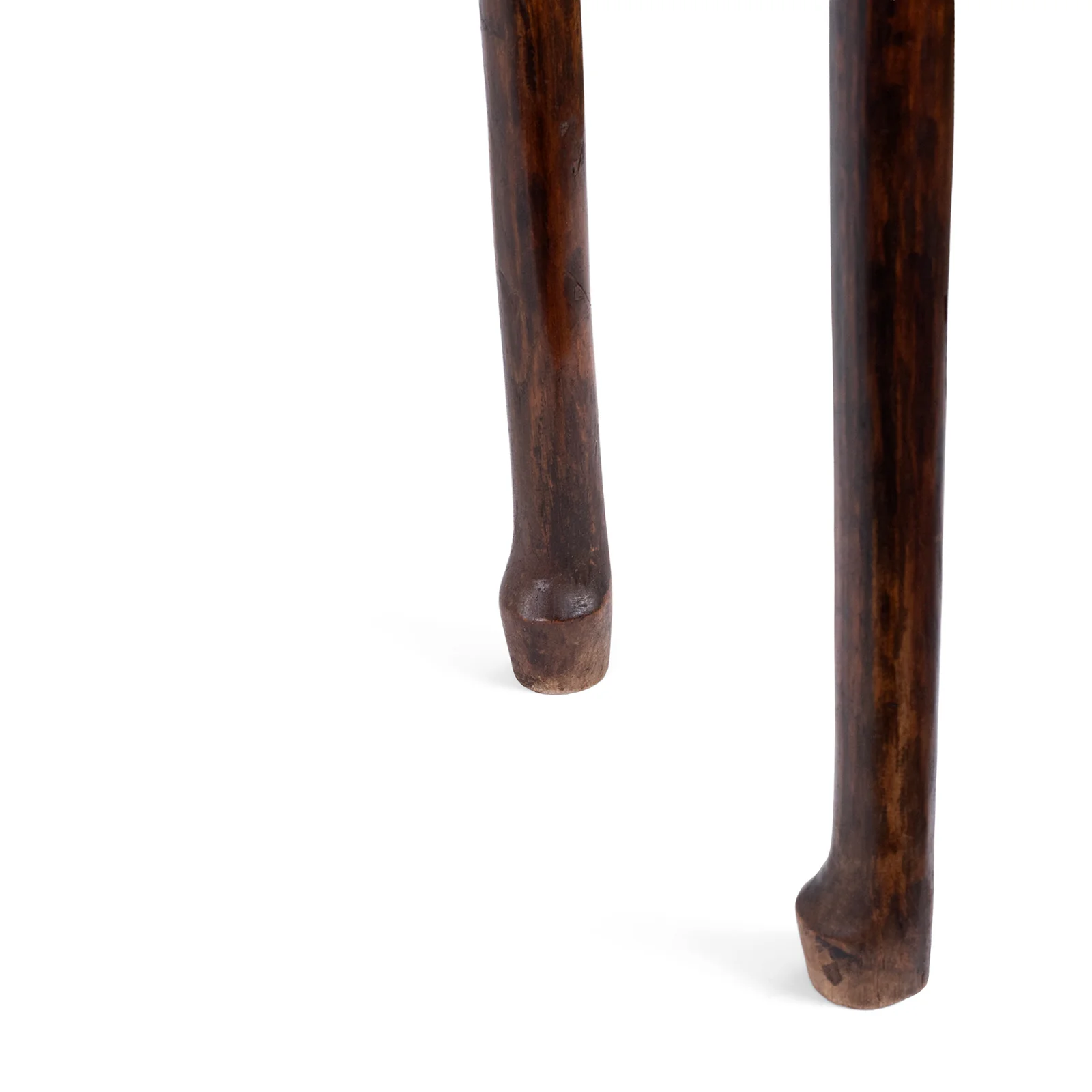
This elegant 19th-century altar table from Hebei is crafted in poplar (杨木, yáng mù) and retains traces of its original burgundy lacquer. Long and narrow, it follows the classical altar-table proportion used for ancestral offerings and incense, its rounded corners and gently curving aprons lending a quiet, scholarly restraint.
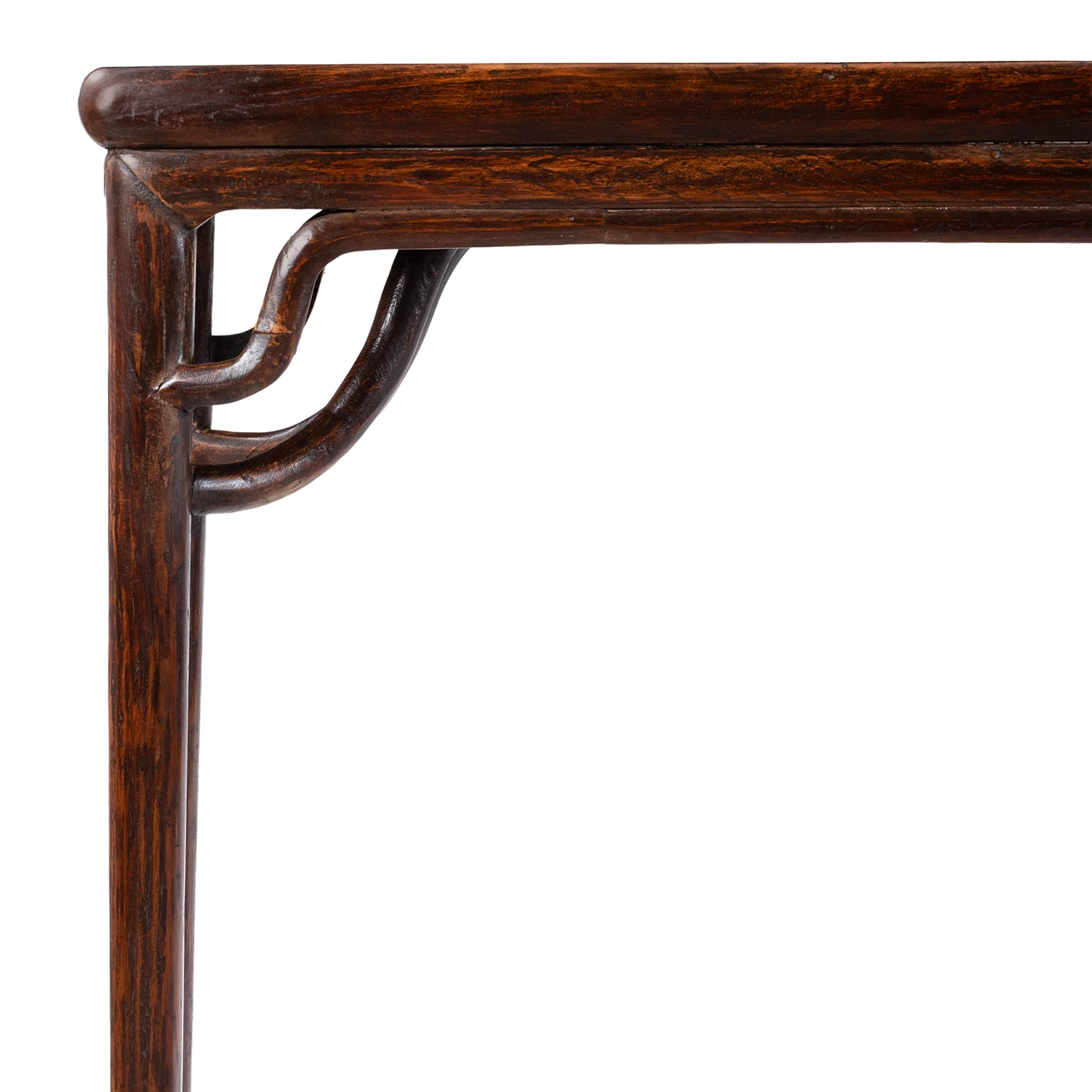
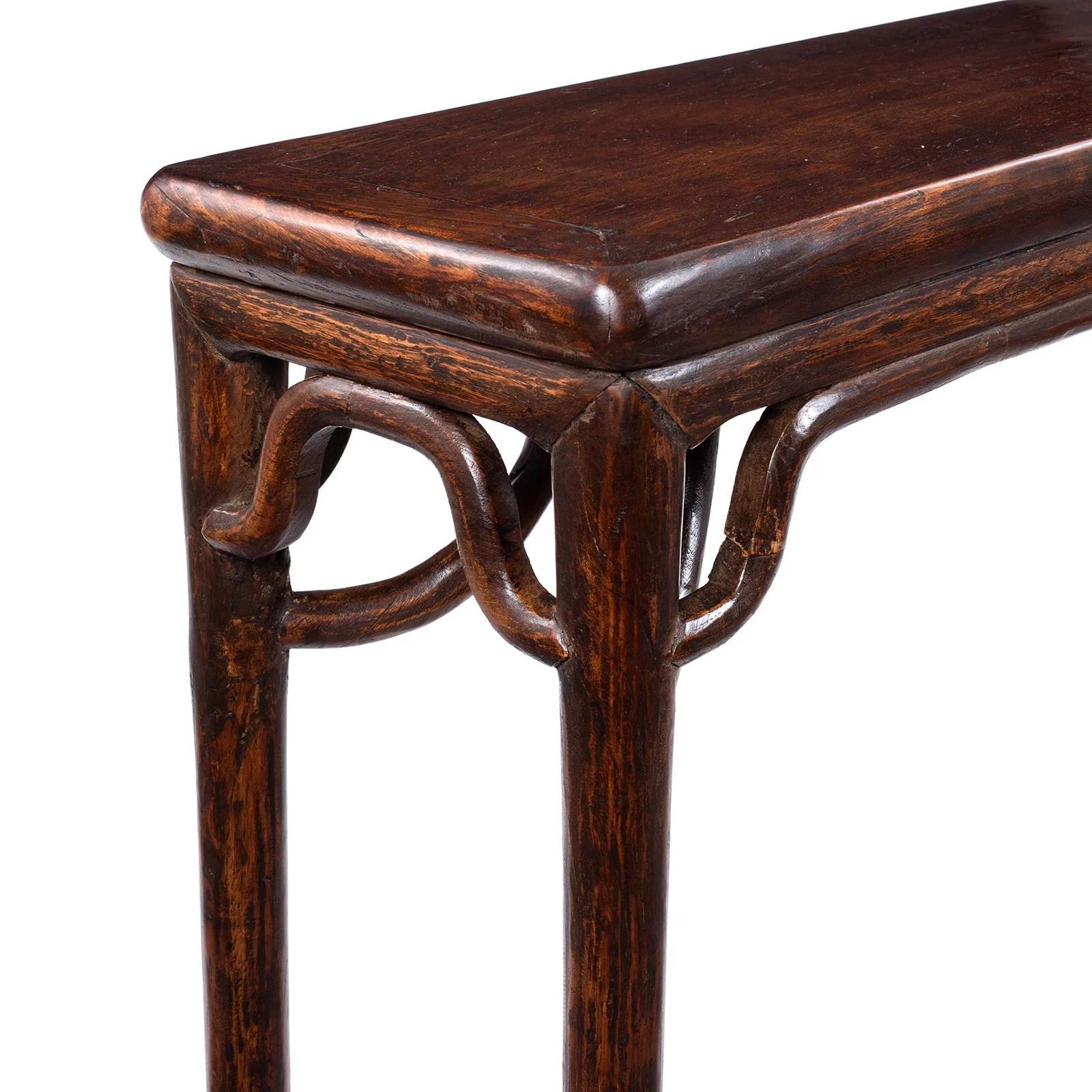
A highlight is the pair of giant's-arm braces - sweeping S-curved buttresses that tie the aprons to the legs. In classical furniture these braces were engineered to provide exceptional rigidity at the leg-apron junction without needing humpback stretchers, which increases open legroom beneath the table while keeping the silhouette light. The braces are a celebrated Ming-period solution: shaped, shouldered and tenoned into the aprons and legs, they act as deep diagonal struts that resist racking when the long, slim top is loaded.
The table is built with traditional mortise-and-tenon (榫卯, sǔn-mǎo) joinery - the hallmark of Chinese furniture - where tight, interlocking joints carry the structure without nails or glue, prized for strength, longevity and the clean, unobtrusive look of concealed fixings. Typical table construction uses variations such as mitred mortise-and-tenon frames and embracing-shoulder tenons to lock corners and shoulders against twist; together with the giant's-arm braces, these create a frame that is both slender and remarkably stable.
- Origin: Hebei province, China
- Date: 19th Century
- Materials: Poplar (杨木) with worn burgundy lacquer
- Features: Giant's-arm braces; rounded corners; narrow, elegant proportions; warm aged patina
- Joinery: Traditional mortise-and-tenon construction; braces acting as diagonal struts that replace humpback stretchers for legroom and stability
- Condition: Excellent antique condition with age-related wear
A versatile piece where refined joinery and architectural braces deliver both poise and strength - equally compelling in contemporary or traditional interiors.
Original: $2,549.91
-65%$2,549.91
$892.47More Images
Poplar Altar Table From Hebei - 19th Century
This elegant 19th-century altar table from Hebei is crafted in poplar (杨木, yáng mù) and retains traces of its original burgundy lacquer. Long and narrow, it follows the classical altar-table proportion used for ancestral offerings and incense, its rounded corners and gently curving aprons lending a quiet, scholarly restraint.
A highlight is the pair of giant's-arm braces - sweeping S-curved buttresses that tie the aprons to the legs. In classical furniture these braces were engineered to provide exceptional rigidity at the leg-apron junction without needing humpback stretchers, which increases open legroom beneath the table while keeping the silhouette light. The braces are a celebrated Ming-period solution: shaped, shouldered and tenoned into the aprons and legs, they act as deep diagonal struts that resist racking when the long, slim top is loaded.
The table is built with traditional mortise-and-tenon (榫卯, sǔn-mǎo) joinery - the hallmark of Chinese furniture - where tight, interlocking joints carry the structure without nails or glue, prized for strength, longevity and the clean, unobtrusive look of concealed fixings. Typical table construction uses variations such as mitred mortise-and-tenon frames and embracing-shoulder tenons to lock corners and shoulders against twist; together with the giant's-arm braces, these create a frame that is both slender and remarkably stable.
- Origin: Hebei province, China
- Date: 19th Century
- Materials: Poplar (杨木) with worn burgundy lacquer
- Features: Giant's-arm braces; rounded corners; narrow, elegant proportions; warm aged patina
- Joinery: Traditional mortise-and-tenon construction; braces acting as diagonal struts that replace humpback stretchers for legroom and stability
- Condition: Excellent antique condition with age-related wear
A versatile piece where refined joinery and architectural braces deliver both poise and strength - equally compelling in contemporary or traditional interiors.
Product Information
Product Information
Shipping & Returns
Shipping & Returns
Description
This elegant 19th-century altar table from Hebei is crafted in poplar (杨木, yáng mù) and retains traces of its original burgundy lacquer. Long and narrow, it follows the classical altar-table proportion used for ancestral offerings and incense, its rounded corners and gently curving aprons lending a quiet, scholarly restraint.
A highlight is the pair of giant's-arm braces - sweeping S-curved buttresses that tie the aprons to the legs. In classical furniture these braces were engineered to provide exceptional rigidity at the leg-apron junction without needing humpback stretchers, which increases open legroom beneath the table while keeping the silhouette light. The braces are a celebrated Ming-period solution: shaped, shouldered and tenoned into the aprons and legs, they act as deep diagonal struts that resist racking when the long, slim top is loaded.
The table is built with traditional mortise-and-tenon (榫卯, sǔn-mǎo) joinery - the hallmark of Chinese furniture - where tight, interlocking joints carry the structure without nails or glue, prized for strength, longevity and the clean, unobtrusive look of concealed fixings. Typical table construction uses variations such as mitred mortise-and-tenon frames and embracing-shoulder tenons to lock corners and shoulders against twist; together with the giant's-arm braces, these create a frame that is both slender and remarkably stable.
- Origin: Hebei province, China
- Date: 19th Century
- Materials: Poplar (杨木) with worn burgundy lacquer
- Features: Giant's-arm braces; rounded corners; narrow, elegant proportions; warm aged patina
- Joinery: Traditional mortise-and-tenon construction; braces acting as diagonal struts that replace humpback stretchers for legroom and stability
- Condition: Excellent antique condition with age-related wear
A versatile piece where refined joinery and architectural braces deliver both poise and strength - equally compelling in contemporary or traditional interiors.