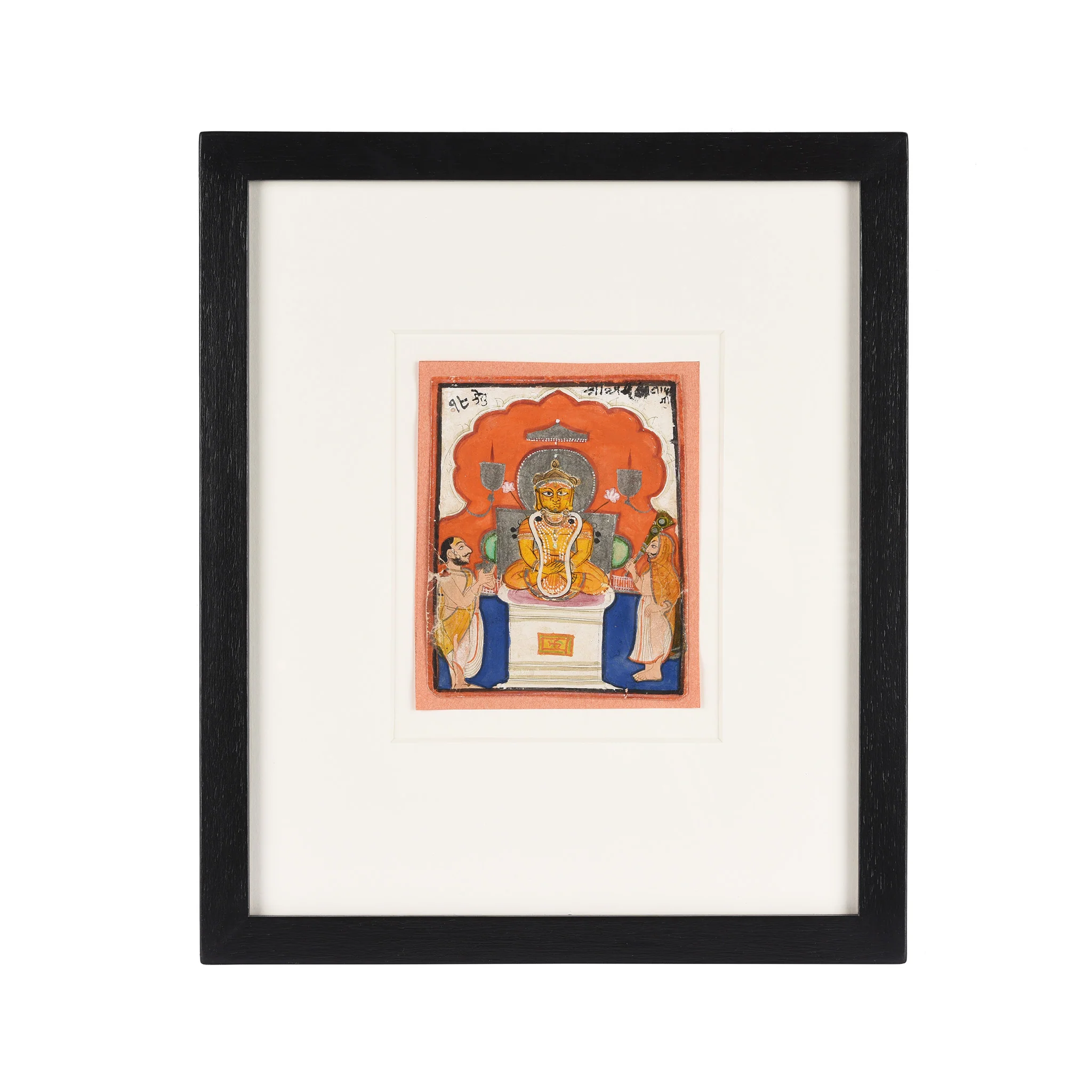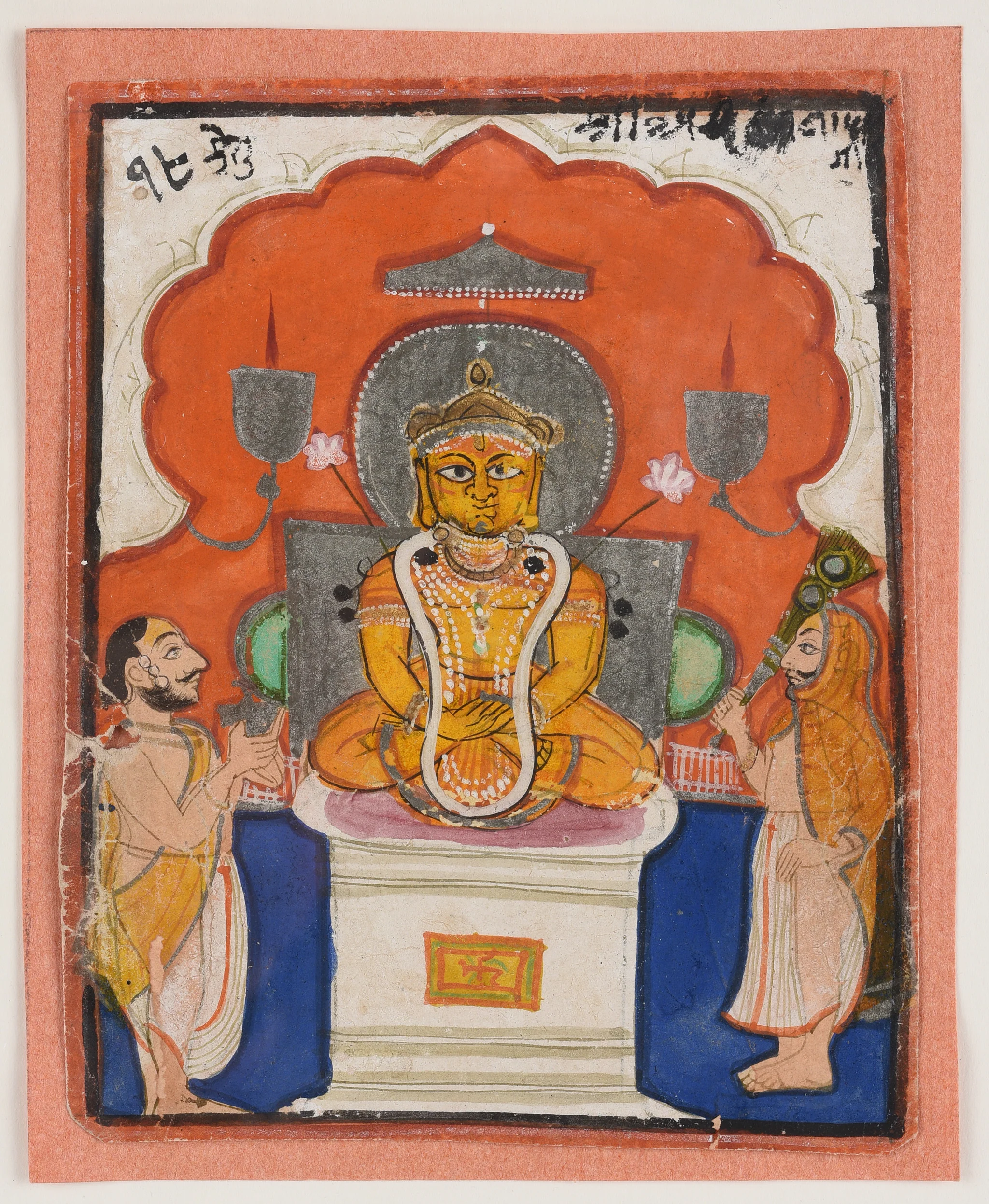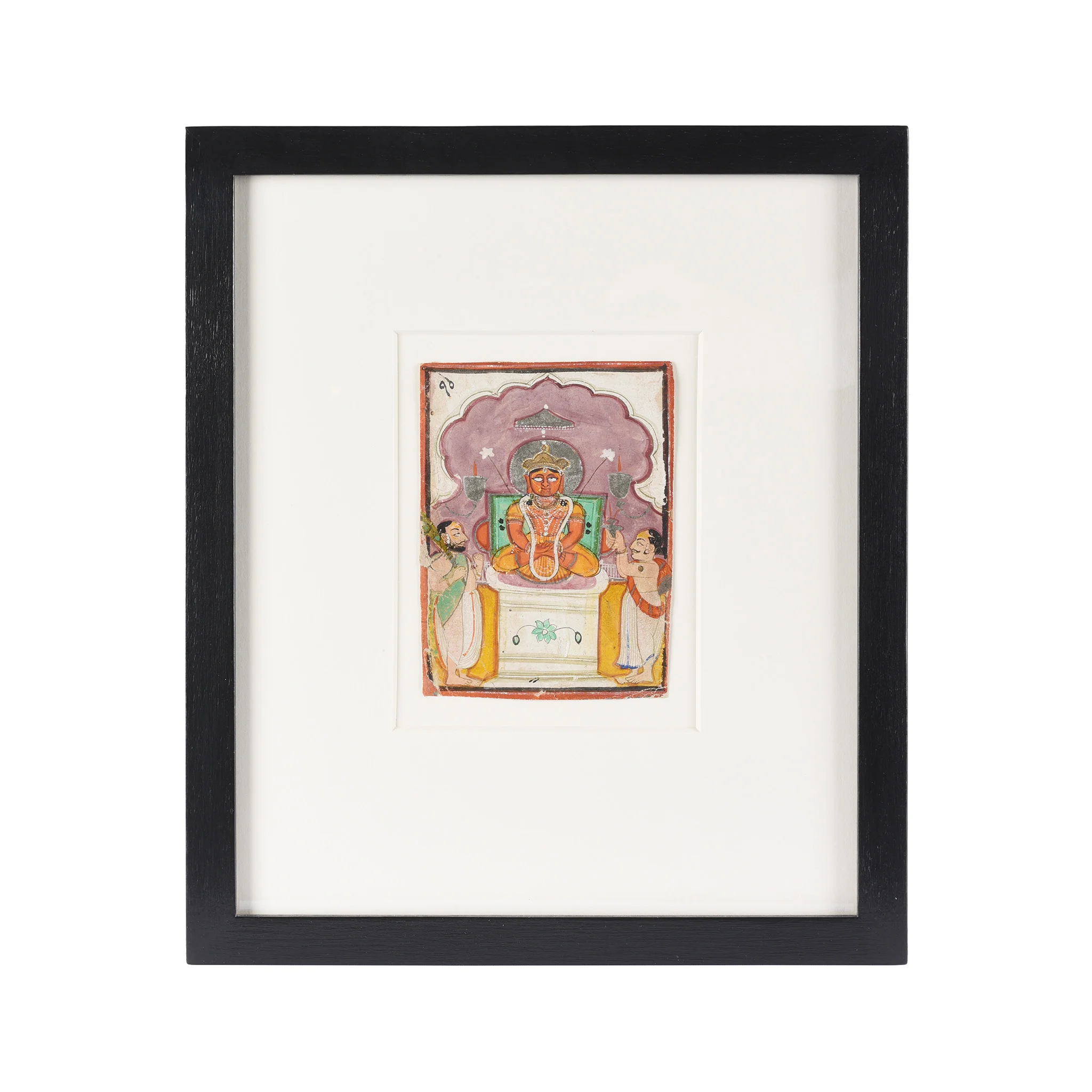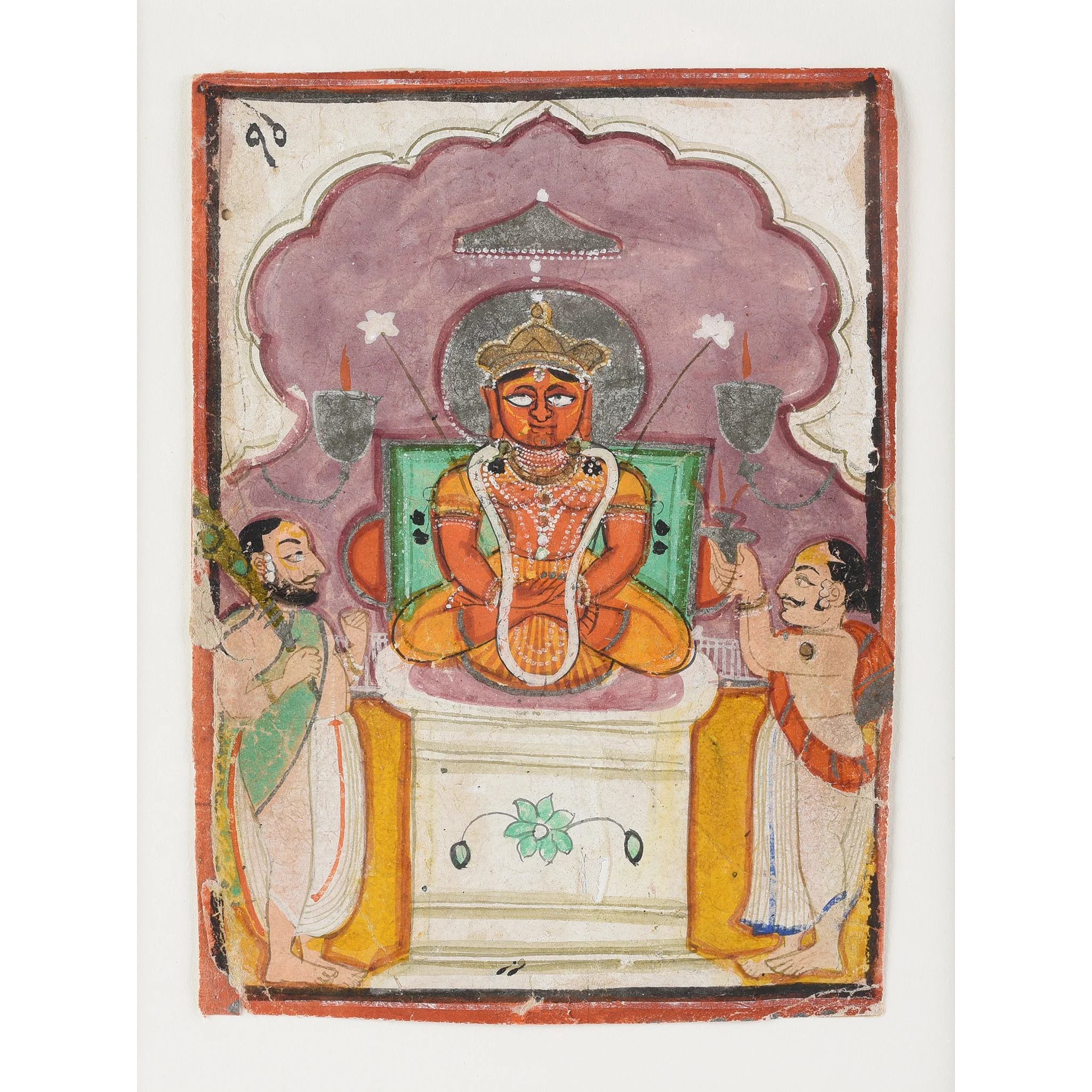
Framed Chinese Ancestor Painting - 19th Century
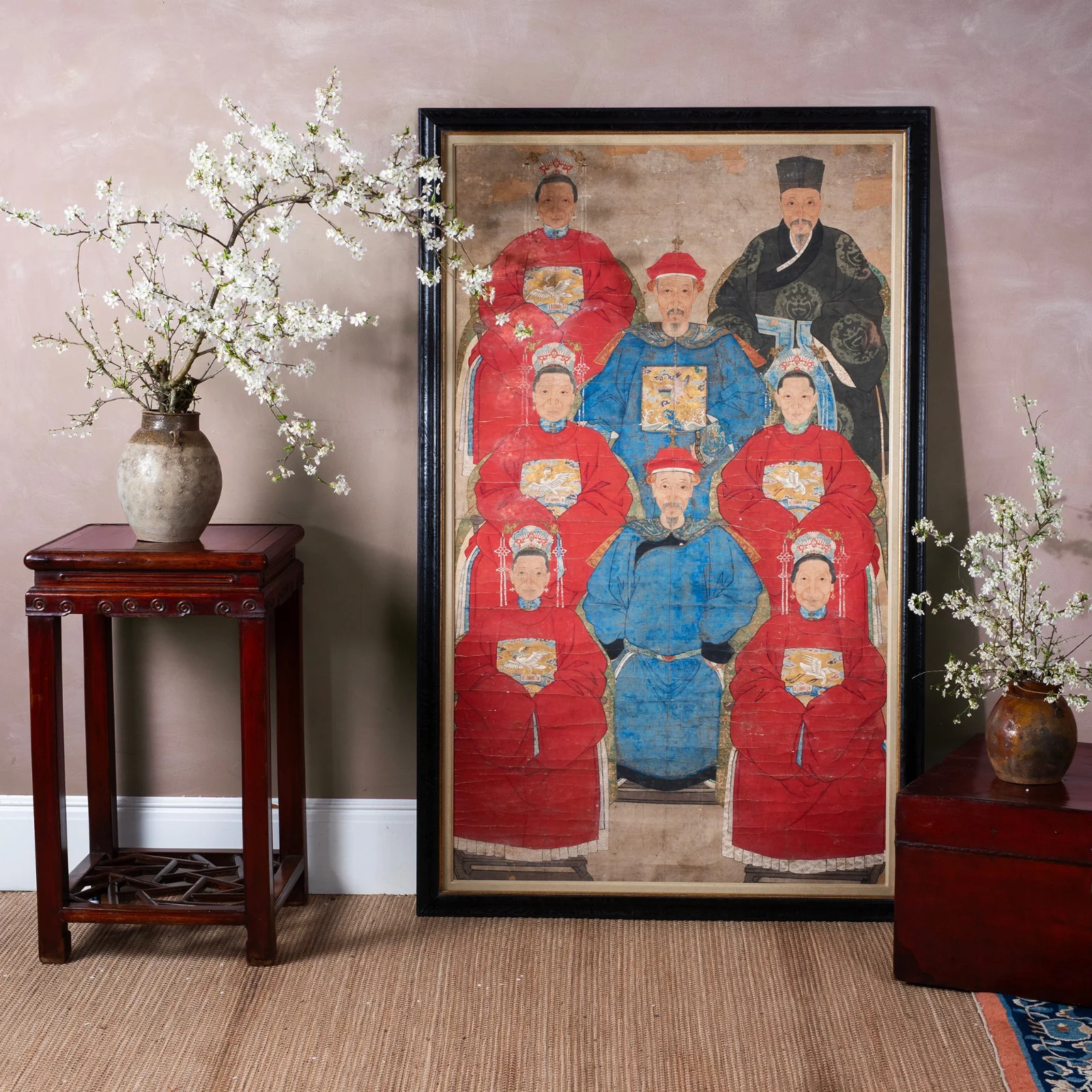
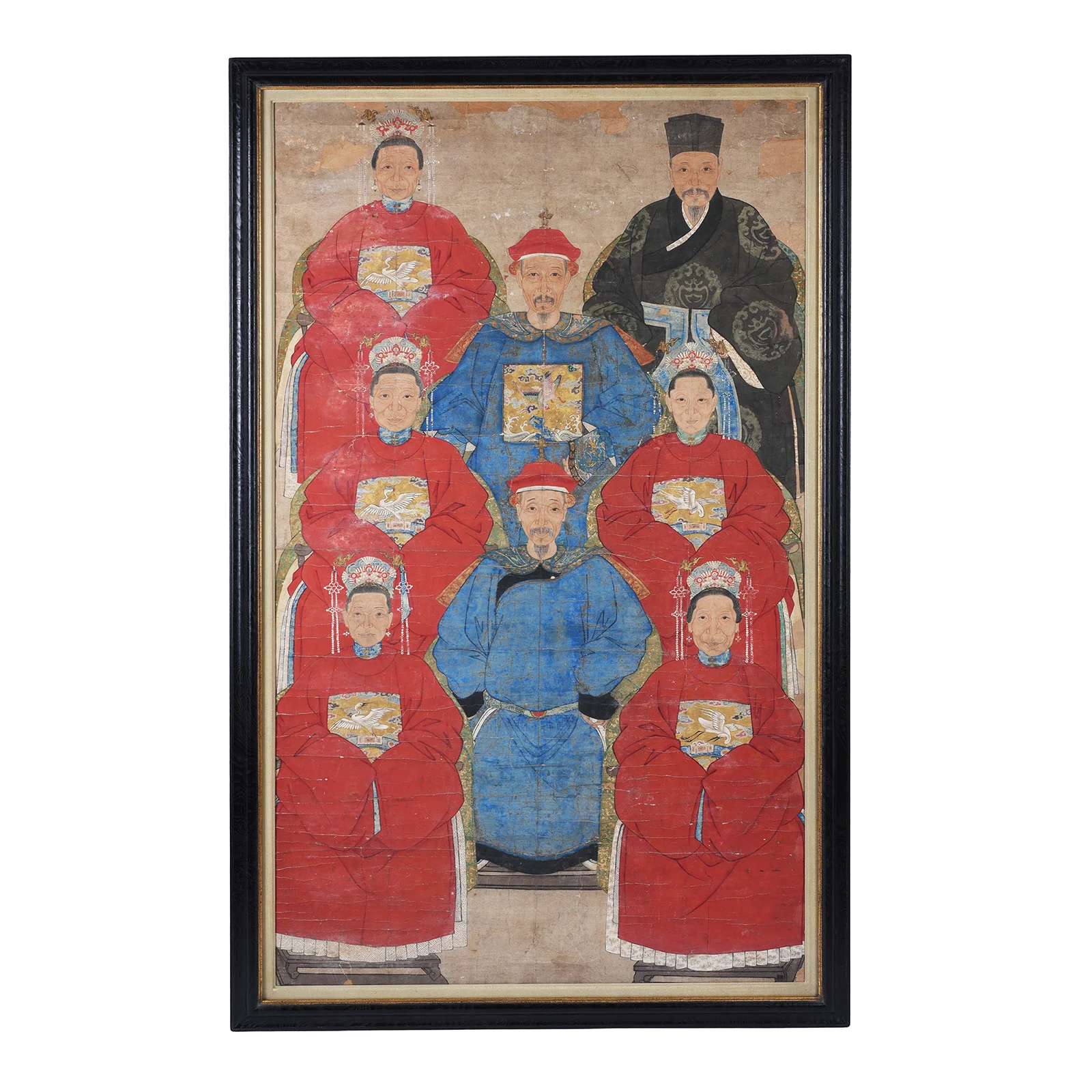
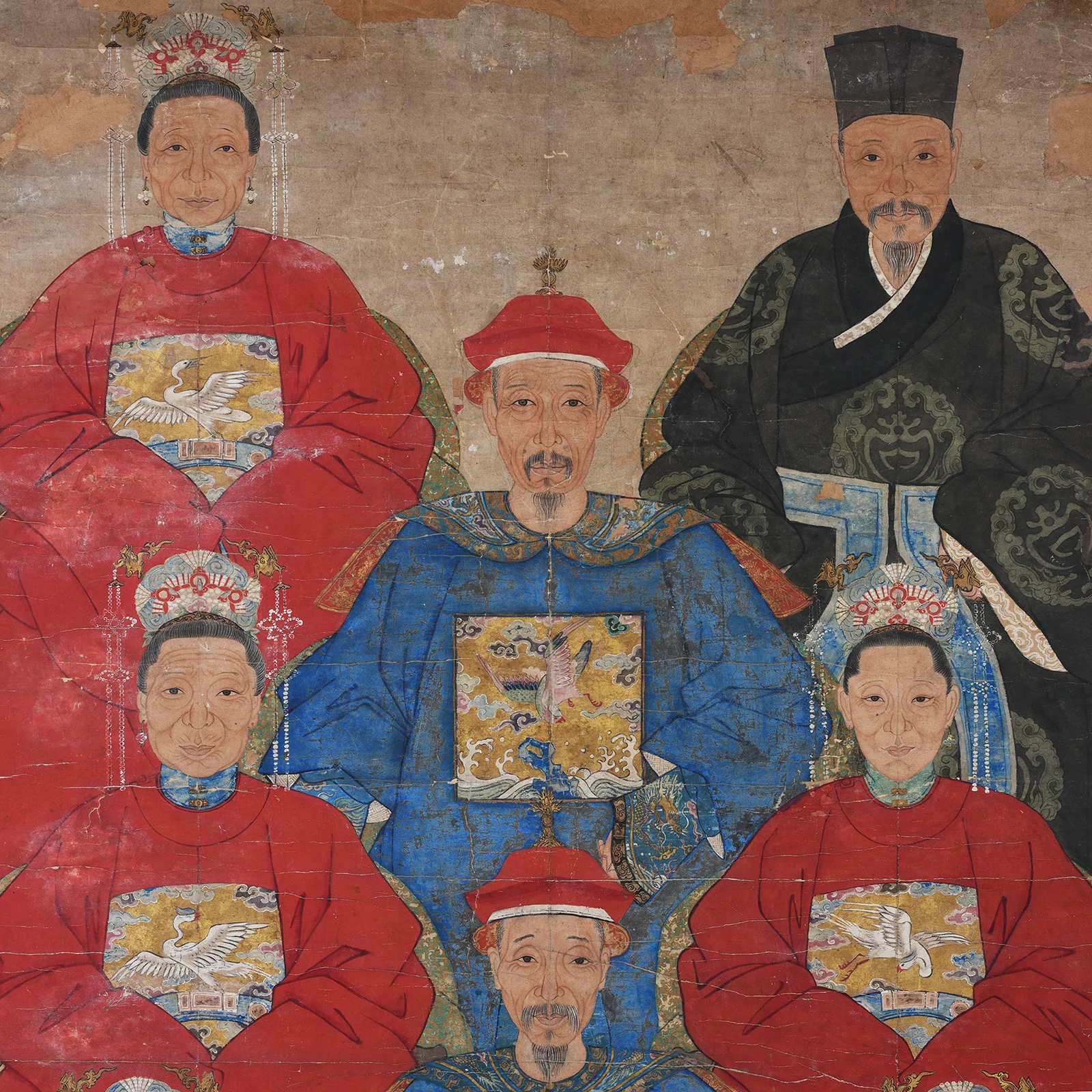
This 19th-century ancestor painting is a richly detailed example of the Chinese zu xian hua tradition, created to honour lineage and ensure continued protection and good fortune for the household. Painted in watercolour on paper, the work depicts multiple generations of an aristocratic or official family, each figure shown with the dignified stillness and formal attire customary in Qing-period ancestral portraiture.
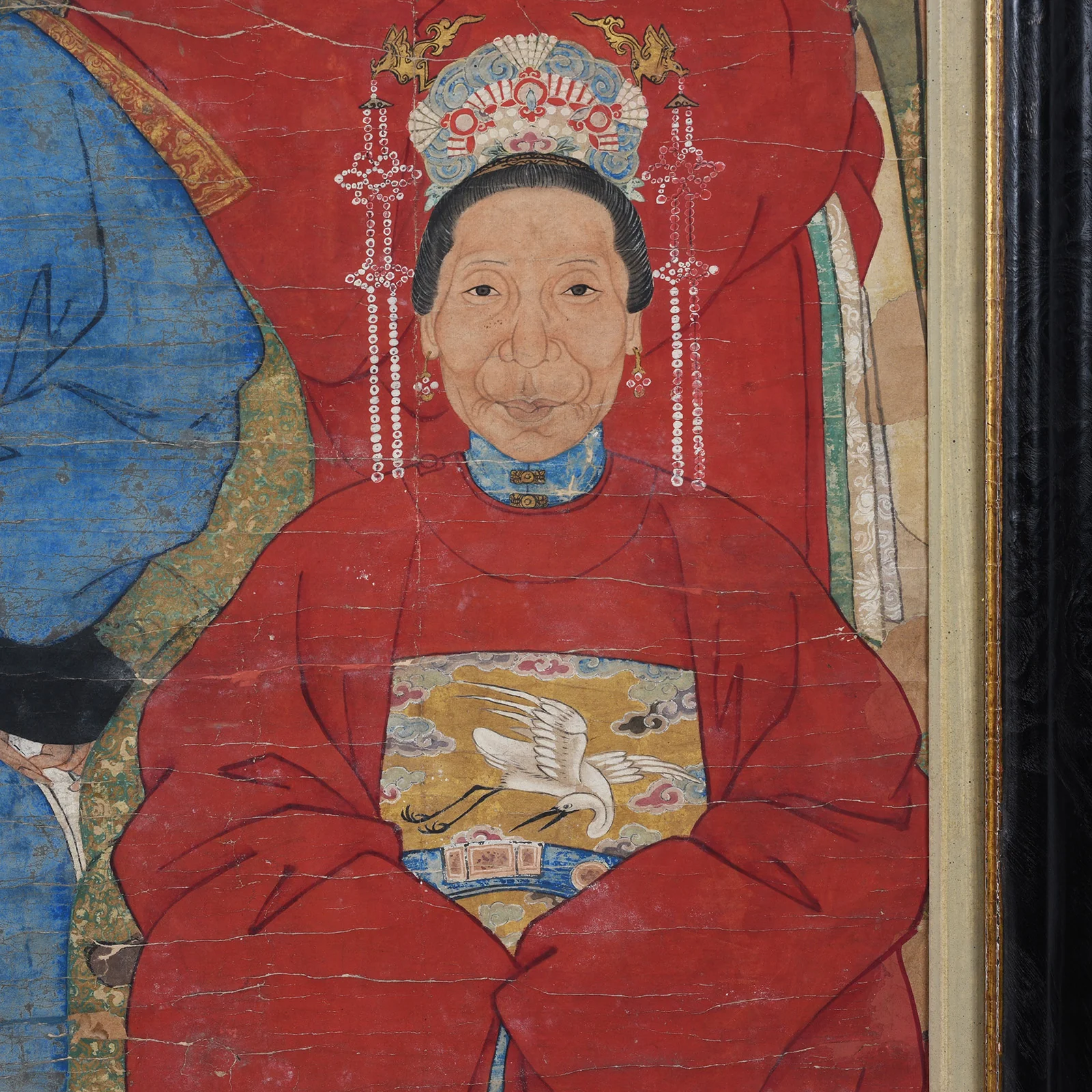
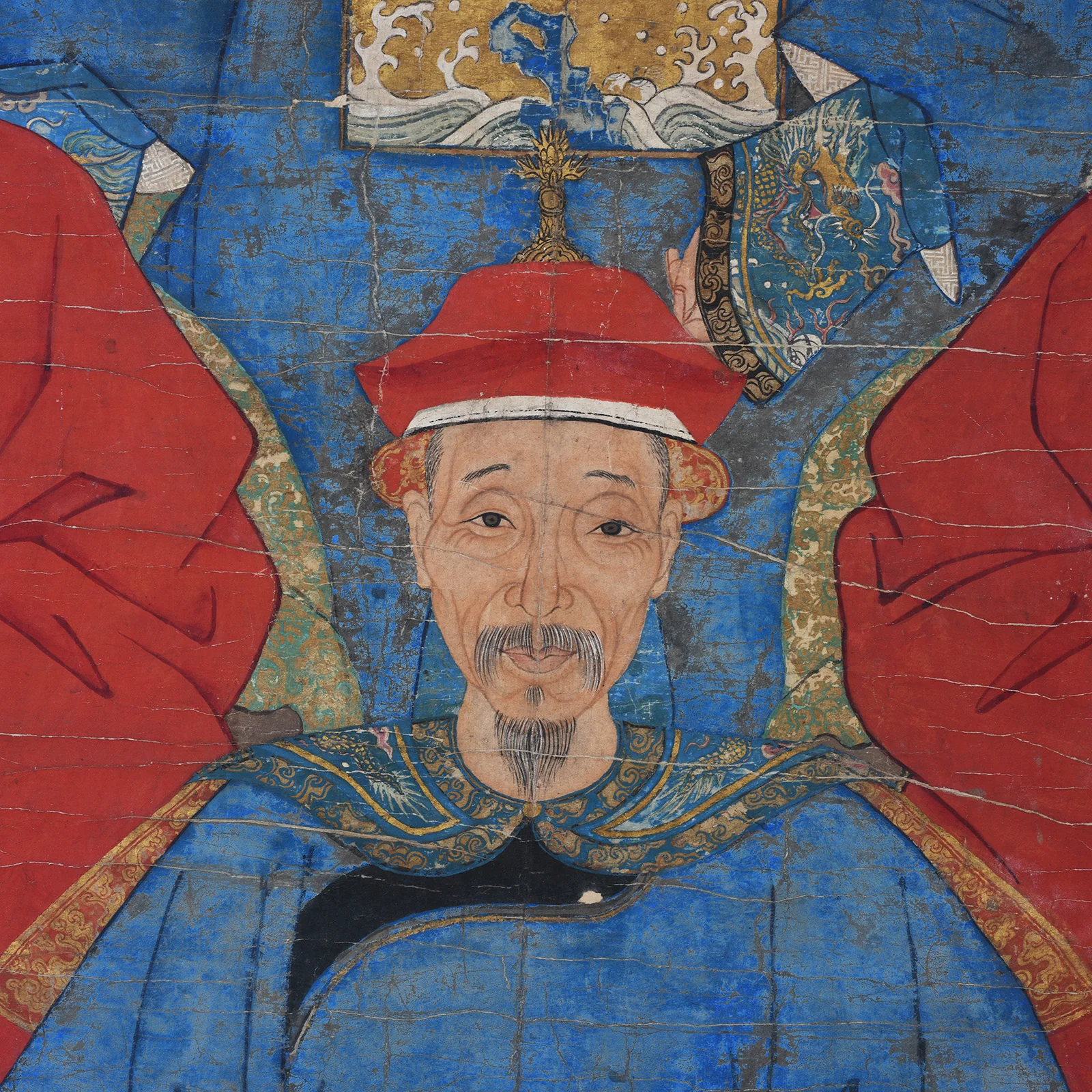
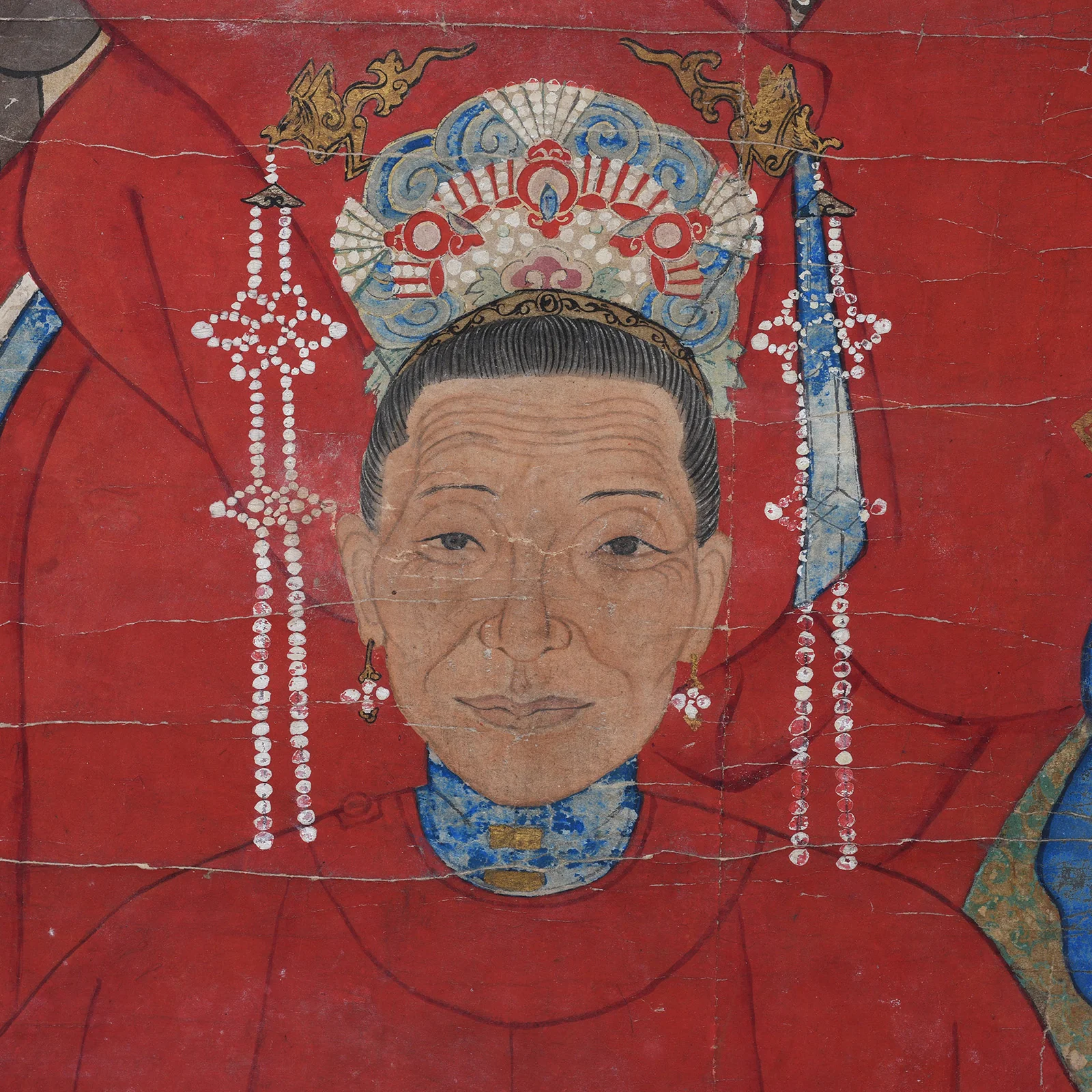
The sitters wear elaborately rendered court robes adorned with buzi (補子) rank badges, each carefully painted to display cranes and phoenixes that signal their place within the imperial hierarchy. These embroidered insignia were worn on the chest and back of formal robes to denote civil rank, virtue and lineage. The women are distinguished by their red robes and ornate headdresses with pearls and floral motifs, while the central male ancestors in blue and black indicate differing civil positions within the Qing system. The artist’s attention to layered garments, textile texture and the serene frontal poses reflects the solemn purpose of such paintings: to create a visual bridge between the living and the honoured past.
Framed in a luxurious hand made ebonised frame, this large and striking portrait serves as both an artwork of historical significance and a powerful decorative statement.
- Origin: China
- Date: 19th Century
- Materials: Watercolour on paper; later framed
- Features: Multi-generational ancestor portrait; detailed court robes; buzi rank badges with cranes and phoenixes; ornate headdresses; formal Qing-period composition
- Condition: Age-related wear, creases and surface losses consistent with its age; colours remain vivid
- Dimensions: W96 × D3 × H190 cm
- Dimensions Without Frame: W83 × H140 cm
Original: $4,542.78
-65%$4,542.78
$1,589.97More Images
Framed Chinese Ancestor Painting - 19th Century
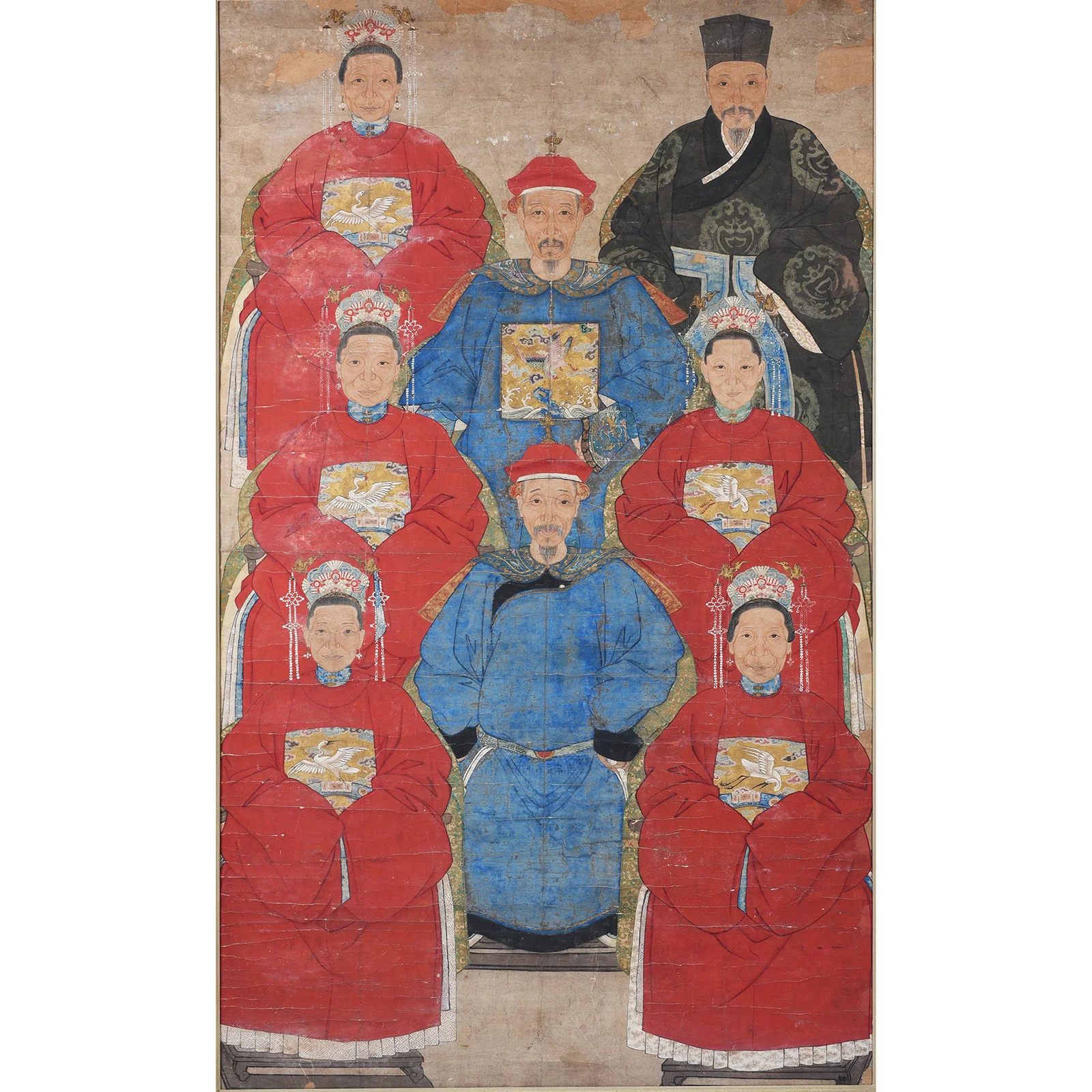
This 19th-century ancestor painting is a richly detailed example of the Chinese zu xian hua tradition, created to honour lineage and ensure continued protection and good fortune for the household. Painted in watercolour on paper, the work depicts multiple generations of an aristocratic or official family, each figure shown with the dignified stillness and formal attire customary in Qing-period ancestral portraiture.
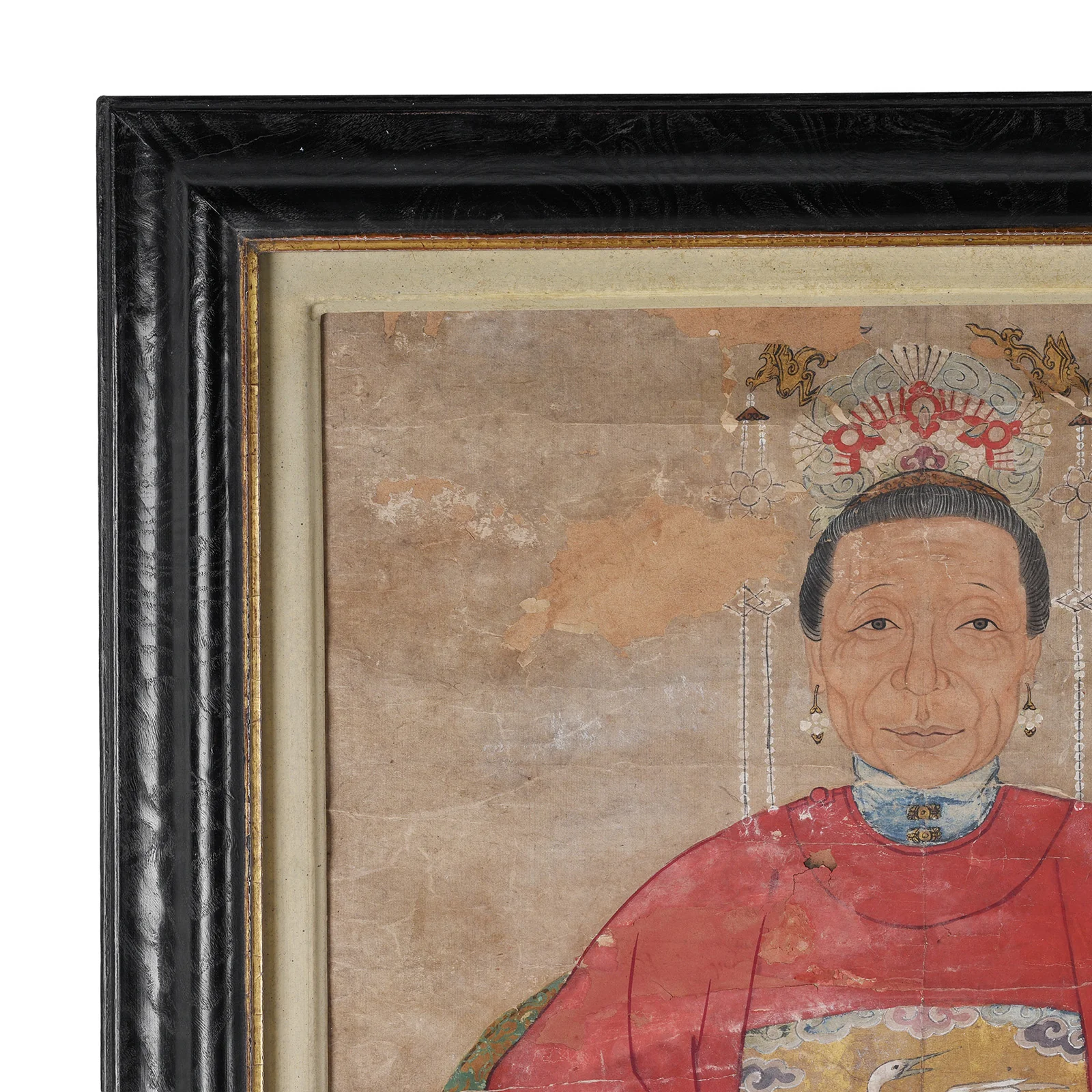
The sitters wear elaborately rendered court robes adorned with buzi (補子) rank badges, each carefully painted to display cranes and phoenixes that signal their place within the imperial hierarchy. These embroidered insignia were worn on the chest and back of formal robes to denote civil rank, virtue and lineage. The women are distinguished by their red robes and ornate headdresses with pearls and floral motifs, while the central male ancestors in blue and black indicate differing civil positions within the Qing system. The artist’s attention to layered garments, textile texture and the serene frontal poses reflects the solemn purpose of such paintings: to create a visual bridge between the living and the honoured past.
Framed in a luxurious hand made ebonised frame, this large and striking portrait serves as both an artwork of historical significance and a powerful decorative statement.
- Origin: China
- Date: 19th Century
- Materials: Watercolour on paper; later framed
- Features: Multi-generational ancestor portrait; detailed court robes; buzi rank badges with cranes and phoenixes; ornate headdresses; formal Qing-period composition
- Condition: Age-related wear, creases and surface losses consistent with its age; colours remain vivid
- Dimensions: W96 × D3 × H190 cm
- Dimensions Without Frame: W83 × H140 cm
Product Information
Product Information
Shipping & Returns
Shipping & Returns
Description
This 19th-century ancestor painting is a richly detailed example of the Chinese zu xian hua tradition, created to honour lineage and ensure continued protection and good fortune for the household. Painted in watercolour on paper, the work depicts multiple generations of an aristocratic or official family, each figure shown with the dignified stillness and formal attire customary in Qing-period ancestral portraiture.
The sitters wear elaborately rendered court robes adorned with buzi (補子) rank badges, each carefully painted to display cranes and phoenixes that signal their place within the imperial hierarchy. These embroidered insignia were worn on the chest and back of formal robes to denote civil rank, virtue and lineage. The women are distinguished by their red robes and ornate headdresses with pearls and floral motifs, while the central male ancestors in blue and black indicate differing civil positions within the Qing system. The artist’s attention to layered garments, textile texture and the serene frontal poses reflects the solemn purpose of such paintings: to create a visual bridge between the living and the honoured past.
Framed in a luxurious hand made ebonised frame, this large and striking portrait serves as both an artwork of historical significance and a powerful decorative statement.
- Origin: China
- Date: 19th Century
- Materials: Watercolour on paper; later framed
- Features: Multi-generational ancestor portrait; detailed court robes; buzi rank badges with cranes and phoenixes; ornate headdresses; formal Qing-period composition
- Condition: Age-related wear, creases and surface losses consistent with its age; colours remain vivid
- Dimensions: W96 × D3 × H190 cm
- Dimensions Without Frame: W83 × H140 cm