Carved Indian 'Majus' Dowry Chest From Saurashtra - 19thC
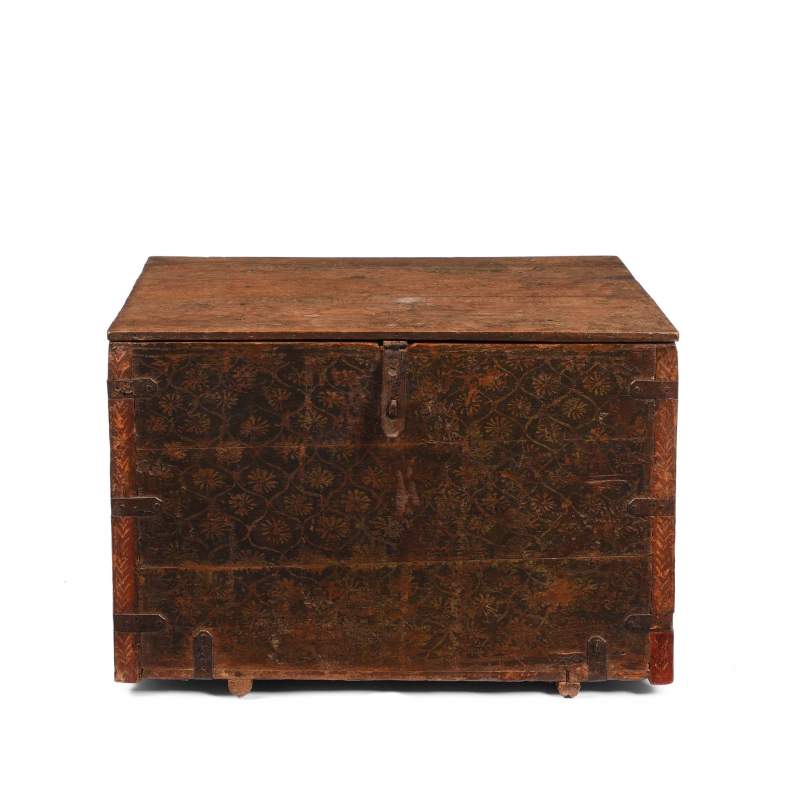
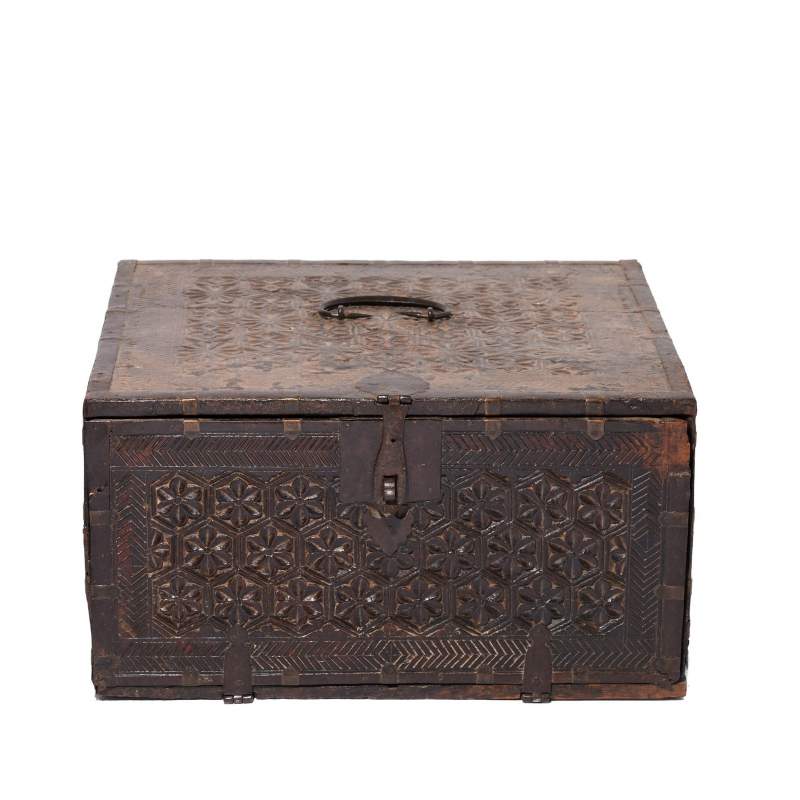
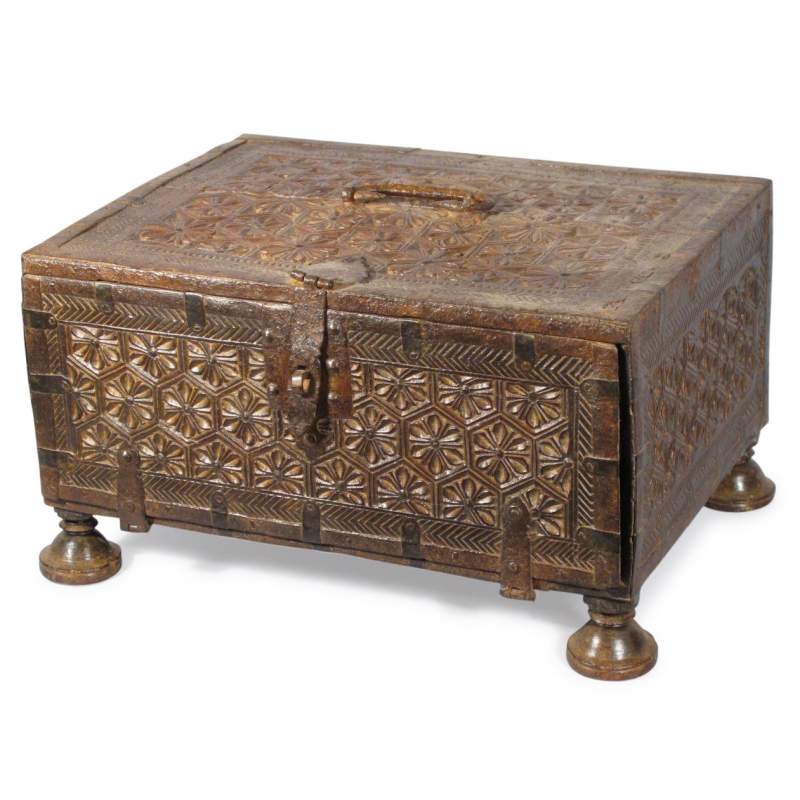
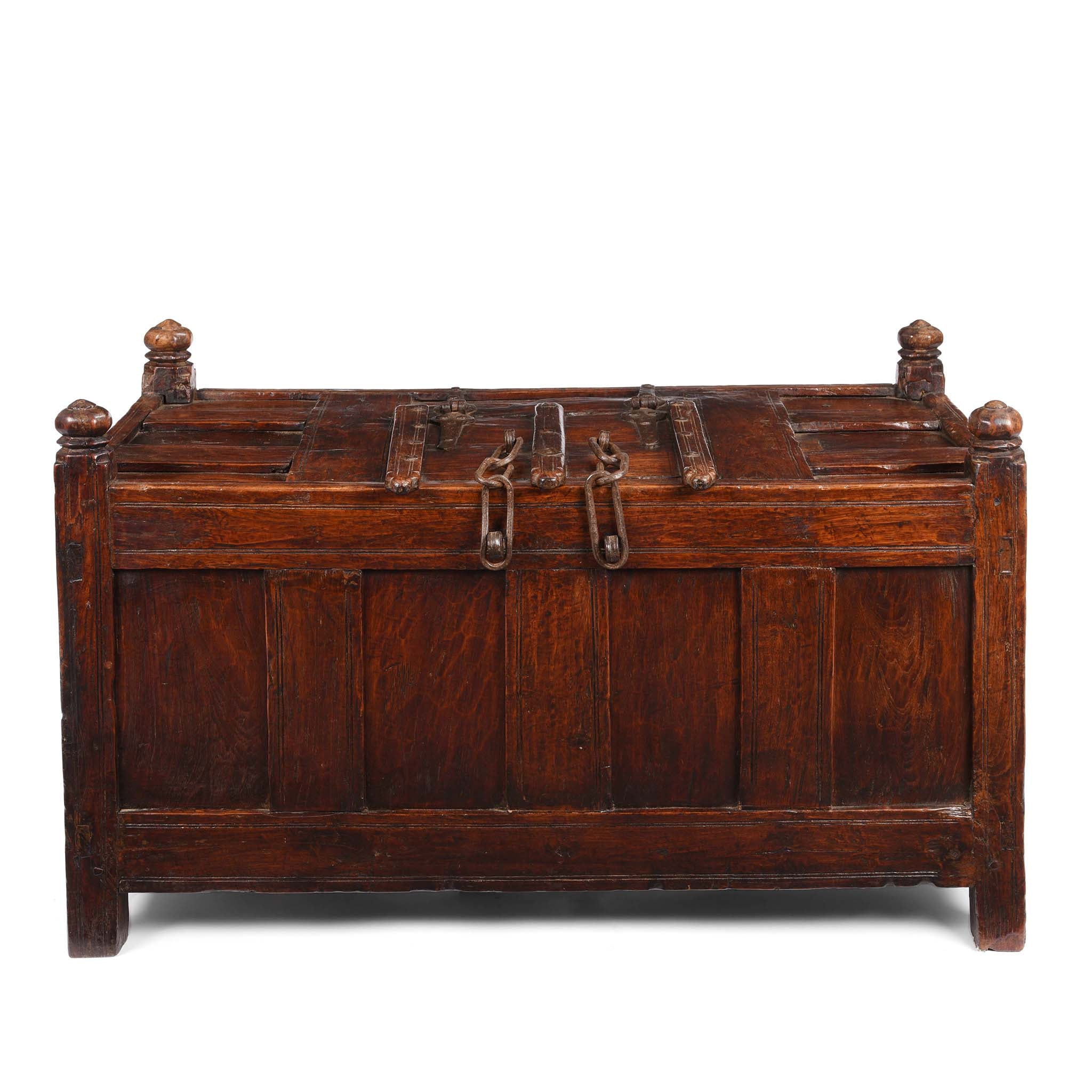
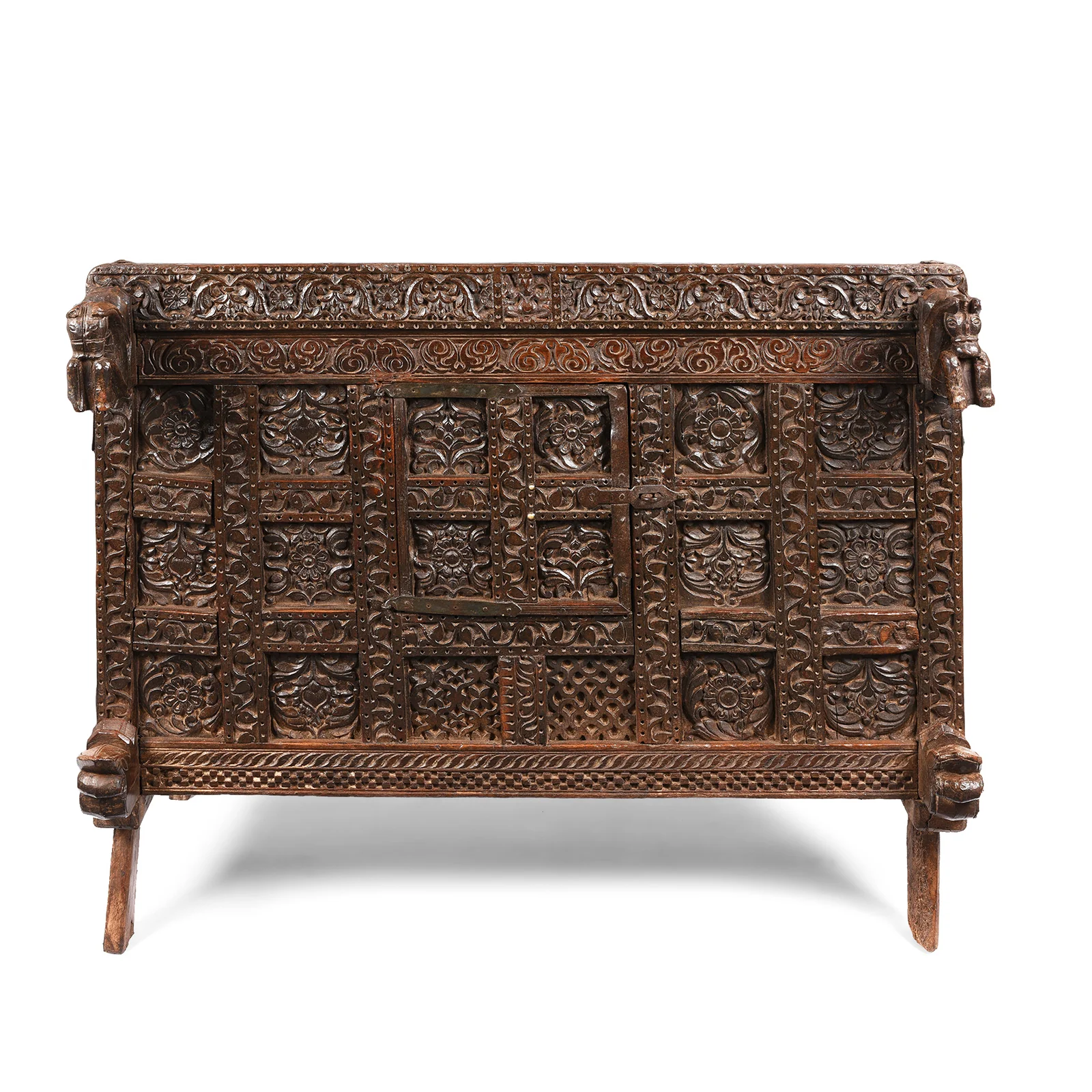
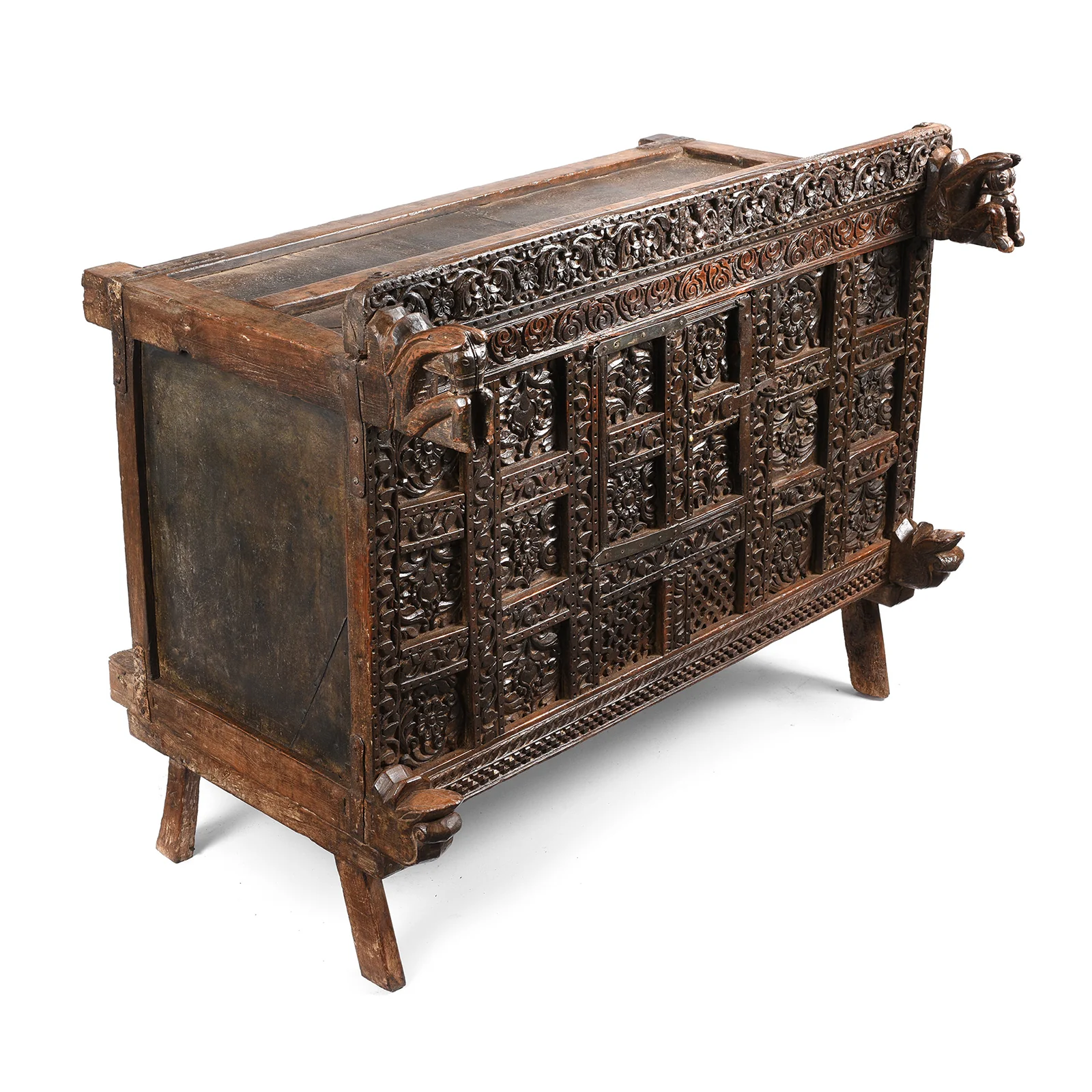
This beautifully carved Indian dowry chest is an exquisitely fine example of a majus dowry chest. The style is classicly indicative of Saurashtra in Gujarat, Northern India.
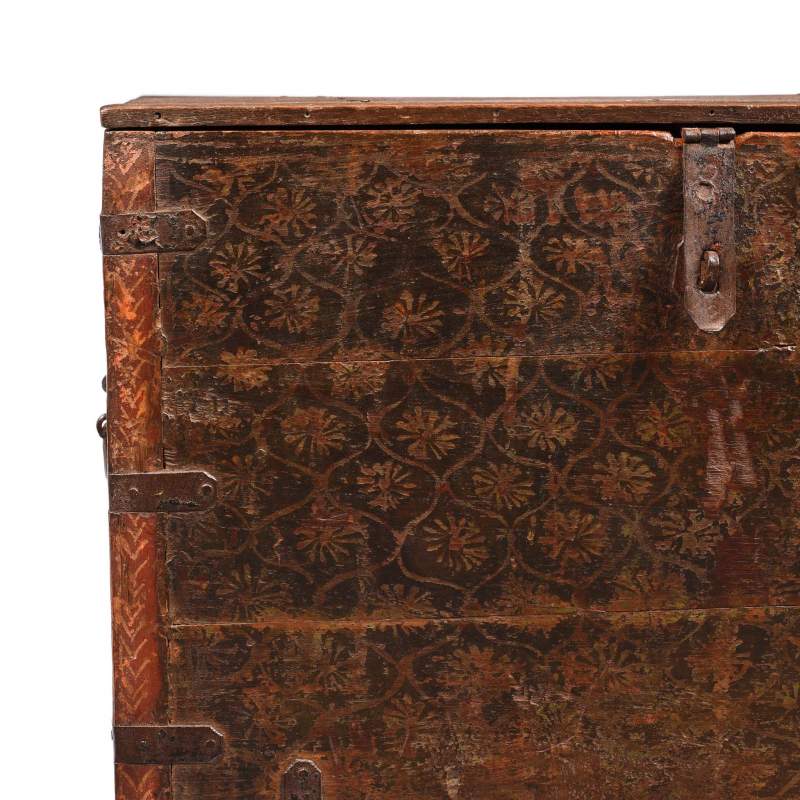
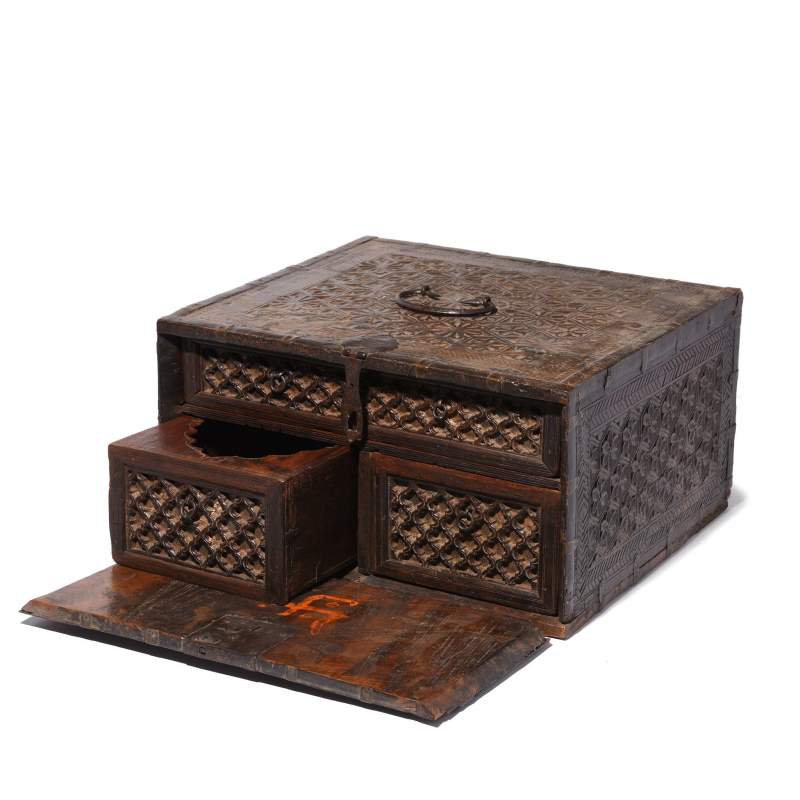
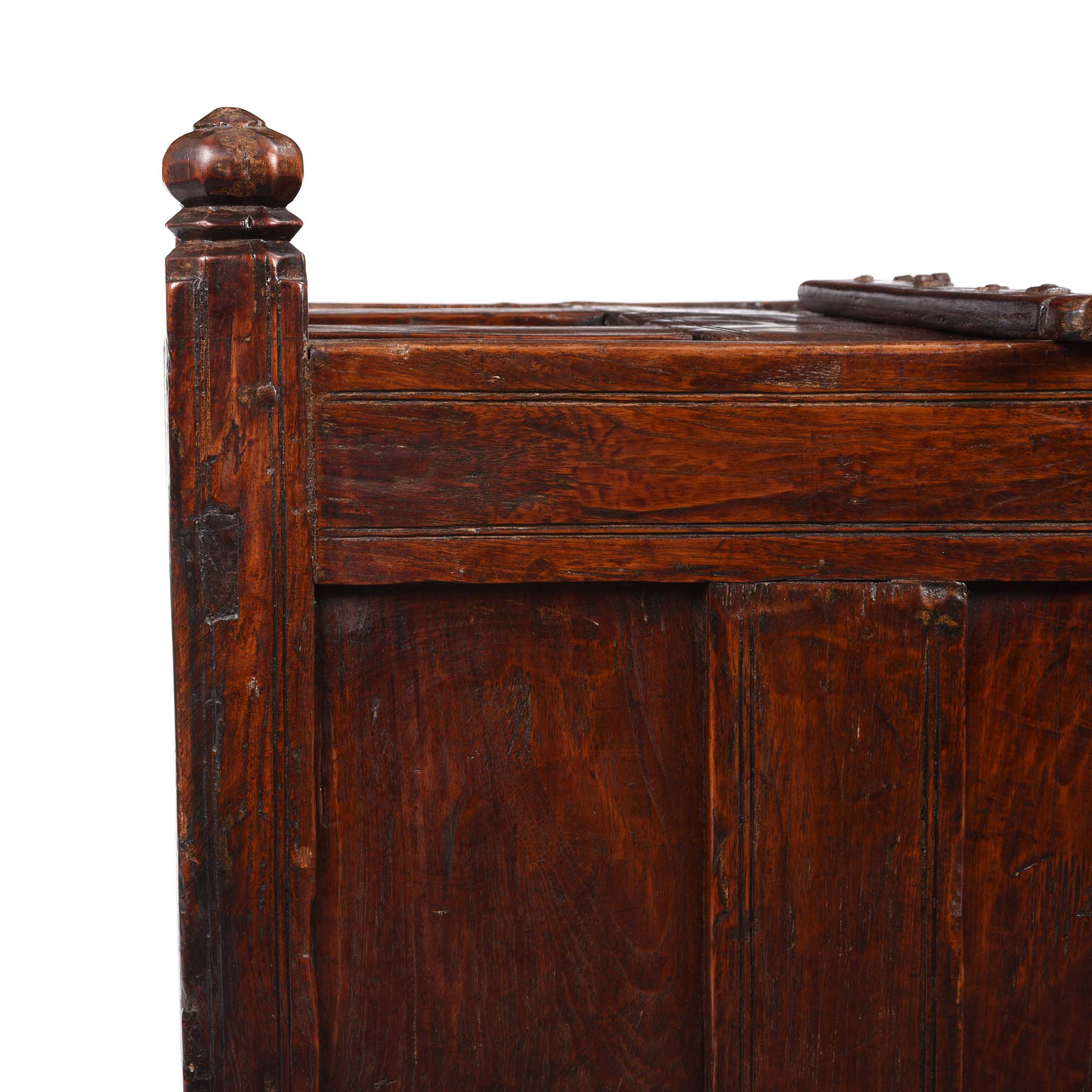
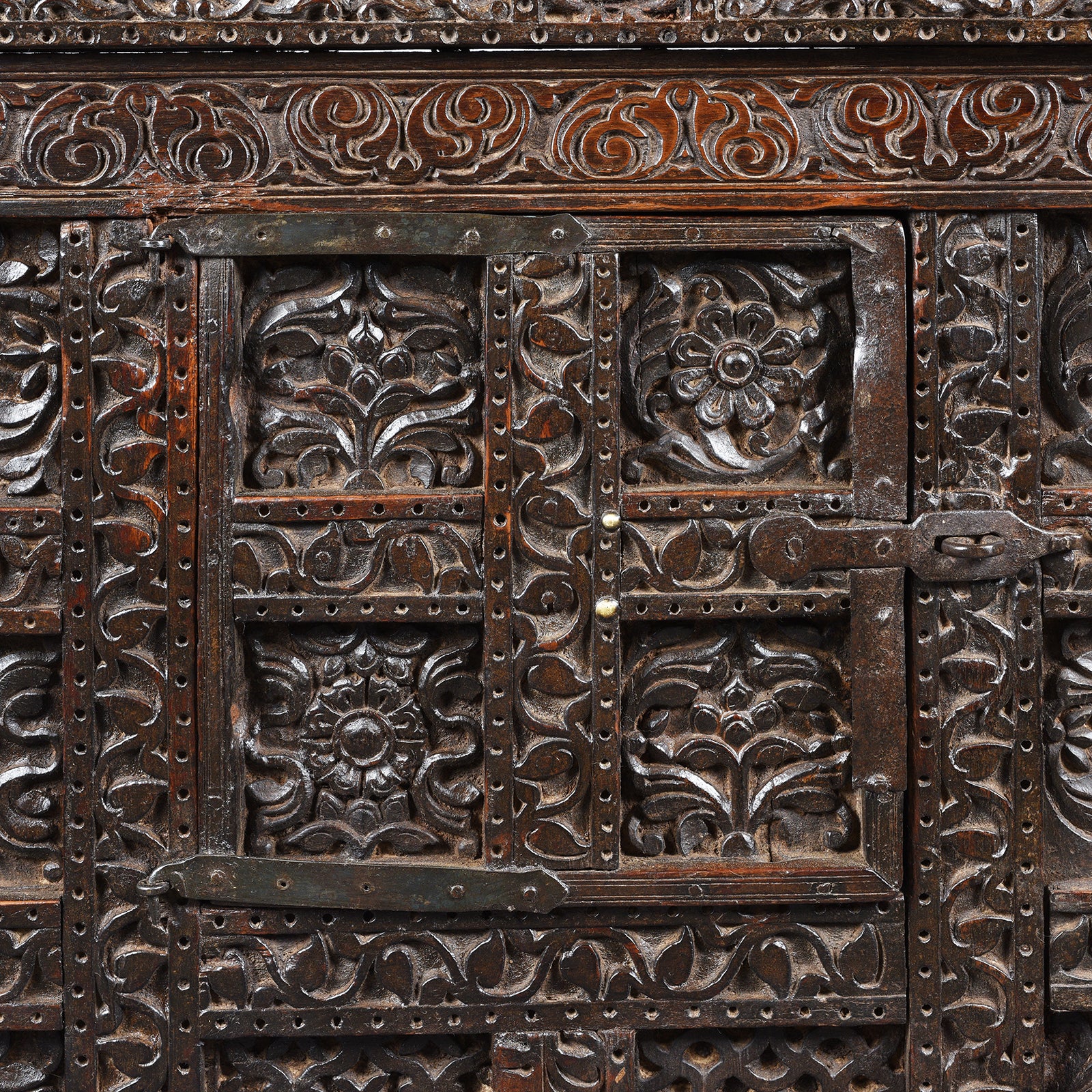
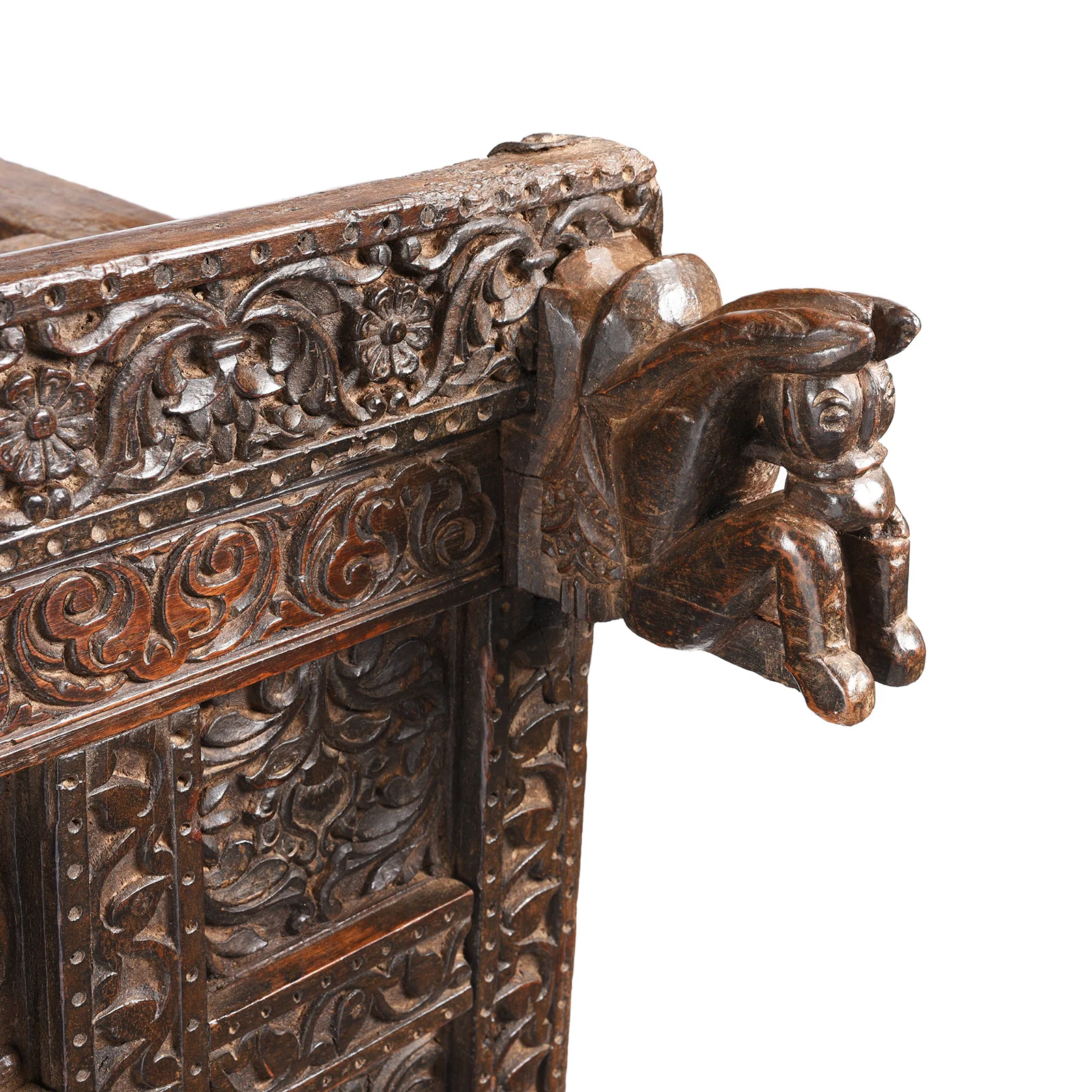
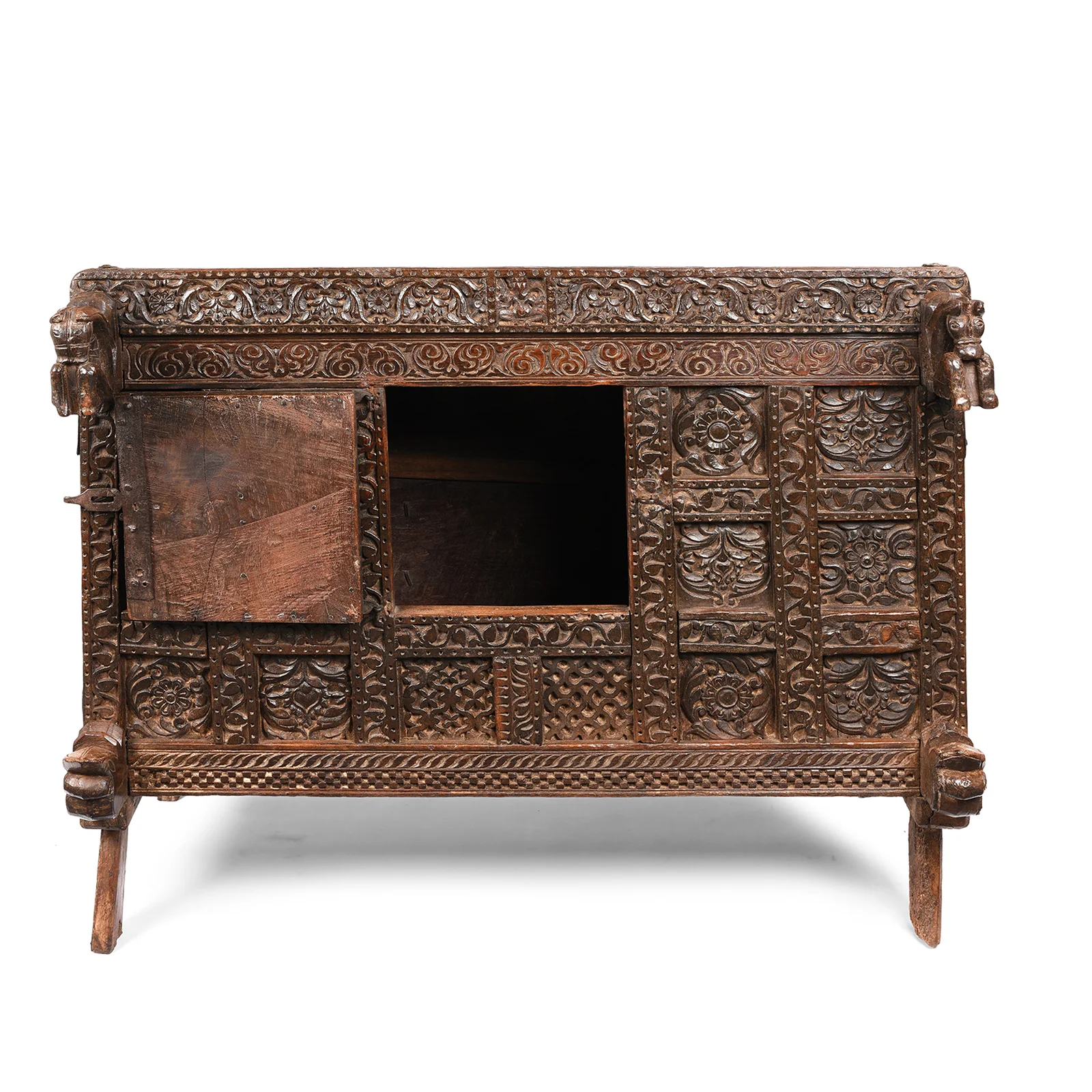
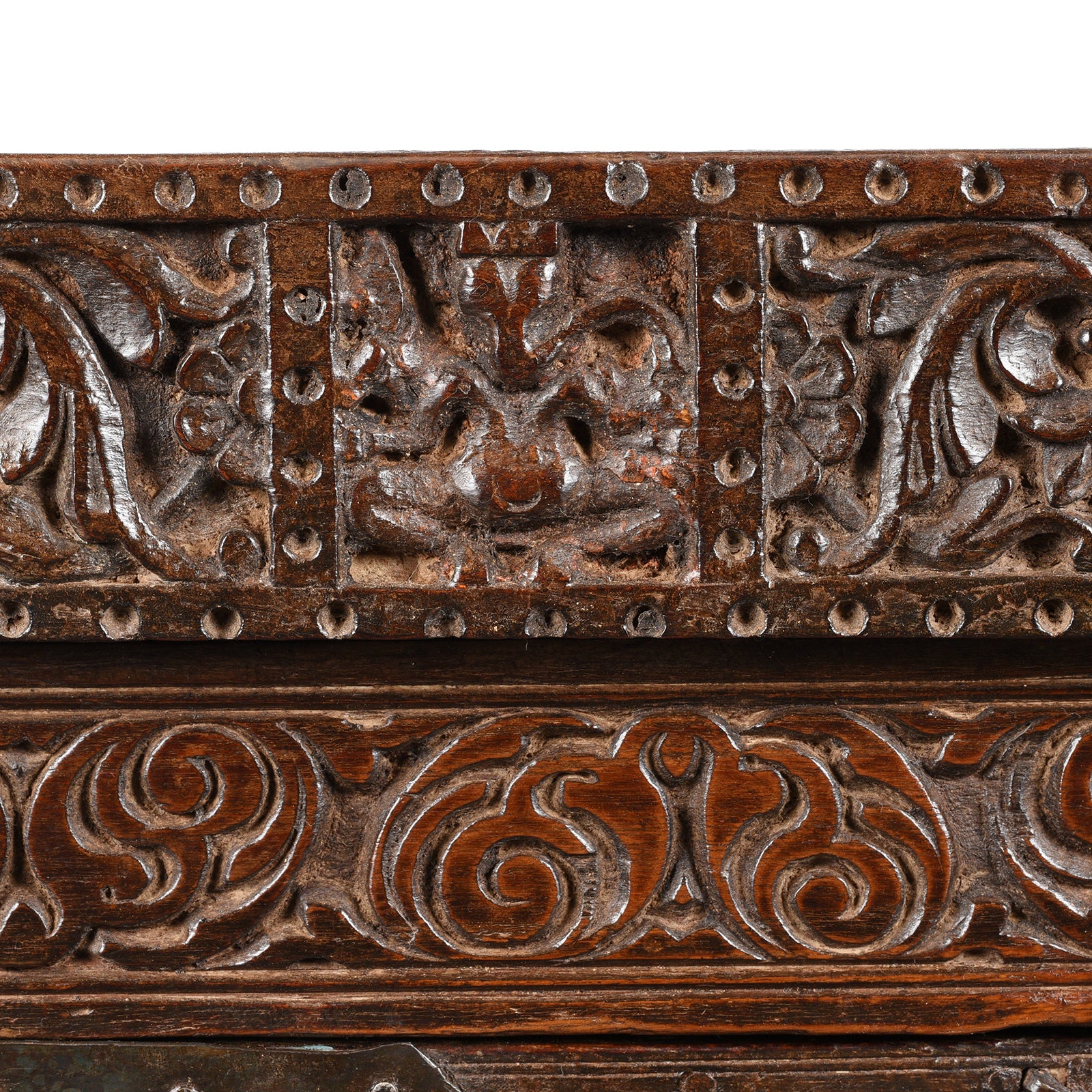
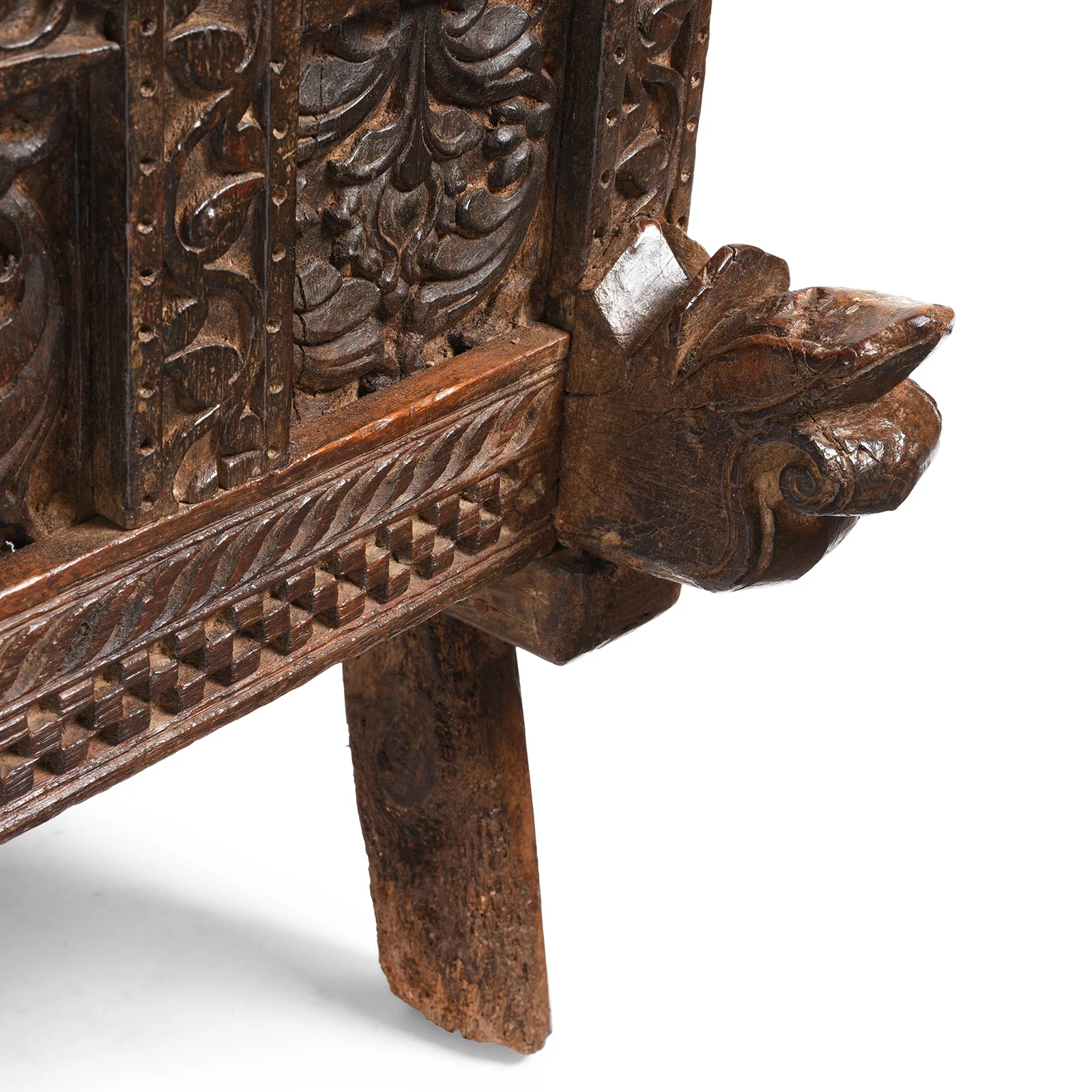
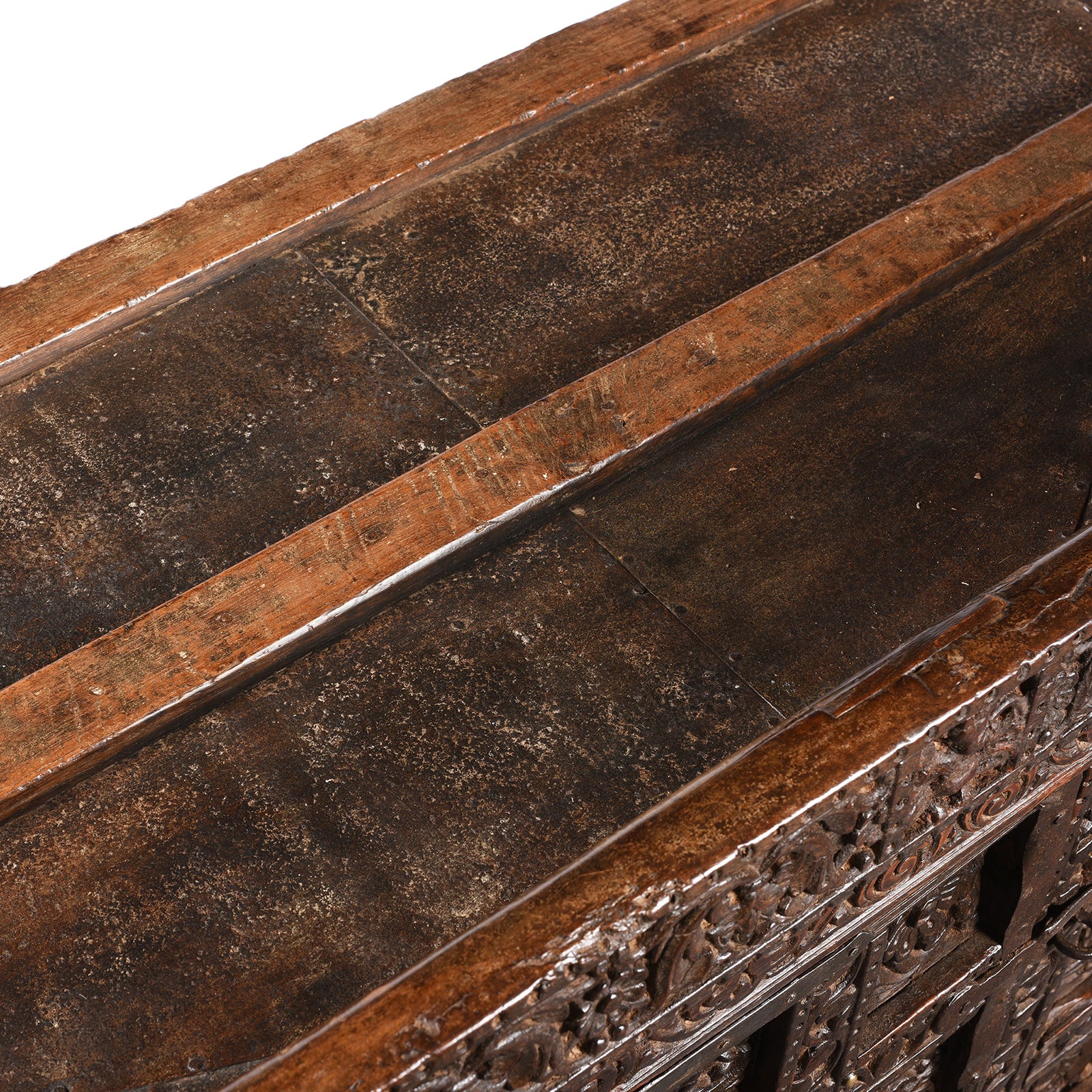
Covered in finely carved Mughal style floral patterns there is a small Ganesh is carved in the top center who would have bestowed wisdom upon the young married couple. Dowry chests like this usually have a small central opening panel revealing a large inner storage area. Carved horses protrude from the top corners while carved flower buds emerge above the legs. This particular piece has an old metal top.
Dowry chests from Saurashtra and the surrounding area are also known as 'majus'. A dowry was the traditional gift given to the groom's family to ensure the bride found a wealthy and good husband. Dowries were usually jewelry and silk saris but sometimes brass cooking pots and other family treasures were exchanged. Dowries have now been outlawed but in reality, it is still practiced and cars and even washing machines have been known to be exchanged.
From India
110 x 69 x 92 (wxdxh cms)
UK Delivery Charge - except Highlands & Islands £80
More delivery options available at checkout
Original: $3,785.65
-65%$3,785.65
$1,324.98More Images
Carved Indian 'Majus' Dowry Chest From Saurashtra - 19thC
This beautifully carved Indian dowry chest is an exquisitely fine example of a majus dowry chest. The style is classicly indicative of Saurashtra in Gujarat, Northern India.
Covered in finely carved Mughal style floral patterns there is a small Ganesh is carved in the top center who would have bestowed wisdom upon the young married couple. Dowry chests like this usually have a small central opening panel revealing a large inner storage area. Carved horses protrude from the top corners while carved flower buds emerge above the legs. This particular piece has an old metal top.
Dowry chests from Saurashtra and the surrounding area are also known as 'majus'. A dowry was the traditional gift given to the groom's family to ensure the bride found a wealthy and good husband. Dowries were usually jewelry and silk saris but sometimes brass cooking pots and other family treasures were exchanged. Dowries have now been outlawed but in reality, it is still practiced and cars and even washing machines have been known to be exchanged.
From India
110 x 69 x 92 (wxdxh cms)
UK Delivery Charge - except Highlands & Islands £80
More delivery options available at checkout
Product Information
Product Information
Shipping & Returns
Shipping & Returns
Description
This beautifully carved Indian dowry chest is an exquisitely fine example of a majus dowry chest. The style is classicly indicative of Saurashtra in Gujarat, Northern India.
Covered in finely carved Mughal style floral patterns there is a small Ganesh is carved in the top center who would have bestowed wisdom upon the young married couple. Dowry chests like this usually have a small central opening panel revealing a large inner storage area. Carved horses protrude from the top corners while carved flower buds emerge above the legs. This particular piece has an old metal top.
Dowry chests from Saurashtra and the surrounding area are also known as 'majus'. A dowry was the traditional gift given to the groom's family to ensure the bride found a wealthy and good husband. Dowries were usually jewelry and silk saris but sometimes brass cooking pots and other family treasures were exchanged. Dowries have now been outlawed but in reality, it is still practiced and cars and even washing machines have been known to be exchanged.
From India
110 x 69 x 92 (wxdxh cms)
UK Delivery Charge - except Highlands & Islands £80
More delivery options available at checkout