Teak Elephant Statue From Gujarat - 19th Century
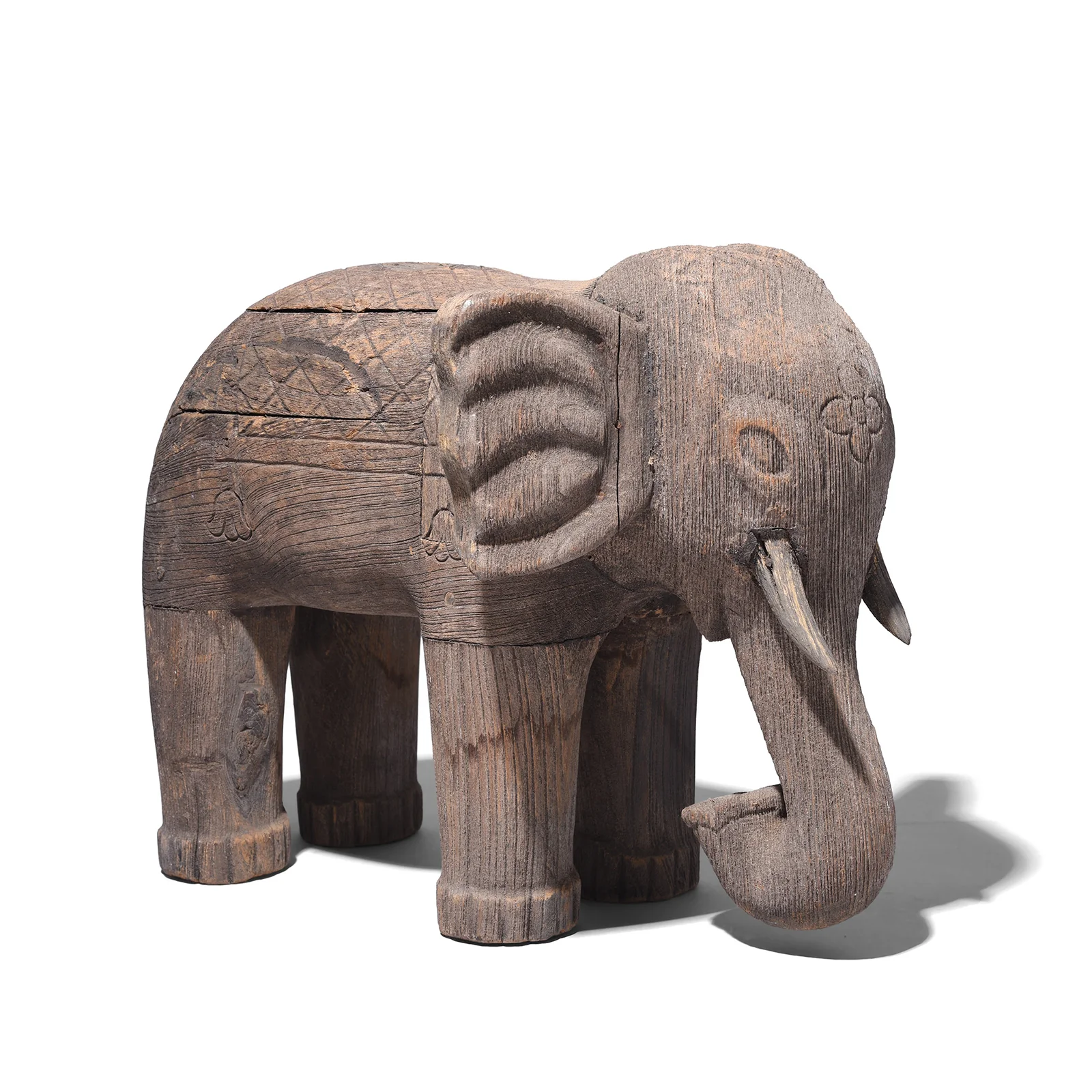
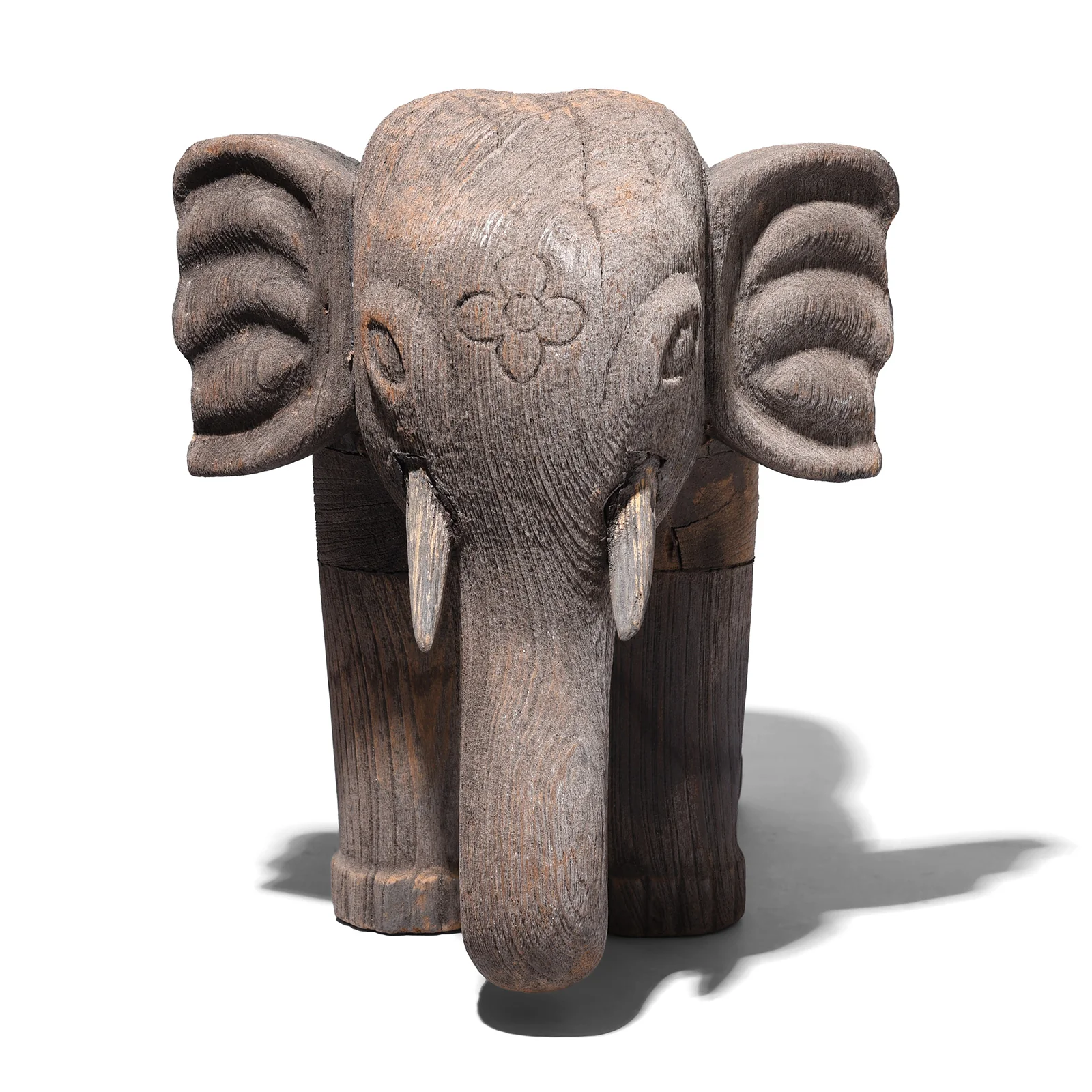
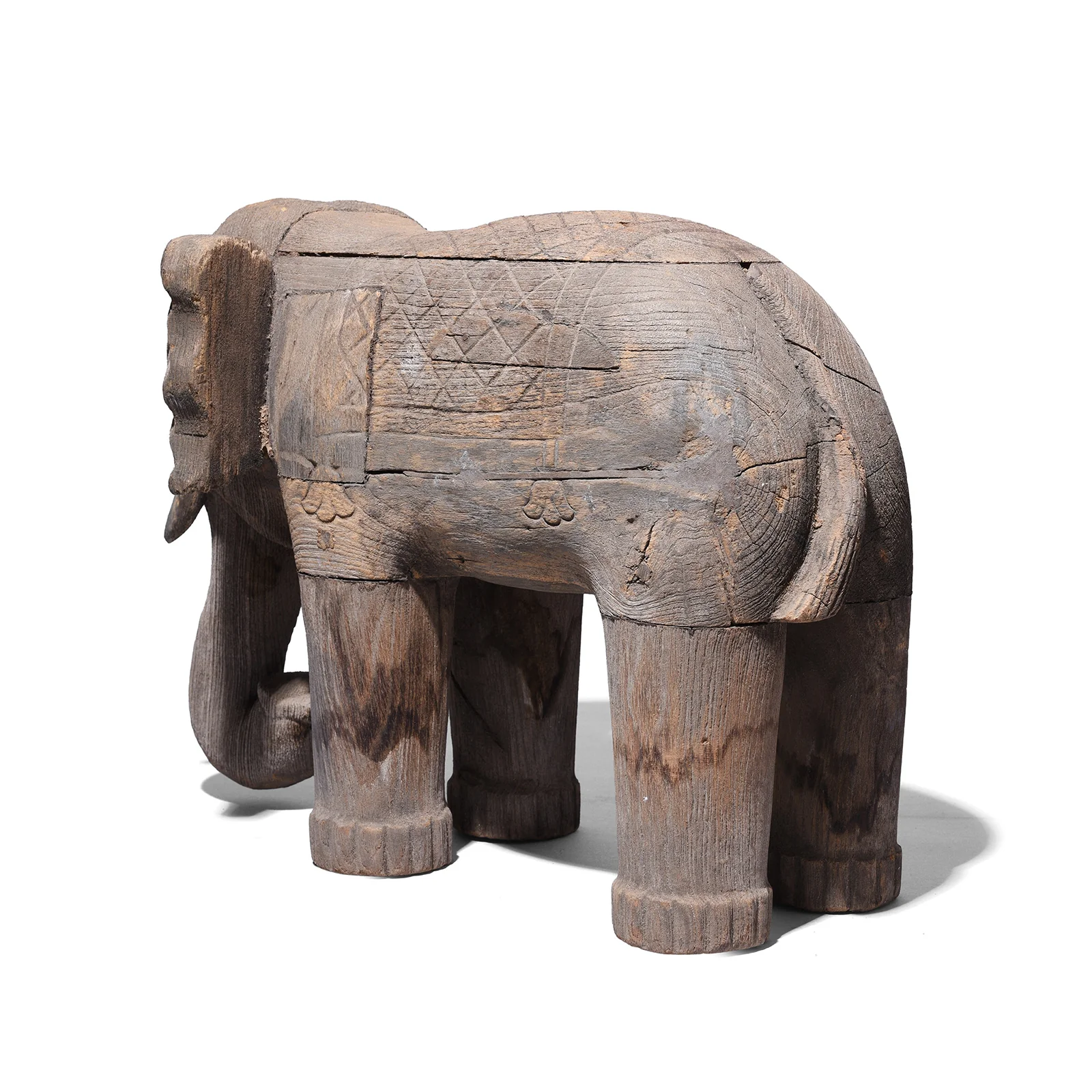
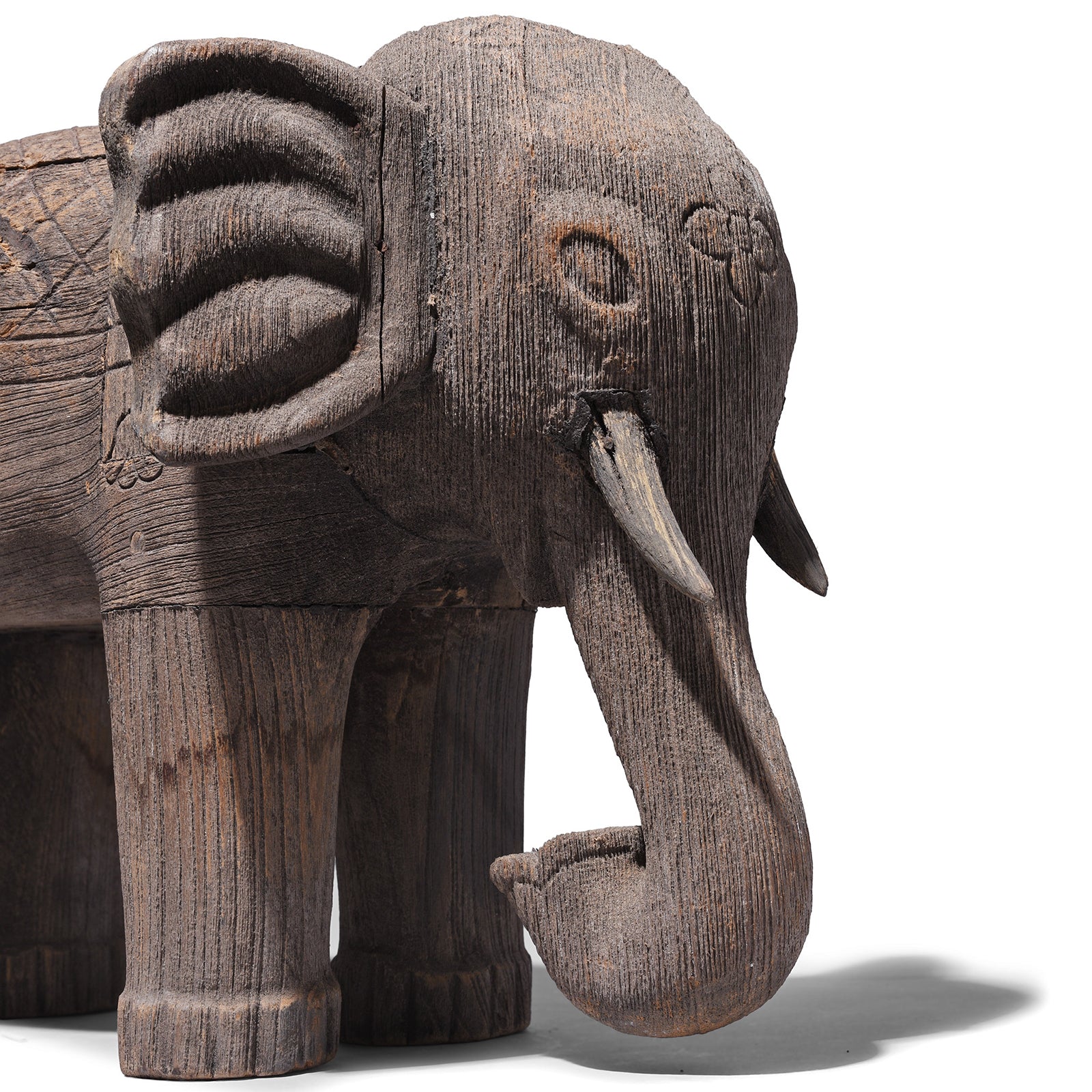
This 19th century teak elephant from Gujarat is a beautifully carved example of rural folk artistry, created from seasoned teak wood and one of a pair. The sculptor has given the elephant a strong, compact form with thick cylindrical legs, a gently curling trunk, and deeply carved ears that frame the face. Light linear incisions across the body suggest ceremonial textiles, while the floral motif carved on the forehead adds a subtle decorative touch typical of village craftsmanship.
The surface has developed a dry, weathered patina that enhances the grain of the timber, giving the piece both sculptural presence and rustic charm. Folk elephants such as this were traditionally placed in village homes as auspicious symbols of strength, protection, and good fortune—making this a characterful example of Gujarati cultural carving.
- Origin: Gujarat, India
- Date: 19th Century
- Materials: Carved teak
- Features: Carved floral forehead motif, incised textile patterns, rustic patina
- Condition: Weathered surface and age-related wear consistent with village carving
- Dimensions: W35 x D22 x H24 cm
Original: $688.18
-65%$688.18
$240.86More Images
Teak Elephant Statue From Gujarat - 19th Century
This 19th century teak elephant from Gujarat is a beautifully carved example of rural folk artistry, created from seasoned teak wood and one of a pair. The sculptor has given the elephant a strong, compact form with thick cylindrical legs, a gently curling trunk, and deeply carved ears that frame the face. Light linear incisions across the body suggest ceremonial textiles, while the floral motif carved on the forehead adds a subtle decorative touch typical of village craftsmanship.
The surface has developed a dry, weathered patina that enhances the grain of the timber, giving the piece both sculptural presence and rustic charm. Folk elephants such as this were traditionally placed in village homes as auspicious symbols of strength, protection, and good fortune—making this a characterful example of Gujarati cultural carving.
- Origin: Gujarat, India
- Date: 19th Century
- Materials: Carved teak
- Features: Carved floral forehead motif, incised textile patterns, rustic patina
- Condition: Weathered surface and age-related wear consistent with village carving
- Dimensions: W35 x D22 x H24 cm
Product Information
Product Information
Shipping & Returns
Shipping & Returns
Description
This 19th century teak elephant from Gujarat is a beautifully carved example of rural folk artistry, created from seasoned teak wood and one of a pair. The sculptor has given the elephant a strong, compact form with thick cylindrical legs, a gently curling trunk, and deeply carved ears that frame the face. Light linear incisions across the body suggest ceremonial textiles, while the floral motif carved on the forehead adds a subtle decorative touch typical of village craftsmanship.
The surface has developed a dry, weathered patina that enhances the grain of the timber, giving the piece both sculptural presence and rustic charm. Folk elephants such as this were traditionally placed in village homes as auspicious symbols of strength, protection, and good fortune—making this a characterful example of Gujarati cultural carving.
- Origin: Gujarat, India
- Date: 19th Century
- Materials: Carved teak
- Features: Carved floral forehead motif, incised textile patterns, rustic patina
- Condition: Weathered surface and age-related wear consistent with village carving
- Dimensions: W35 x D22 x H24 cm