Bronze Urli from South India - 19th Century
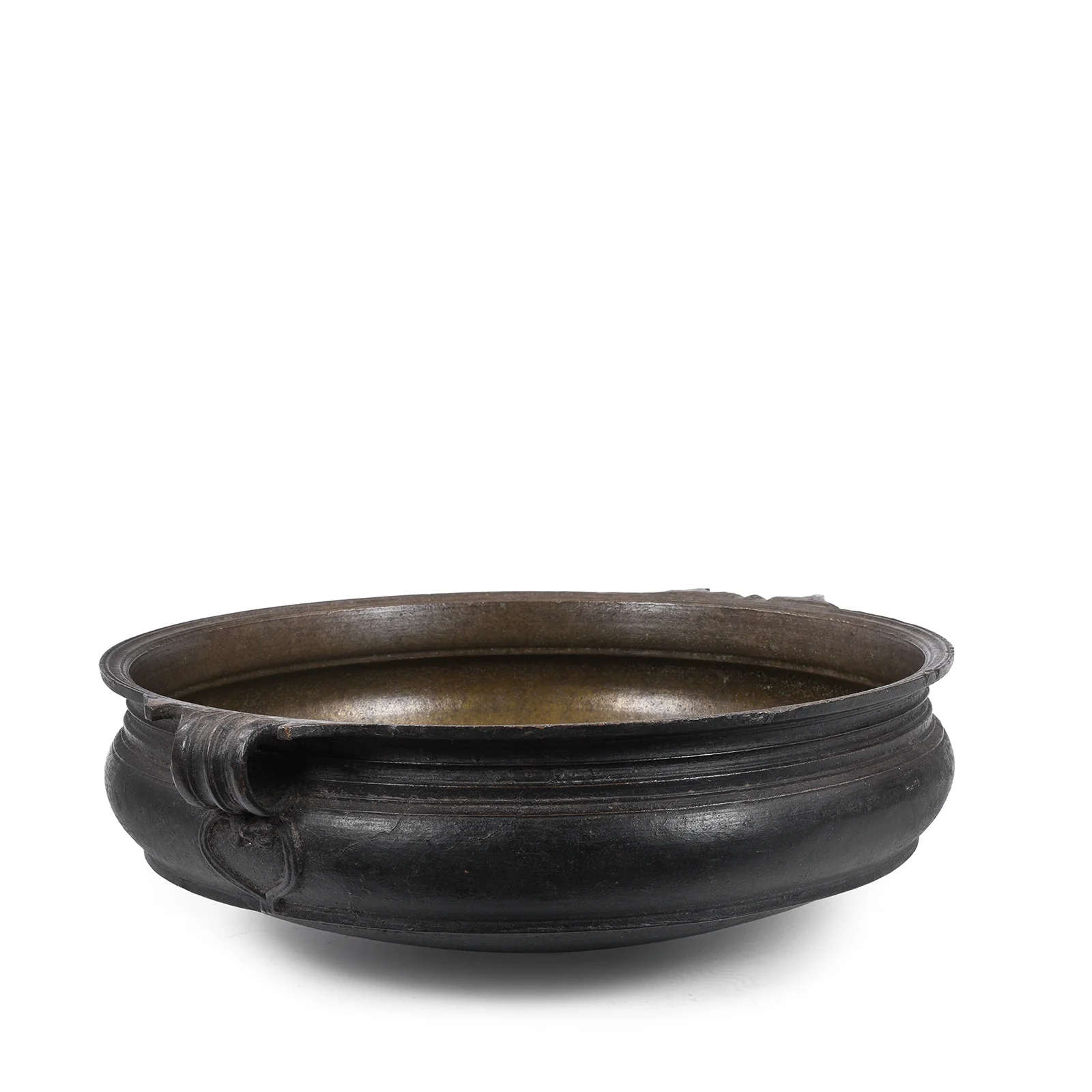
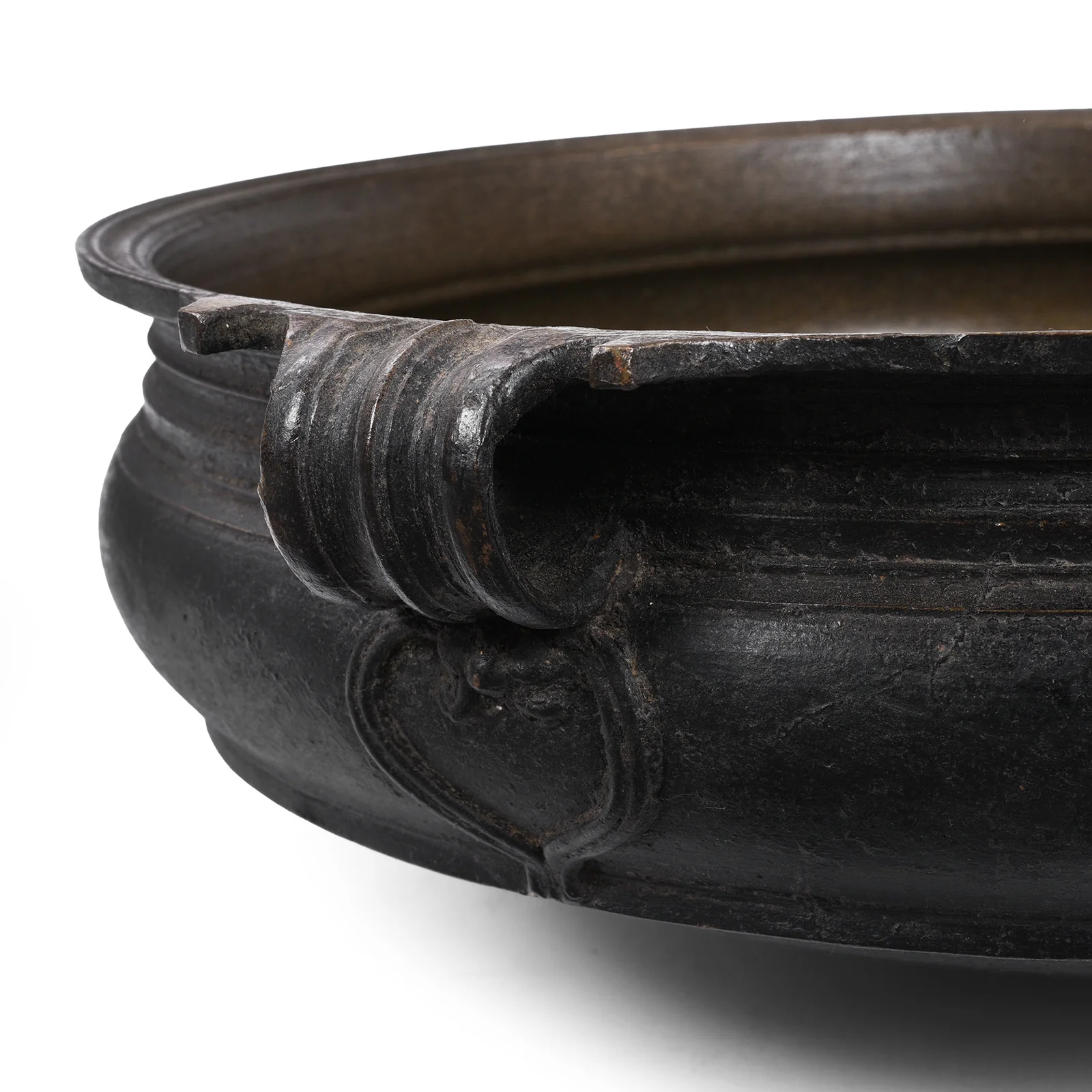
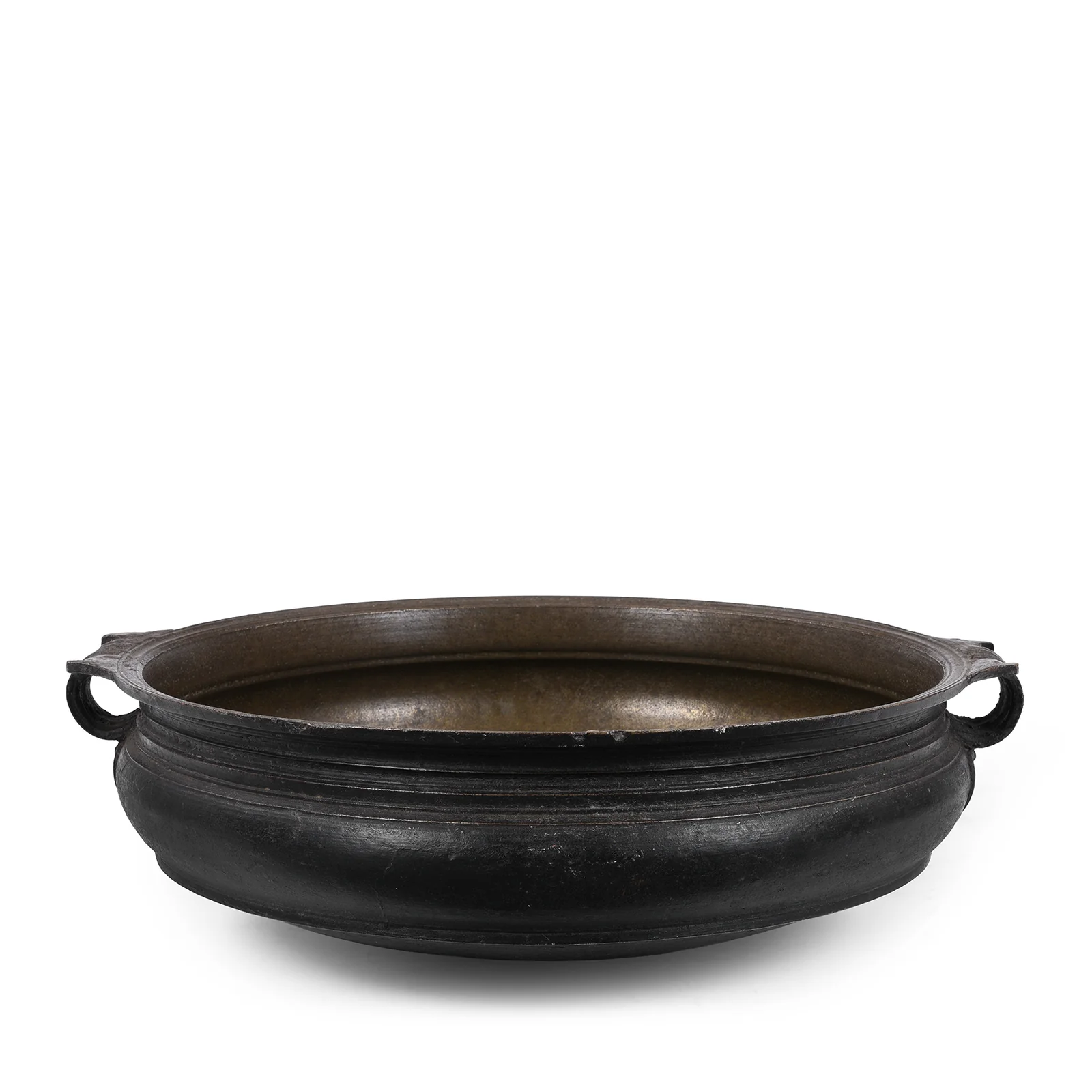
This 19th century bronze Urli (ഉരുളി) from Kerala, South India, is a fine example of traditional metal craftsmanship. Urlis, also known as uruli or charakku, were essential vessels in Tamil and Malayali households, used as cauldrons for preparing vast quantities of food. Their wide form allowed for slow cooking, and they were placed directly on the fire. Strong looped handles on either side allowed wooden poles to be inserted for lifting and carrying, a practical design that also lent the vessel its distinctive silhouette.
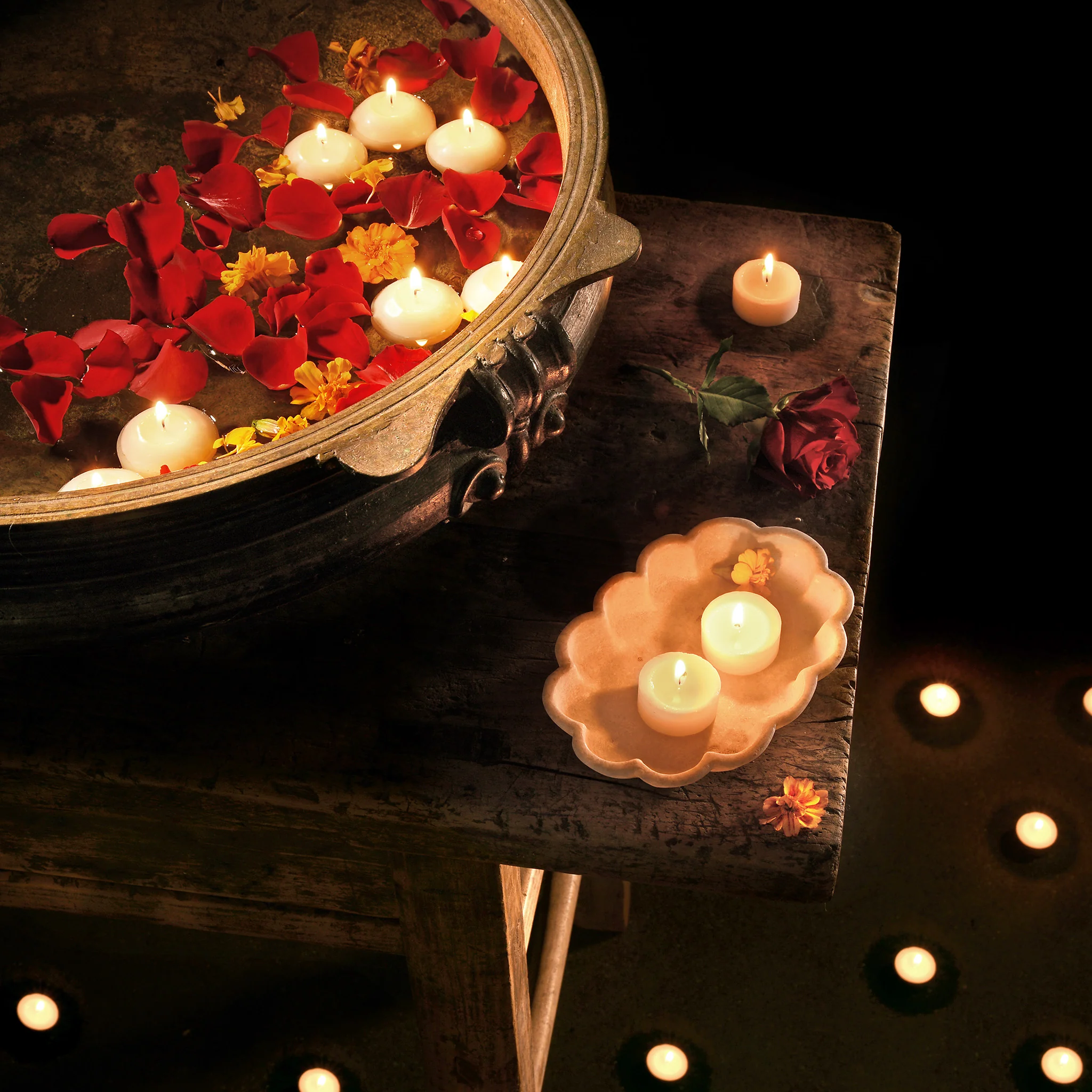
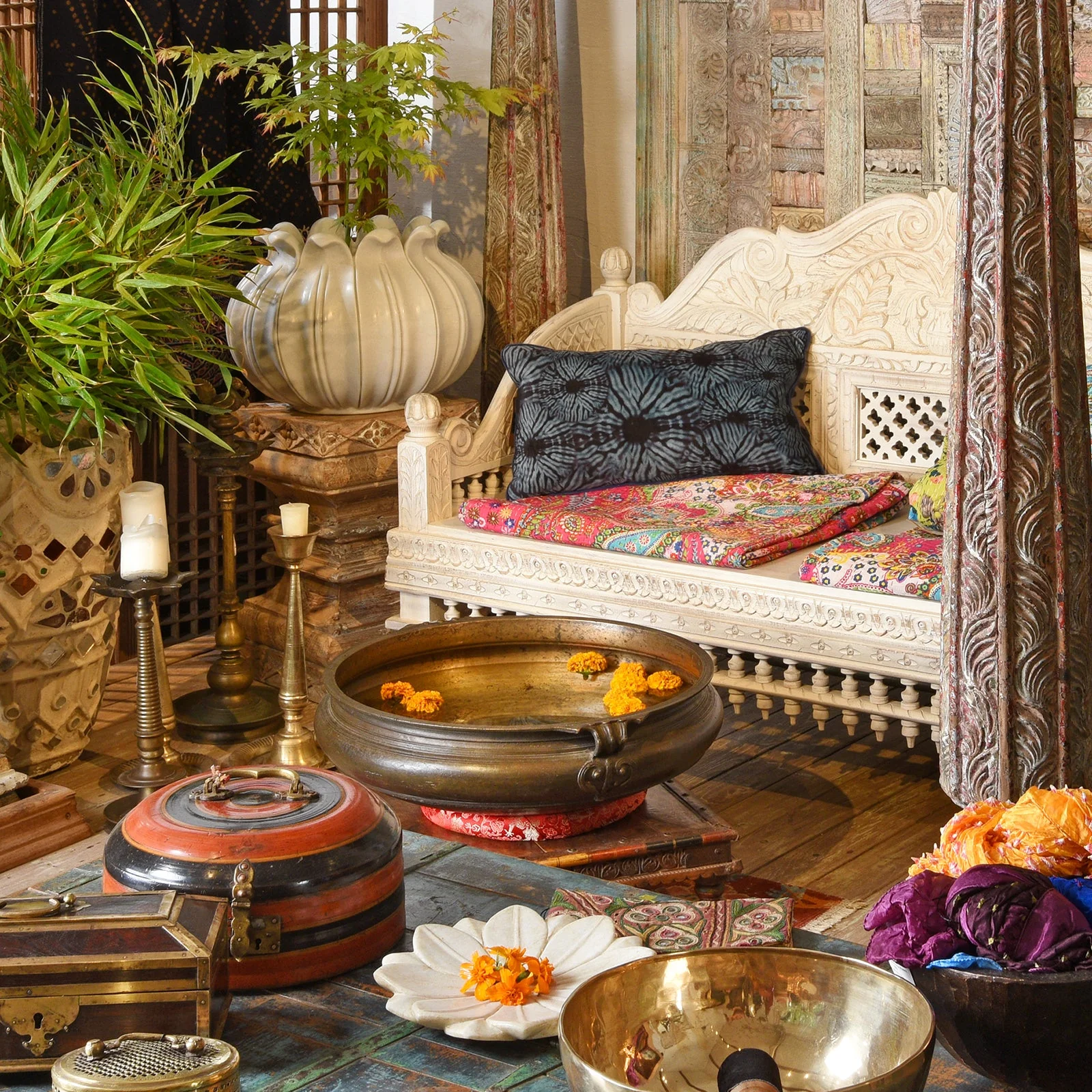
Traditionally cast in bronze or bell metal using the ancient lost-wax process (cire perdue), each Urli was unique, with the mold destroyed after every casting. This ensured subtle variations and character in each piece, while retaining a timeless form rooted in South Indian domestic culture. Today, Urlis are often displayed as decorative bowls, sometimes filled with water and floating flowers, symbolising prosperity and welcome in Kerala households.
A similar example can be found in the National Handicrafts & Handlooms Museum, New Delhi, illustrated on page 42 of Museums of India by Jyotindra Jain & Aarti Aggarwala. This reference highlights the enduring importance of Urlis in Indian culinary and cultural traditions.
- Origin: Kerala, South India
- Date: 19th Century
- Materials: Bronze (bell metal)
- Features: Wide cauldron form, loop handles for carrying, cast using lost-wax process
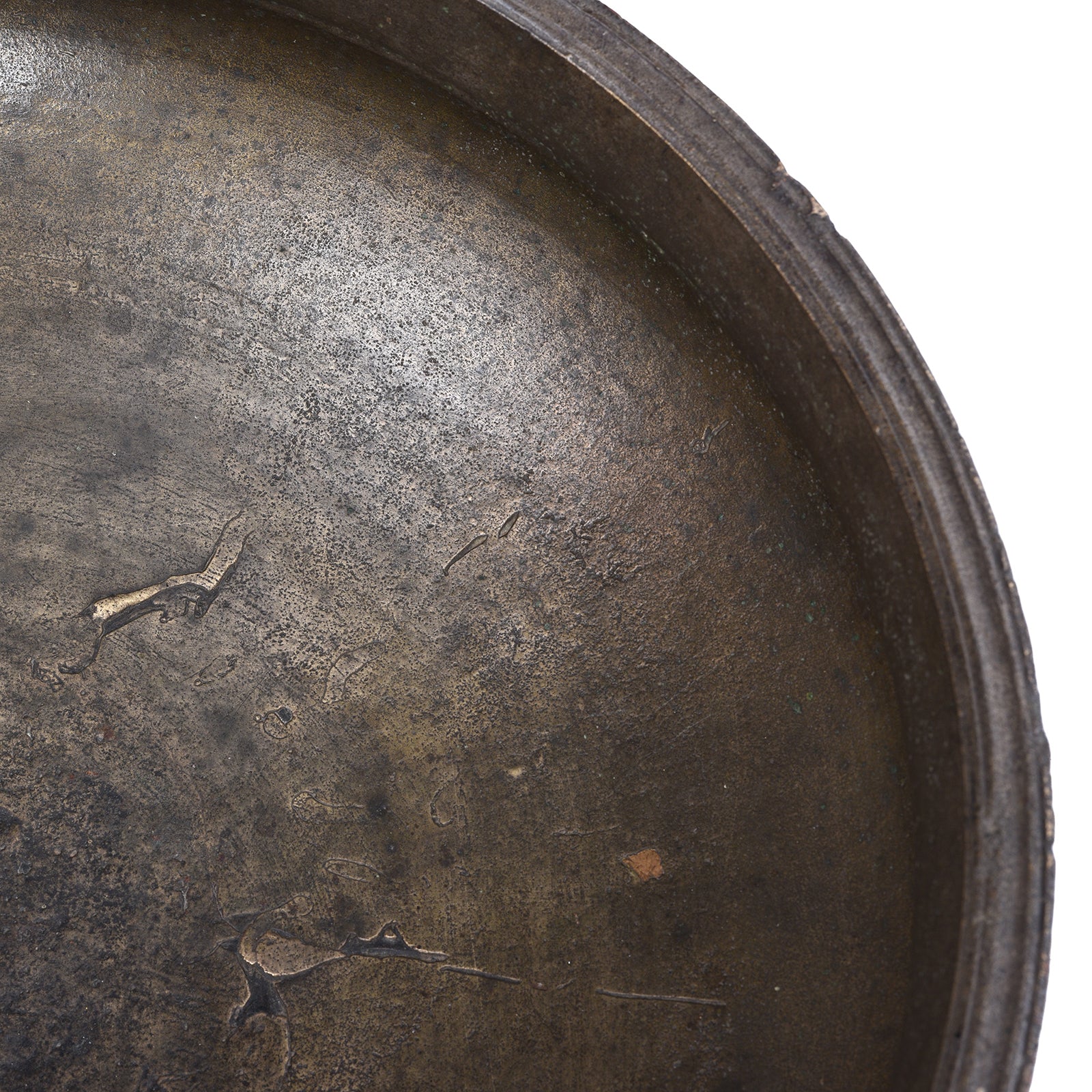
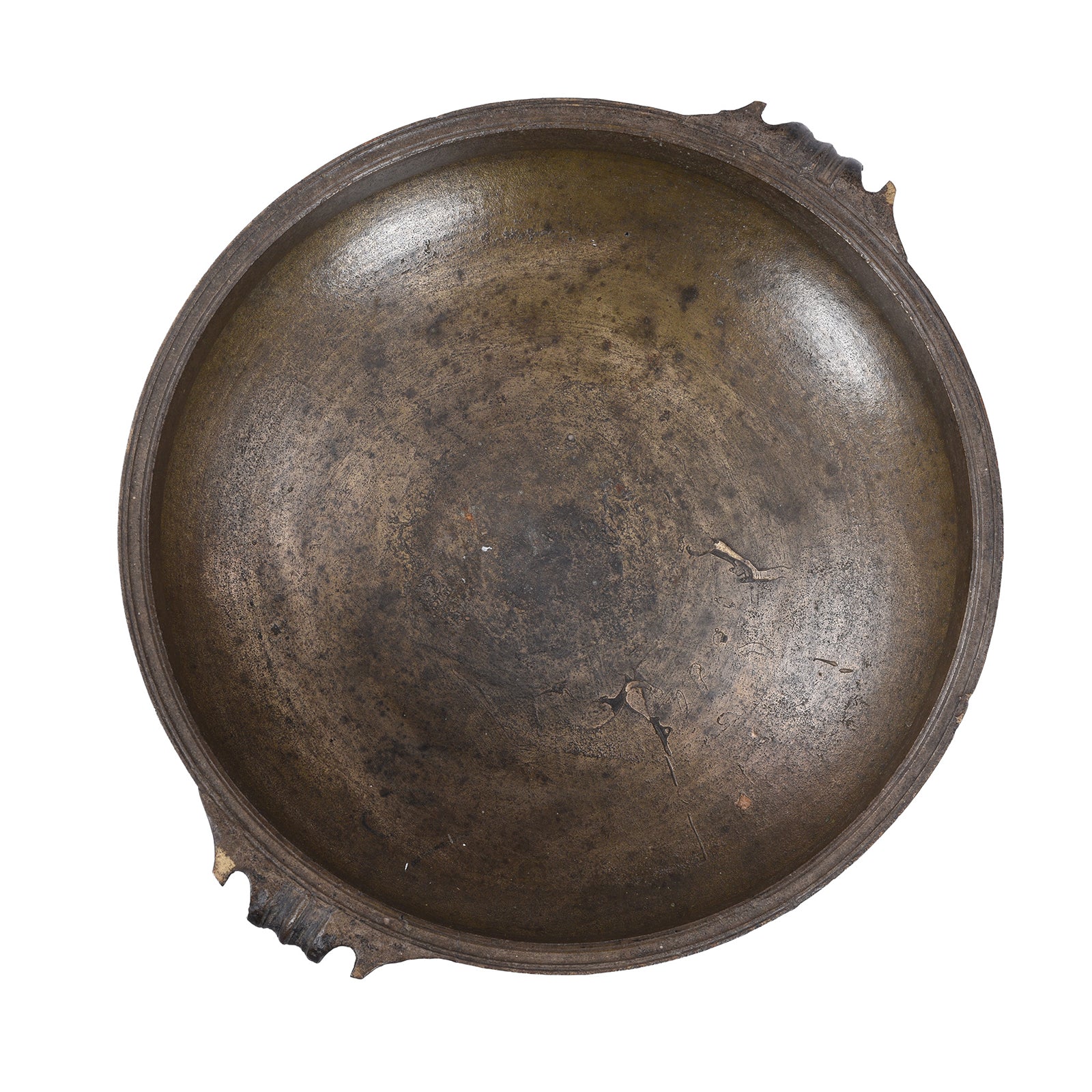
- Condition: Wear and historic patches consistent with age and use; fine patina developed over time
- Dimensions: W55 x D49 x H18 cm
More Images
Bronze Urli from South India - 19th Century
This 19th century bronze Urli (ഉരുളി) from Kerala, South India, is a fine example of traditional metal craftsmanship. Urlis, also known as uruli or charakku, were essential vessels in Tamil and Malayali households, used as cauldrons for preparing vast quantities of food. Their wide form allowed for slow cooking, and they were placed directly on the fire. Strong looped handles on either side allowed wooden poles to be inserted for lifting and carrying, a practical design that also lent the vessel its distinctive silhouette.
Traditionally cast in bronze or bell metal using the ancient lost-wax process (cire perdue), each Urli was unique, with the mold destroyed after every casting. This ensured subtle variations and character in each piece, while retaining a timeless form rooted in South Indian domestic culture. Today, Urlis are often displayed as decorative bowls, sometimes filled with water and floating flowers, symbolising prosperity and welcome in Kerala households.
A similar example can be found in the National Handicrafts & Handlooms Museum, New Delhi, illustrated on page 42 of Museums of India by Jyotindra Jain & Aarti Aggarwala. This reference highlights the enduring importance of Urlis in Indian culinary and cultural traditions.
- Origin: Kerala, South India
- Date: 19th Century
- Materials: Bronze (bell metal)
- Features: Wide cauldron form, loop handles for carrying, cast using lost-wax process
- Condition: Wear and historic patches consistent with age and use; fine patina developed over time
- Dimensions: W55 x D49 x H18 cm
Product Information
Product Information
Shipping & Returns
Shipping & Returns
Description
This 19th century bronze Urli (ഉരുളി) from Kerala, South India, is a fine example of traditional metal craftsmanship. Urlis, also known as uruli or charakku, were essential vessels in Tamil and Malayali households, used as cauldrons for preparing vast quantities of food. Their wide form allowed for slow cooking, and they were placed directly on the fire. Strong looped handles on either side allowed wooden poles to be inserted for lifting and carrying, a practical design that also lent the vessel its distinctive silhouette.
Traditionally cast in bronze or bell metal using the ancient lost-wax process (cire perdue), each Urli was unique, with the mold destroyed after every casting. This ensured subtle variations and character in each piece, while retaining a timeless form rooted in South Indian domestic culture. Today, Urlis are often displayed as decorative bowls, sometimes filled with water and floating flowers, symbolising prosperity and welcome in Kerala households.
A similar example can be found in the National Handicrafts & Handlooms Museum, New Delhi, illustrated on page 42 of Museums of India by Jyotindra Jain & Aarti Aggarwala. This reference highlights the enduring importance of Urlis in Indian culinary and cultural traditions.
- Origin: Kerala, South India
- Date: 19th Century
- Materials: Bronze (bell metal)
- Features: Wide cauldron form, loop handles for carrying, cast using lost-wax process
- Condition: Wear and historic patches consistent with age and use; fine patina developed over time
- Dimensions: W55 x D49 x H18 cm