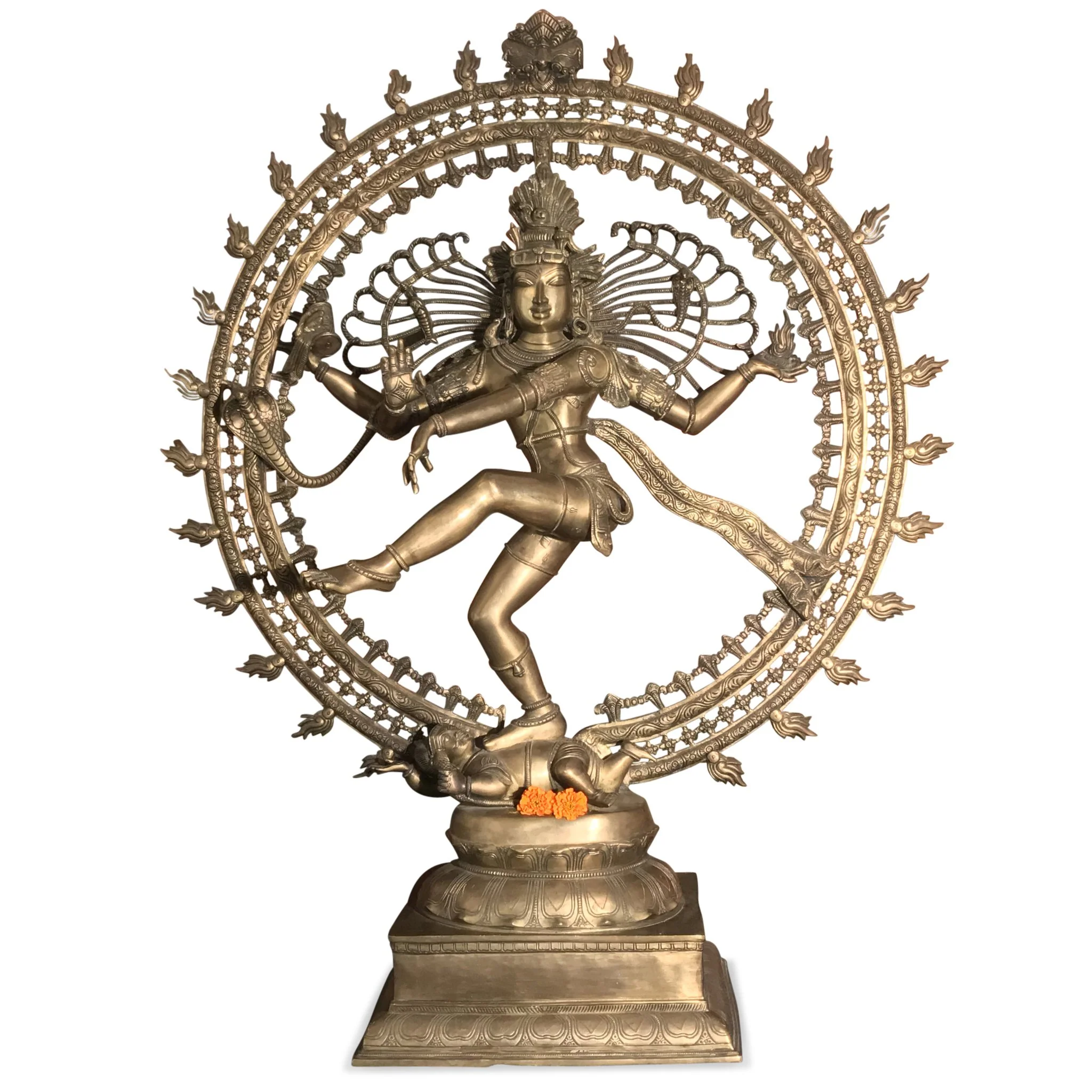
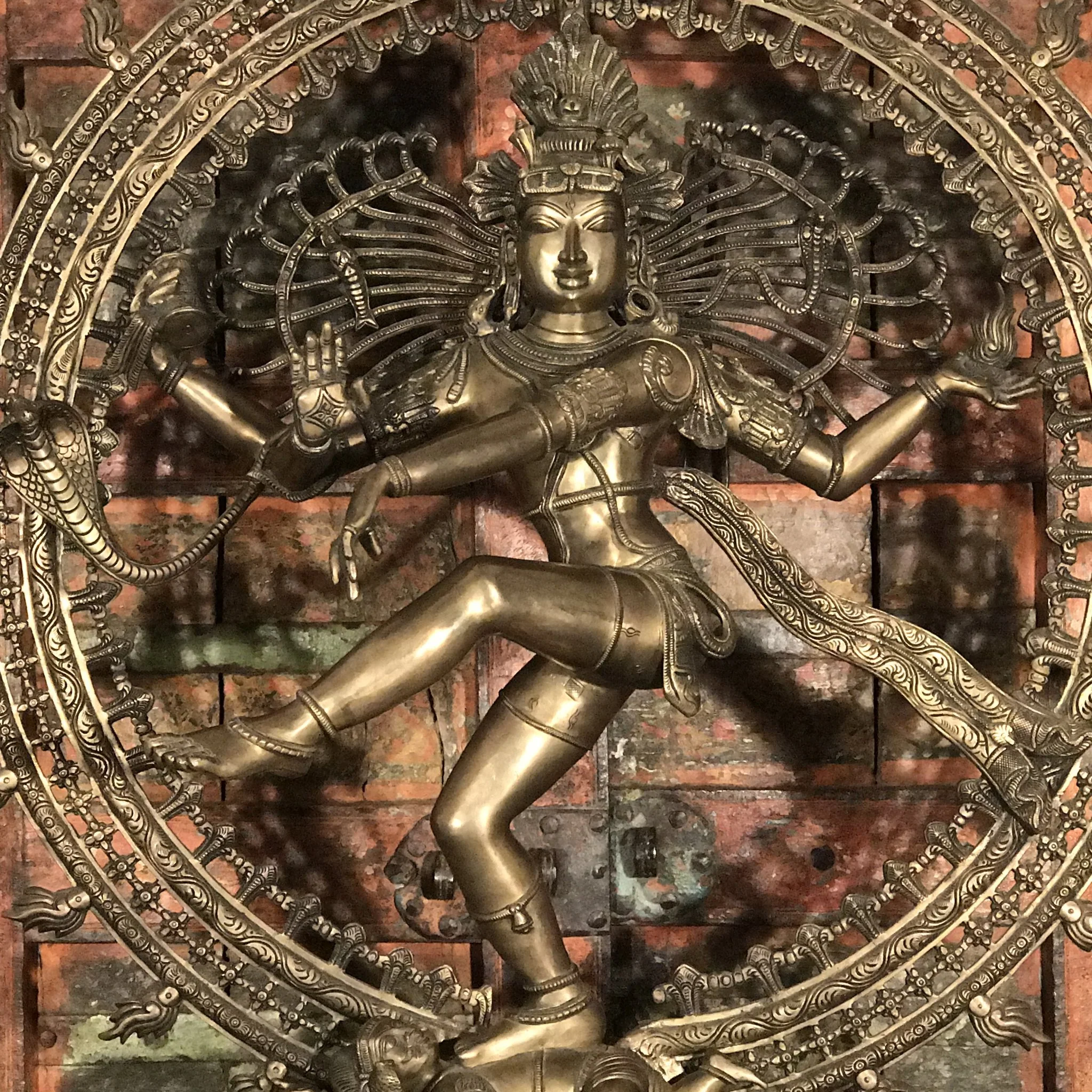
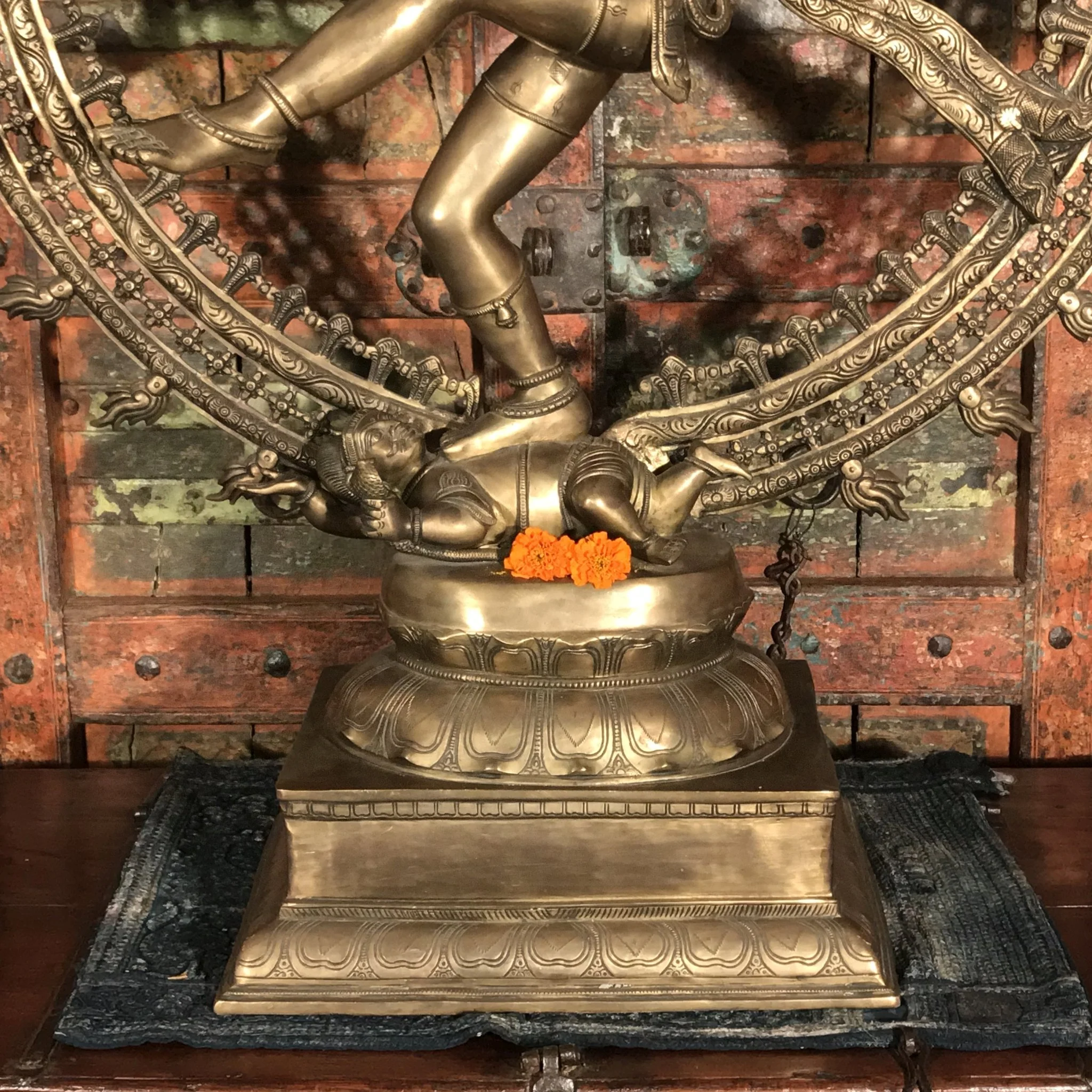
Large Brass Dancing Shiva Nataraj Statue From South India
Chola period bronzes were created using the lost wax technique. The process is commonly known as Cire Perdue. Beeswax is mixed with a little oil and kneaded well to soften it. The figure is sculpted from this mixture fashioning all the minute details. When finished the entire figure is then coated with clay made from termite hills to create the mould. The mould is ithen dried and fired in an oven with cow-dung cakes. The wax model melts leaving an empty clay mould. The mould is then heated and molten brass or bronze is poured into the empty clay-mould.
Chola bronzes used an alloy is known as Pancha Loham. When the mould is entirely filled it is left to cool. The clay mould is then broken off exposing the cast figure. The casting is then cleaned, finer details are carved, and blemishes are removed. It is finally polished. This is a high quality reproduction piece cast in brass and made using the same techniques. It has an aged bronze finish
From India
98 x 34 x 122 (wxdxh cms) base 43 x 34 cm
UK Delivery Charge - except Highlands & Islands £80
More delivery options available on checkout
Original: $4,172.33
-65%$4,172.33
$1,460.32More Images
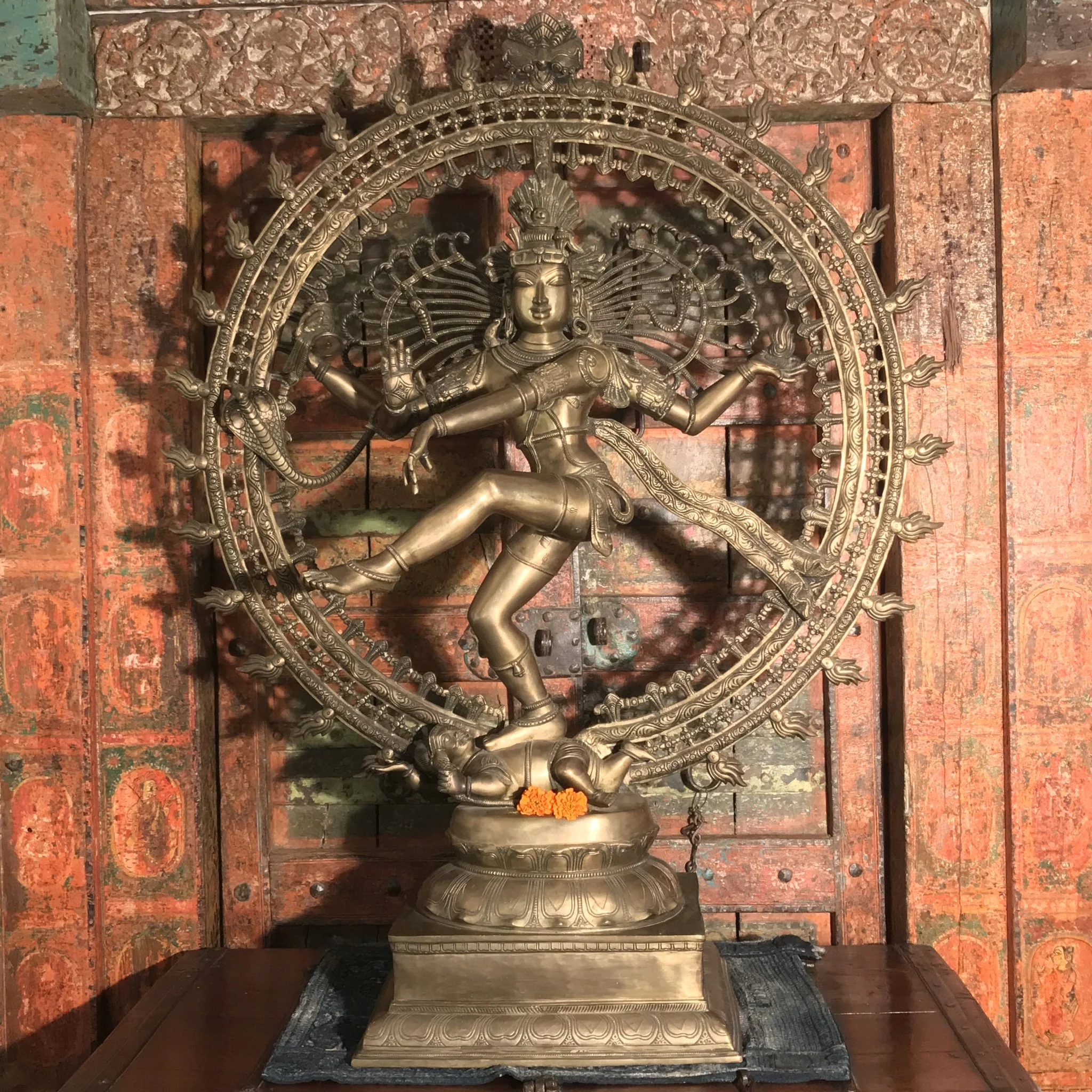
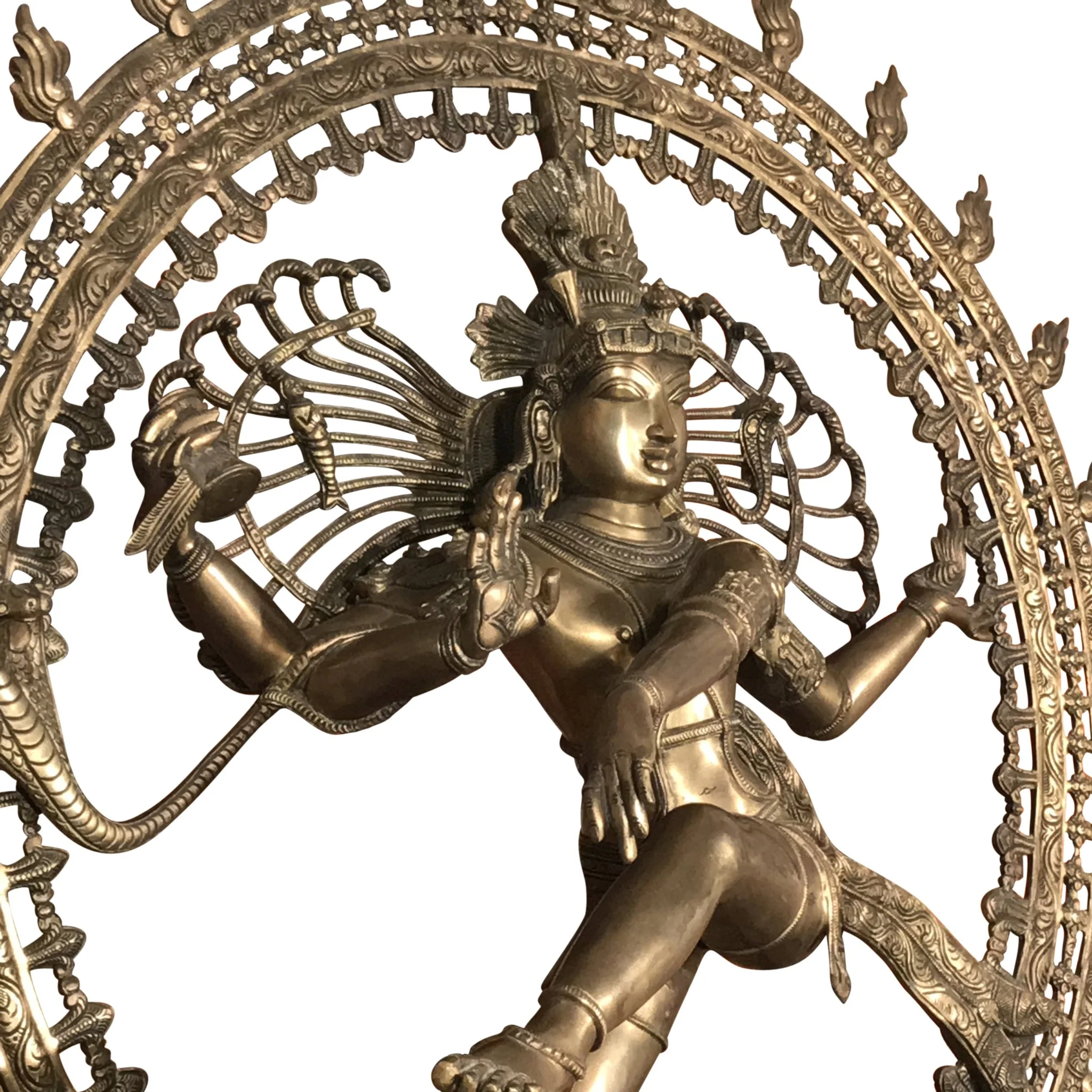
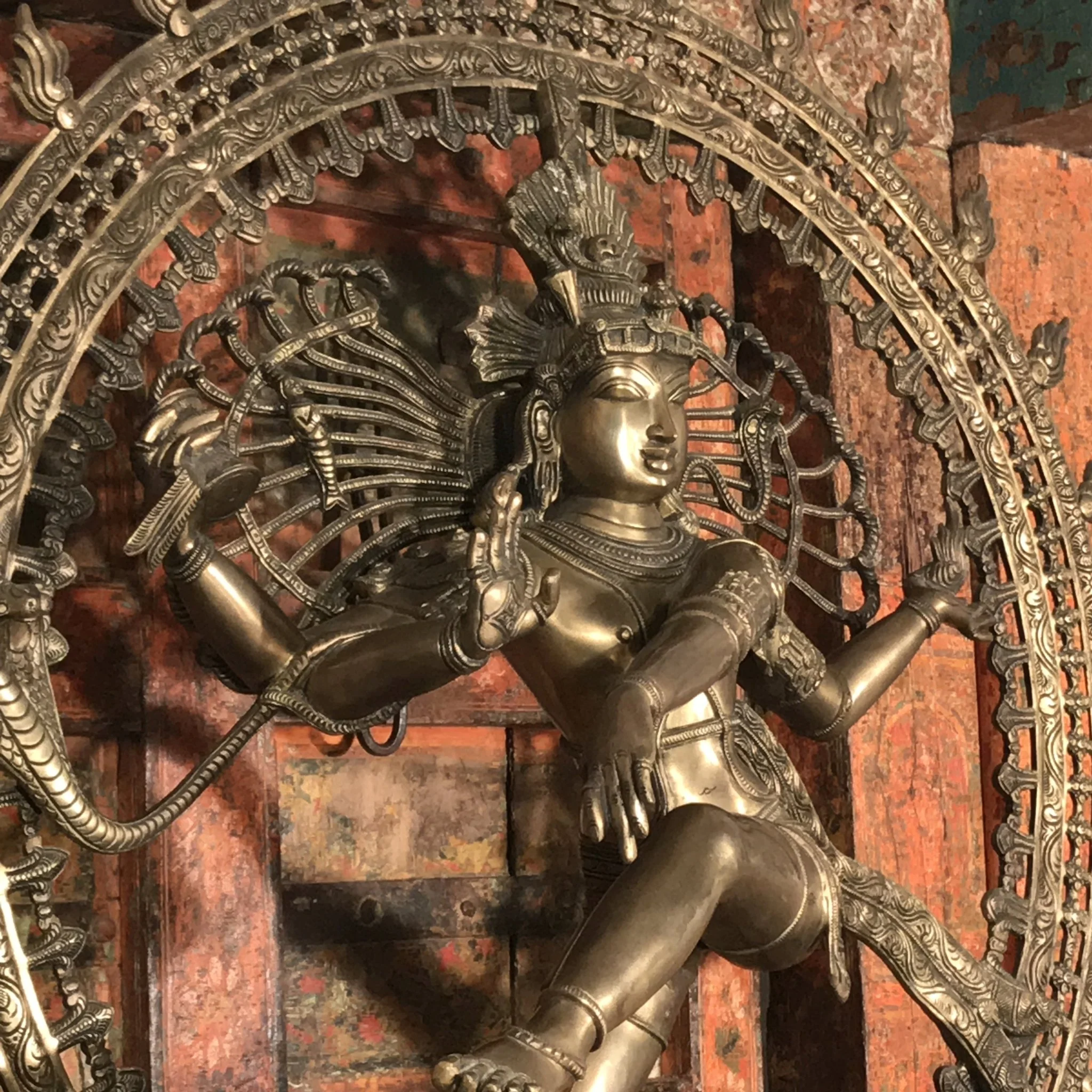
Large Brass Dancing Shiva Nataraj Statue From South India
Chola period bronzes were created using the lost wax technique. The process is commonly known as Cire Perdue. Beeswax is mixed with a little oil and kneaded well to soften it. The figure is sculpted from this mixture fashioning all the minute details. When finished the entire figure is then coated with clay made from termite hills to create the mould. The mould is ithen dried and fired in an oven with cow-dung cakes. The wax model melts leaving an empty clay mould. The mould is then heated and molten brass or bronze is poured into the empty clay-mould.
Chola bronzes used an alloy is known as Pancha Loham. When the mould is entirely filled it is left to cool. The clay mould is then broken off exposing the cast figure. The casting is then cleaned, finer details are carved, and blemishes are removed. It is finally polished. This is a high quality reproduction piece cast in brass and made using the same techniques. It has an aged bronze finish
From India
98 x 34 x 122 (wxdxh cms) base 43 x 34 cm
UK Delivery Charge - except Highlands & Islands £80
More delivery options available on checkout
Product Information
Product Information
Shipping & Returns
Shipping & Returns
Description
Chola period bronzes were created using the lost wax technique. The process is commonly known as Cire Perdue. Beeswax is mixed with a little oil and kneaded well to soften it. The figure is sculpted from this mixture fashioning all the minute details. When finished the entire figure is then coated with clay made from termite hills to create the mould. The mould is ithen dried and fired in an oven with cow-dung cakes. The wax model melts leaving an empty clay mould. The mould is then heated and molten brass or bronze is poured into the empty clay-mould.
Chola bronzes used an alloy is known as Pancha Loham. When the mould is entirely filled it is left to cool. The clay mould is then broken off exposing the cast figure. The casting is then cleaned, finer details are carved, and blemishes are removed. It is finally polished. This is a high quality reproduction piece cast in brass and made using the same techniques. It has an aged bronze finish
From India
98 x 34 x 122 (wxdxh cms) base 43 x 34 cm
UK Delivery Charge - except Highlands & Islands £80
More delivery options available on checkout